The Silence of the Dark Side
Four human beings are currently sitting in a pressurized metal canister, hurtling through a vacuum at speeds that defy the human internal sense of pace. Behind them is every ocean, every city, and every person they have ever known. Ahead of them is a grey, cratered wasteland that has not felt the heat of a human breath in over fifty years.
This is Artemis II. It is not a victory lap. It is a grueling, uncomfortable, and terrifyingly high-stakes rehearsal for a future we are still trying to earn.
As the Orion spacecraft swings around the far side of the moon, the crew has just crossed a threshold that belongs to the history books. They have eclipsed the distance record set by the crew of Apollo 13 in 1970. For a few hours, Reid Wiseman, Victor Glover, Christina Koch, and Jeremy Hansen became the most isolated humans in the history of our species. They were farther from help than any soul has ever been.
But history is rarely as poetic as the textbooks suggest. While the world watched the telemetry data and celebrated the milestone, the four people inside the capsule were dealing with a problem that is decidedly more terrestrial, more humbling, and significantly more urgent than a record-breaking odometer.
The toilet broke.
The Fragility of the Tin Can
Space travel is often marketed as a sleek, seamless transition into the future. We see the high-definition feeds and the slow-motion walks to the launchpad. What we don't see—what we choose to ignore—is that these people are living in a space roughly the size of a professional equipment van. There is no "away" in space. Everything you bring with you, and everything your body produces, stays within those few hundred cubic feet of breathable air.
When the waste management system in the Orion capsule began to malfunction shortly before the lunar flyby, the mission didn't stop being about exploration. It just became about survival in its most basic, gritty sense.
Consider the psychological weight of that moment. You are 250,000 miles from the nearest plumber. You are moving at 20,000 miles per hour. You are surrounded by millions of dollars of sensitive electronics that cannot, under any circumstances, get wet or contaminated. Suddenly, the record you just broke feels very abstract. The reality of your immediate environment—the smell, the logistics of hygiene, the mounting discomfort—is the only thing that matters.
This is the hidden cost of the frontier. We focus on the "giant leaps," but the mission is actually made of thousands of small, precarious shuffles. If the life support systems or the waste management fails, the most advanced spacecraft in history becomes nothing more than an expensive, drifting coffin.
The Ghost of 1970
The comparison to Apollo 13 isn't just about the distance. It’s about the vulnerability.
In April 1970, Jim Lovell, Jack Swigert, and Fred Haise found themselves in a desperate fight for their lives after an oxygen tank exploded. They used the Moon’s gravity as a slingshot to hurl themselves back toward Earth, reaching a distance of 400,171 kilometers from our home planet. For fifty-six years, that number stood as the high-water mark for human reach.
The Artemis II crew has now pushed past that mark, reaching a peak altitude of over 403,000 kilometers.
But where Apollo 13 was a frantic escape, Artemis II is a deliberate, methodical test. The toilet issue, while seemingly trivial or even humorous to those on the ground, serves as a stark reminder of why we do these "checkout" missions. We are relearning how to live in the deep.
The Apollo missions were sprints. We went, we planted a flag, and we rushed back before the thin margin of safety evaporated. Artemis is a marathon. We aren't just trying to visit the Moon; we are trying to inhabit the neighborhood. That requires systems that work for weeks, not days. It requires solving the "human" problems that NASA engineers sometimes struggle to quantify.
The Human Element in the Machine
To understand the stakes, you have to look at the people inside the Orion.
Victor Glover isn't just a pilot; he is a father and a husband who knows that every mile added to that record is another mile of risk. Christina Koch isn't just a record-breaking astronaut; she is a researcher who understands that her body is currently the primary data point for how radiation and microgravity affect the female physiology over long distances.
When the waste system failed, they didn't panic. They didn't call for an abort—partly because, at that point in the orbital mechanics, you can't just "turn around." You are committed to the physics of the loop. Instead, they did what astronauts have done since the days of Mercury: they improvised. They used backup containment systems. They managed the mess. They kept their eyes on the gauges.
There is a specific kind of bravery required to be the "guinea pig." The crew of Artemis II knows they won't be the ones to walk on the lunar surface. That honor belongs to the crew of Artemis III. The four people currently orbiting the Moon are there to find the bugs in the software and the leaks in the plumbing so that the next crew doesn't die from them.
They are the ones who have to sit in the dark, far from the reach of radio signals as they pass behind the lunar disk, wondering if the heat shield will hold or if the life support will keep the CO2 scrubbers running.
The Illusion of Progress
We often think of technology as a linear climb. We assume that because we have iPhones and AI, going back to the Moon should be easy.
It isn't.
We lost the institutional knowledge of the 1960s. We lost the factories that built the Saturn V. We are, in many ways, starting from scratch with a much higher standard for safety and a much tighter budget. The Orion capsule is a marvel, but it is also brand new. It is a prototype being tested in the most unforgiving laboratory in the universe.
The toilet malfunction isn't a sign of failure. It is a sign of honesty. It reveals the gap between our ambitions and our current capabilities. It reminds us that we are still biological creatures—fragile, messy, and dependent on a very thin layer of technology to keep the void at bay.
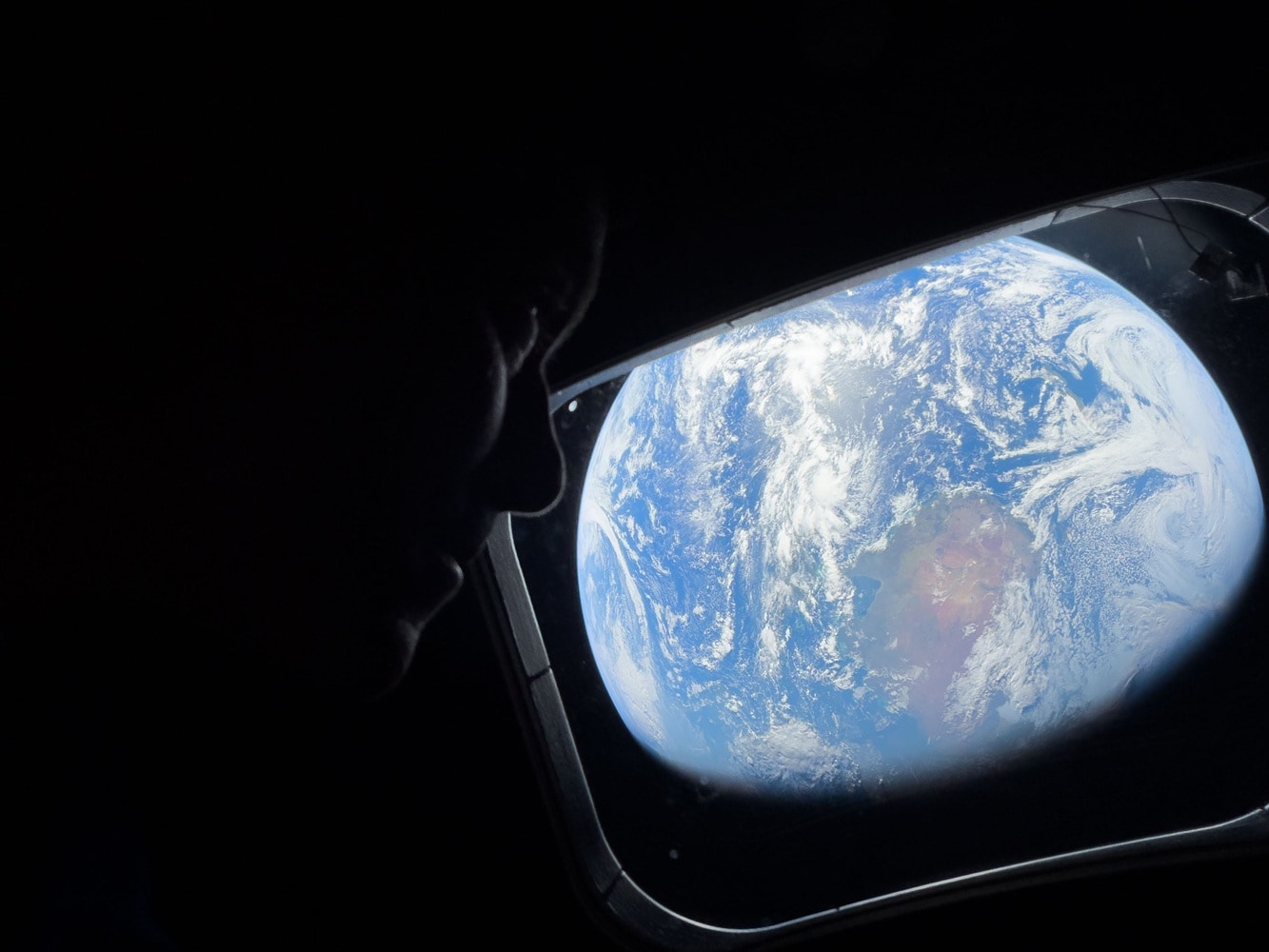
As the crew looked out the windows at the lunar far side—a view only a handful of humans have ever seen with their own eyes—they weren't seeing a map. They were seeing a landscape of terrifying isolation. The Moon is not a welcoming place. It is a silent, monochromatic desert that reflects the sun with a blinding intensity and hides in a shadow that can freeze steel.
Beyond the Record
The headline says they passed the Apollo 13 distance. That is a number.
The reality is that they passed the limit of our comfort zone. They have pushed the boundaries of where a human being can reasonably expect to survive if things go wrong.
As they began their long fall back toward Earth, the "toilet issue" remained a persistent annoyance, a reminder of their own humanity. But the mission continued. The heat shield began to prep for the 5,000-degree friction of reentry. The parachutes waited in their canisters.
We watch these missions because they represent the best of us—our curiosity, our drive, our willingness to endure the uncomfortable for the sake of the unknown. But we should also watch them to remember how small we are.
Four people are currently falling through the blackness, separated from an instant death by a few inches of aluminum and carbon fiber. They are tired. They are likely a bit smelly. They are cramped. And they are currently the only representatives of our world in the vast, cold silence of the deep.
They are coming home now. The record has been set. The data has been gathered. The lessons—both the glorious and the gross—have been learned.
When the Orion capsule finally splashes down in the Pacific, and the hatch is cracked open, the first thing the crew will feel is the salt air. They will feel the weight of gravity. They will see a blue sky that doesn't end in an eternal black. And for the first time in days, they will be able to walk to a bathroom that actually works.
It is the simplest things that we miss most when we reach for the stars.
The Moon remains behind them, a silent witness to their passing, indifferent to the records broken or the hardships endured, waiting for the next set of footprints to disturb its dust.