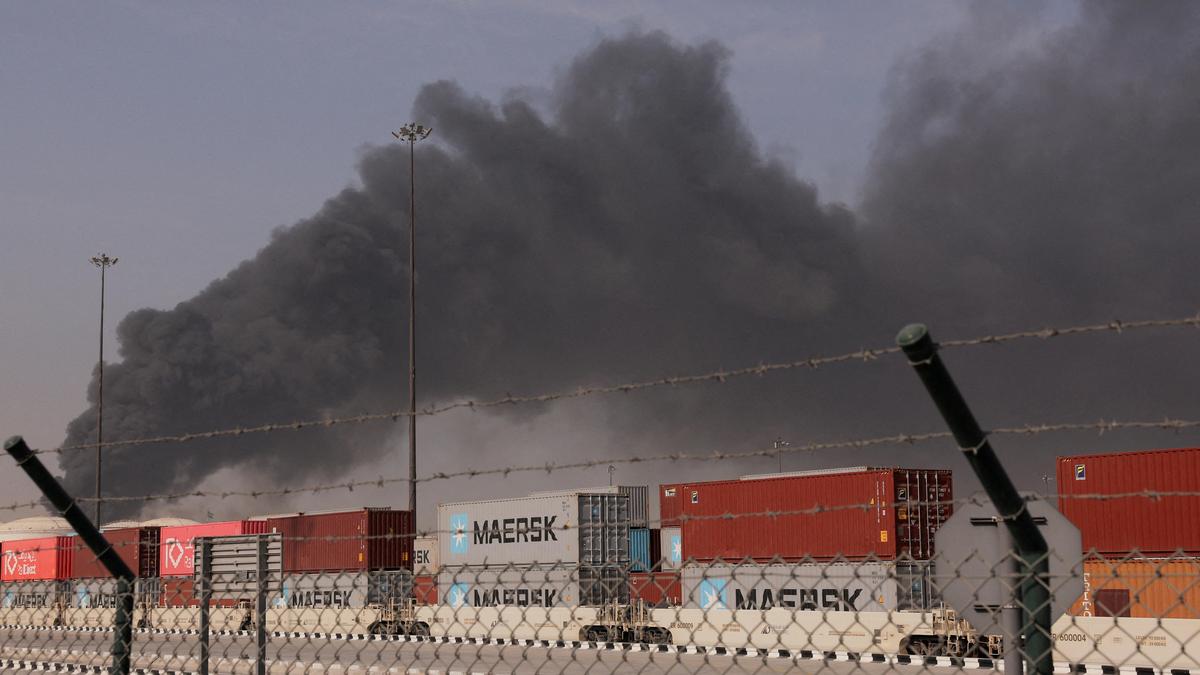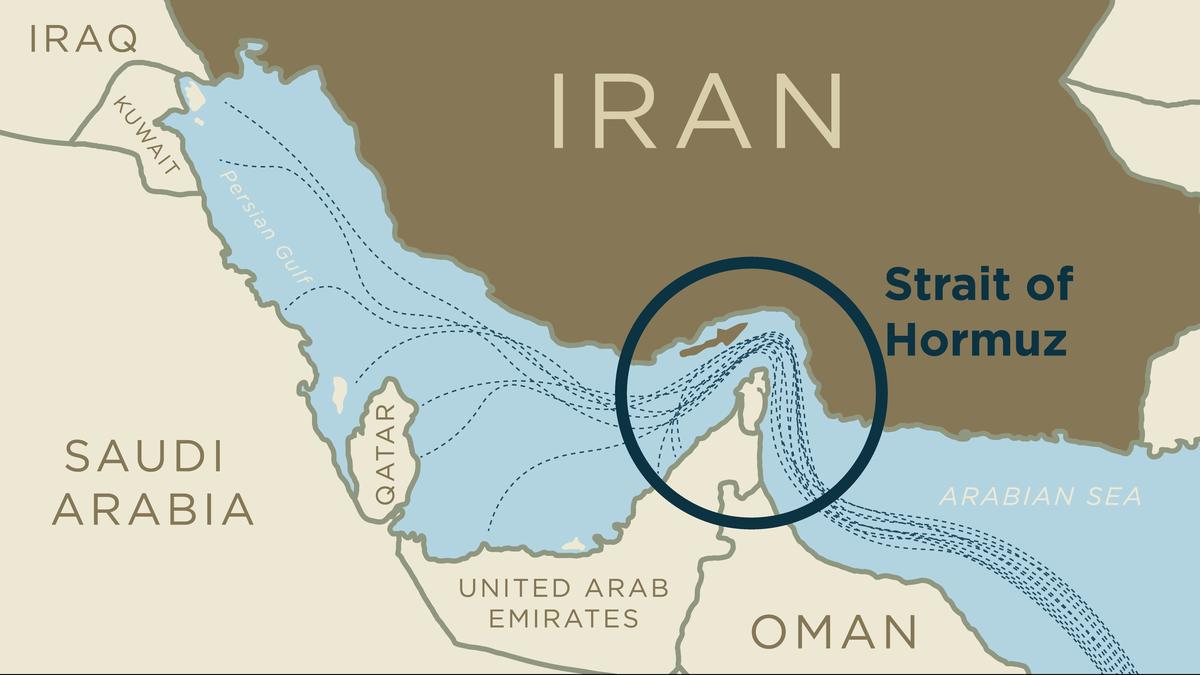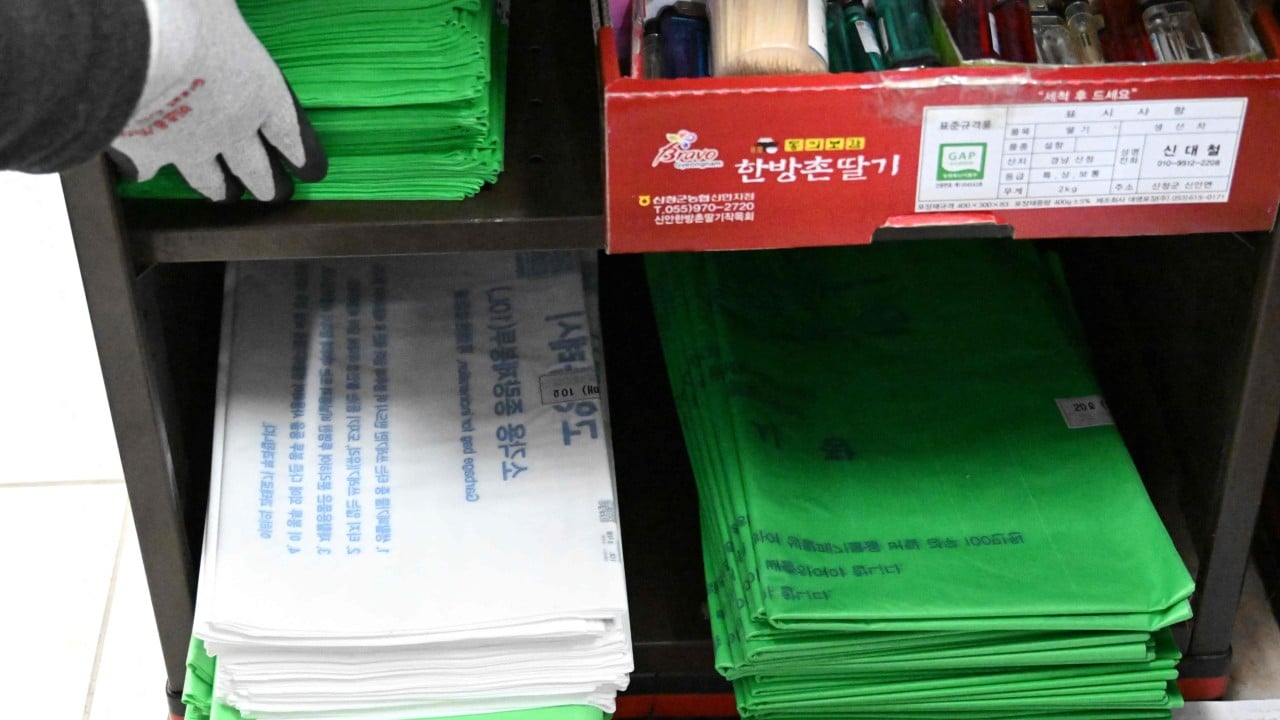
In Seoul, the most sought-after commodity isn't a luxury handbag or a high-tech semiconductor. It is a 20-liter standard plastic trash bag. This week, daily sales of these municipal-mandated liners surged fivefold to 2.7 million units, forcing major retailers to impose strict per-customer limits. The panic is a visceral reaction to the effective closure of the Strait of Hormuz following the outbreak of war in Iran on February 28. Because South Korea relies on this chokepoint for 54% of its naphtha—the petrochemical bedrock of all plastic—the humble bin bag has become the canary in the coal mine for a nation realizing how thin its "first-world" veneer actually is.
While the headlines focus on the 25 trillion won ($16.5 billion) "wartime" budget recently fast-tracked by the National Assembly, the real story is playing out in the aisles of local Emart and GS25 branches. South Koreans are not just buying bags; they are bracing for a systemic collapse of the modern convenience they took for granted.
The Naphtha Trap and the Illusion of Inventory
The South Korean government, led by Energy Minister Kim Sung-whan, has been on a frantic damage-control tour. He insists that recycled raw materials can bridge the gap for over a year and that there is no need for hoarding. These reassurances are falling on deaf ears.
The mathematical reality is harder to spin. Most of the country's polyethylene production—the material used for these bags—is tethered to naphtha prices. With the Strait of Hormuz blocked, the cost of raw polyethylene is projected to jump by as much as one million won per ton by May. Manufacturers have already begun idling plants. They aren't just worried about the price; they are worried about the physical disappearance of the molecules required to keep the machines running.
A standard 20-liter bag typically costs about 80 won. If the government allows producers to pass on the rising costs of raw materials, that price could triple overnight. For a population already reeling from a first-in-30-years fuel price cap, the trash bag represents the last line of defense for household stability.
A Wartime Budget for a Peacetime Society
The 25 trillion won supplementary budget is a massive injection of liquidity designed to prevent the economy from seizing up. However, the allocation tells a story of desperation rather than strategy. A significant portion is earmarked for "emergency management funds" for firms crushed by the sudden evaporation of the Middle East supply chain.
There is a fundamental disconnect in the policy. While the budget minister, Park Hong-keun, speaks of supporting "vulnerable households," the government is simultaneously lifting caps on coal-powered generation and pushing nuclear power to 80% capacity to compensate for the oil shortage. South Korea is effectively undoing a decade of green energy progress in a matter of weeks. The "wartime" budget isn't an investment in the future; it is a massive, expensive bandage on a gaping wound.
The Psychology of the Winner
In the digital underground of Korean message boards, a new type of social currency has emerged. Users post photos of hundreds of bundled trash bags stacked in their utility rooms. One netizen recently bragged, "I bought as many as I could. I'm the winner."
This "winner" mentality reflects a deep-seated distrust of official government narratives. In 1997, during the IMF crisis, Koreans gave up their gold to save the nation. In 2026, they are hoarding plastic to save themselves. The panic has already spilled over into other naphtha-dependent goods: disposable cups, sanitary pads, and cleaning supplies.
Small business owners are in an even tighter spot. Many have reportedly ordered two-year supplies of waste bags, fearing that by mid-April, production will cease entirely. One owner in Daegu noted that they are more worried about the plastic bags discoloring or degrading in storage than they are about the actual war in the Middle East. It is a bizarre, localized obsession that highlights a fragile supply chain where the most basic items are the most vulnerable.
The Coming Waste Management Crisis
If the shortage persists, the crisis will evolve from a retail panic into a public health nightmare. South Korea has one of the strictest waste disposal systems in the world. You cannot simply throw trash away in any bag; it must be the official, government-issued version.
Minister Kim has floated the idea of allowing "general plastic bags" to be used if the situation hits a worst-case scenario. This sounds like a simple fix, but it would collapse the entire automated sorting and recycling infrastructure that the country has spent billions building. The system is designed to recognize and process specific types of official bags. Removing that standard would mean reverting to a 1980s-style landfill model, an unthinkable retreat for a nation that prides itself on being a global leader in the circular economy.
The Gyeonggi Province civil defense drills, currently focused on air raid preparedness, are a grim reminder of how quickly "normal" can evaporate. While officials inspect emergency water supplies and sirens, the public is more concerned with the logistics of their daily refuse.
Beyond the Hormuz Blockade
The Iranian crisis has exposed a structural flaw in the South Korean economic miracle: an extreme dependence on a single, volatile geography for its petrochemical survival. The "wartime" budget might stabilize the won or keep a few SMEs from going bankrupt this month, but it does nothing to address the naphtha trap.
As long as the Strait of Hormuz remains effectively shut, no amount of supplementary spending can conjure plastic out of thin air. The bin bag panic isn't about trash; it's about the terrifying realization that a global conflict thousands of miles away can dictate whether or not a citizen in Seoul is allowed to clean their house. The government’s next move isn't about finding more money, but about finding a way to decouple the nation's daily life from a chokepoint they have no power to open.
Secure your own supply of essential disposables now, because the government's "three-month inventory" is a figure based on peacetime consumption, not a nation in the grip of a hoarding frenzy.