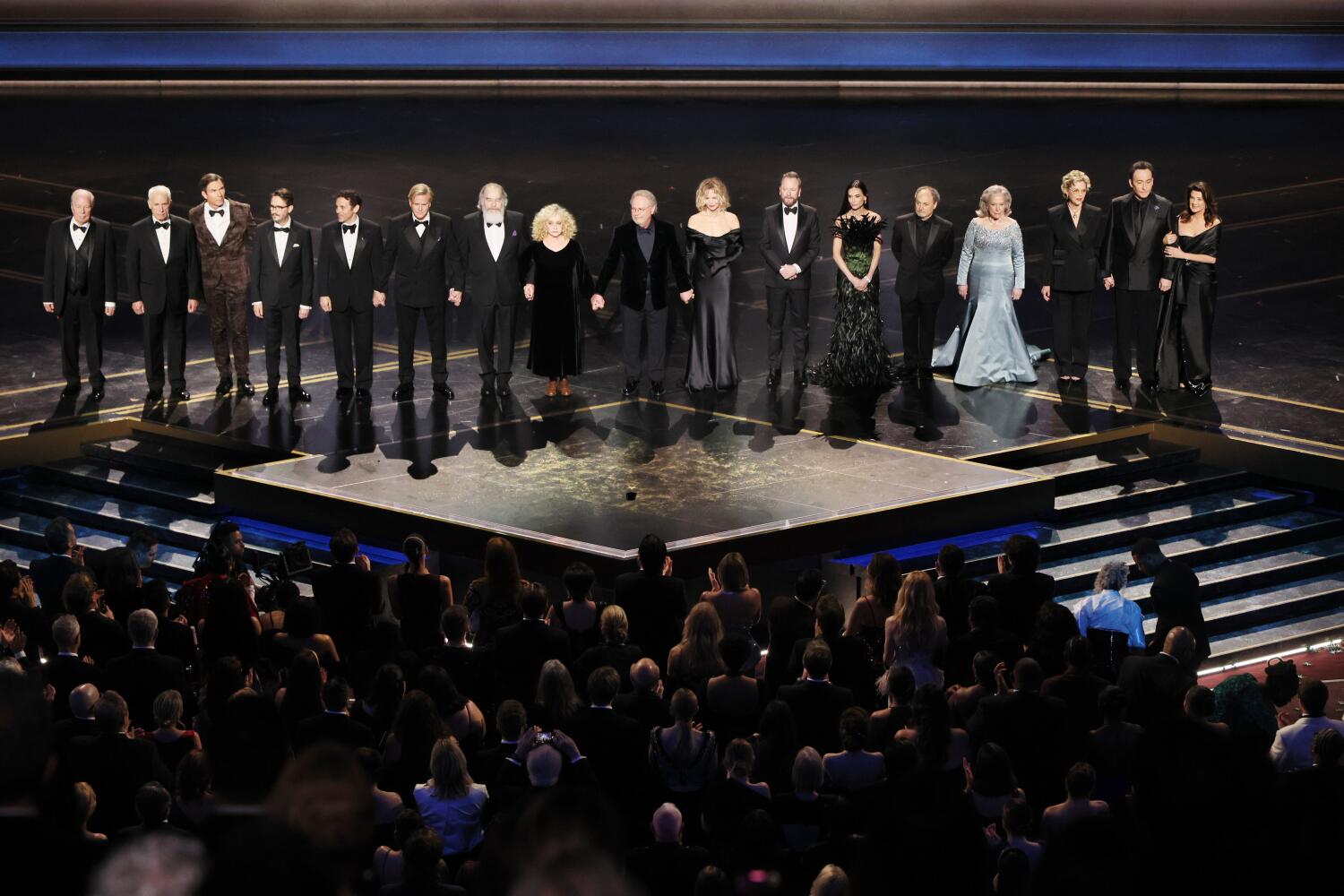
The 98th Academy Awards will be remembered not for the fashion or the host, but for the moment the industry finally paid its debts. When Ryan Coogler and Paul Thomas Anderson both took the stage to accept their first-ever Oscars, the atmosphere inside the Dolby Theatre shifted from standard Hollywood self-congratulation to a profound sense of relief. For decades, the Academy of Motion Picture Arts and Sciences has operated on a deficit of credibility, routinely bypassing the very architects of modern cinema in favor of safe, sentimental choices. This year, the streak broke. The wins represent a structural pivot in how the industry values legacy versus momentum.
The "overdue" narrative is a tired trope in awards season, but for Anderson and Coogler, the math was becoming impossible to ignore. Anderson, a filmmaker who has spent thirty years meticulously deconstructing the American mythos, entered the night with eleven previous nominations and zero wins. Coogler, the man who turned a comic book property into a Best Picture nominee and revived the Rocky mythos, had been arguably the most influential commercial and cultural force of the last decade without a personal statuette to show for it. Their wins weren't just individual victories. They were a frantic attempt by the Academy to remain relevant to a public that has grown cynical of its tastes.
The Anderson Calculus and the End of the Auteur Drought
Paul Thomas Anderson has long been the "filmmaker’s filmmaker," a title that usually serves as a polite euphemism for "unrecognized by the masses." From the jagged energy of Boogie Nights to the operatic dread of There Will Be Blood, Anderson has consistently produced work that defines the medium. Yet, the Academy has historically treated him like a brilliant eccentric—someone to be nominated for the sake of prestige, but rarely someone to be handed the top prize.
His win for Best Director this year signals a change in the voting body's demographic. The massive expansion of the Academy, which added thousands of international members over the last several years, has diluted the "Old Hollywood" voting bloc that previously favored traditional biopics and period dramas. This new, more global electorate values technical mastery and singular vision over sentimental storytelling.
Anderson’s victory was for a project that many considered his most uncompromising yet. It didn't hunt for the win. It didn't use the standard emotional beats that Oscar-bait films rely on. Instead, it doubled down on the visual language that has made him a titan of the industry. The industry finally caught up to his frequency.
Why the Auteur Matters Now
In an era dominated by algorithmic content and "content windows," the survival of the theatrical experience depends on the brand name of the director. The Academy realized that if they continue to ignore the masters of the craft, the Oscars lose their status as the North Star of cinema. If Paul Thomas Anderson can't win an Oscar, then the Oscar ceases to be the definitive mark of excellence in directing.
It is a symbiotic relationship. Anderson gets the hardware, but the Academy gets the reflected glory of his brilliance.
Ryan Coogler and the Burden of the Blockbuster
Ryan Coogler’s path to the podium was vastly different but equally fraught. Since Fruitvale Station, Coogler has navigated the precarious balance between personal, intimate storytelling and the massive machinery of global franchises. His win for Best Original Screenplay marks a significant moment for the industry’s perception of "popular" cinema.
For years, there has been a sneering dismissal of directors who work within the studio system’s biggest IPs. Coogler shattered that. He proved that you could inject profound themes of grief, isolation, and systemic failure into films that also sell a billion dollars in tickets. His win is a recognition that the script is the soul of the machine.
The Myth of the Commercial Sellout
The criticism often leveled at Coogler was that he had "graduated" from independent cinema to the corporate world, as if the two couldn't coexist. His latest win puts that argument to rest. The Academy rewarded him for a film that felt deeply personal, despite its scale. This sends a message to the next generation of filmmakers: you do not have to choose between your voice and your reach.
- Coogler’s influence stretches beyond the box office.
- He has redefined the aesthetics of the modern hero.
- His writing prioritizes character interiority over spectacle.
The Academy’s historical bias against genre fiction and high-budget spectacles has been eroding, but Coogler’s win is the definitive blow. It acknowledges that writing a tight, emotionally resonant screenplay for a massive audience is just as difficult—if not more so—than writing a niche chamber piece.
The Changing Face of the Voting Body
We have to look at the numbers to understand why this happened now. The Academy’s "A2020" initiative and subsequent pushes for diversity weren't just about race and gender; they were about age and geography. The median age of the voter has dropped significantly. These younger voters grew up with Coogler’s rise and Anderson’s mid-career masterpieces. They don't view these men as "up-and-comers" or "experimentalists." They view them as the establishment.
This shift has created a meritocracy that was previously blocked by a wall of tradition. In the past, a win for a "traditional" film was almost guaranteed if it checked certain boxes: a historical setting, a physical transformation by the lead actor, and a clear moral lesson. Both Anderson and Coogler avoid these tropes. Their characters are messy. Their endings are often ambiguous.
The Death of the "Wait Your Turn" Era
There used to be an unwritten rule in Hollywood: you have to pay your dues. You get nominated five times, you lose to a veteran who is "overdue," and then eventually, when you are in your seventies, you get a legacy win for a lesser work. This was the Scorsese path. This was the Al Pacino path.
The 98th Oscars rejected that timeline. By awarding Anderson and Coogler while they are still at the height of their creative powers, the Academy is rewarding the work itself, not the career longevity. This is a healthier ecosystem for cinema. It encourages filmmakers to take risks now, rather than waiting for their "turn" decades down the line.
The Industry’s Identity Crisis
Despite these wins, the film industry is in a state of profound anxiety. The theatrical model is under constant threat from streaming giants, and the mid-budget drama—the kind of movie Anderson used to make—is nearly extinct. The Academy knows that it is the primary marketing engine for "prestige" cinema.
If the Oscars don't crown winners that the public respects, the telecast loses viewers. If they lose viewers, they lose the ability to influence what people watch. These wins were a calculated move to reclaim the narrative. By honoring Coogler, they bridge the gap with a younger, more diverse audience. By honoring Anderson, they maintain their standing with the cinephile elite.
The Risk of a One-Night Pivot
One year of "correct" wins does not fix a century of systemic oversight. There is a danger that the Academy will pat itself on the back for these two wins and return to its old habits next year. However, the data suggests otherwise. The films being produced by the major studios are changing, and the people voting on them are changing even faster.
The real test will be whether this trend continues when the nominees aren't as undeniably talented as Anderson and Coogler. Can the Academy recognize greatness in a newcomer who doesn't have thirty years of goodwill behind them? Or are we just replacing one version of "overdue" with another?
The Technical Execution of the Win
Watching the two men accept their awards provided a stark contrast in style but a unified message. Anderson’s speech was brief, almost dismissive of the pomp, focusing entirely on the collaborators who have stayed with him for decades. Coogler was more expansive, acknowledging the weight of the moment for the communities he represents.
Both pointed toward a future where the distinction between "indie" and "mainstream" is increasingly irrelevant. The craft is the craft. Whether you are shooting on 70mm film in a valley or using a digital sensor on a soundstage, the goal is the same: to capture something true about the human condition.
The Academy finally stopped looking at the price tag and the pedigree and started looking at the screen. It took ninety-eight years to get here, but the 98th Academy Awards proved that the system is capable of evolution, however slow and painful that process might be.
Go watch the films. Don't look at the trophies; look at the frames. That is where the real win happened long before the envelopes were opened. Would you like me to analyze the specific voting shifts in the directing and writing branches that led to these results?