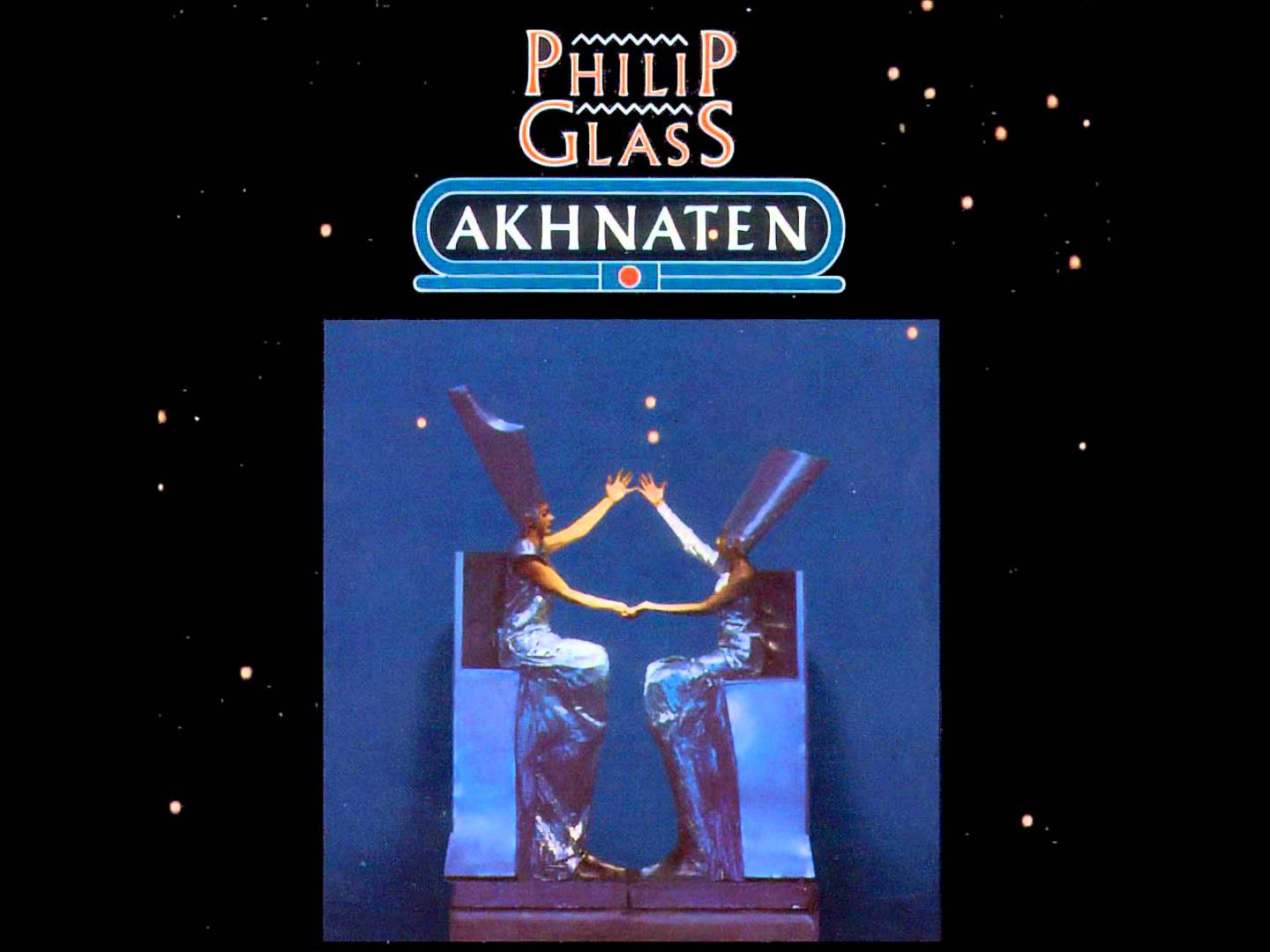
You don't just watch a Philip Glass opera. You succumb to it. If you’ve ever sat through a performance of Akhnaten, you know that specific feeling of time stretching, warping, and eventually disappearing altogether. It’s a sensory overload disguised as minimalism. LA Opera has brought Phelim McDermott’s legendary production back to the Dorothy Chandler Pavilion, and honestly, it’s even more vital than it was during its first run.
The buzz this time isn't just about the mesmerizing juggling or the slow-motion processions that make you hold your breath. It’s about the arrival of John Holiday in the title role. Taking over a part synonymous with Anthony Roth Costanzo is no small feat. It's a high-wire act. Yet, Holiday doesn't just fill the space; he redefines the emotional center of the entire show.
The Countertenor Power of John Holiday
Most people think of opera as booming tenors and glass-shattering sopranos. Akhnaten flips that. The Pharaoh is written for a countertenor—a male voice that sings in the female alto or soprano range. It’s an otherworldly sound. It’s meant to represent a ruler who was neither fully man nor woman, a revolutionary who tried to drag ancient Egypt into monotheism.
John Holiday brings a grounded, earthy strength to this ethereal vocal line. While some countertenors can sound thin or overly precious, Holiday’s voice has a rich, velvety texture. He captures the vulnerability of a man who thinks he’s a god and the terrifying isolation that comes with that belief. When he sings the "Hymn to the Sun" in the second act, the theater stays pin-drop silent. You aren't just hearing a song. You're witnessing a prayer that feels uncomfortably private.
He’s physically commanding, too. The production famously starts with the Pharaoh being stripped and then dressed in elaborate, heavy golden robes. It takes forever. Every movement is calculated. Holiday handles this slow-burn choreography with a grace that makes the eventual tragedy of the third act hit much harder. You see the human under the gold.
Why Minimalism Works Better Than Spectacle
We live in a world of three-second TikTok clips and constant digital noise. Glass’s music is the antidote. It relies on arpeggios that repeat and shift almost imperceptibly. To the uninitiated, it might sound repetitive. To those who let go, it’s a trance.
McDermott’s direction understands this perfectly. Instead of busy sets or frantic scene changes, he uses a troupe of jugglers. It sounds weird on paper. Why are there jugglers in ancient Egypt? But as the balls rise and fall in perfect synchronization with the rhythmic pulses of the orchestra, it starts to look like the movement of atoms or the ticking of a cosmic clock. It visualizes the music.
The Gandini Juggling ensemble performs feats that are objectively difficult, but they do it with a stoic, ritualistic calmness. They aren't there to show off. They are there to represent the passage of time and the fragility of Akhnaten’s new world. One dropped ball and the illusion breaks. That tension keeps you locked in for three hours.
The Visual Language of Tom Pye and Kevin Pollard
The aesthetic of this production is a fever dream of Victorian archaeology and ancient Egyptian iconography. It doesn't try to be historically "accurate" in a dry, textbook way. It tries to feel like how we imagine the past when we’re dreaming.
Tom Pye’s set design uses layers of scaffolding and translucent screens. It creates a sense of depth that feels infinite. Then you have Kevin Pollard’s costumes. They are massive. They are bizarre. Queen Tye wears a headdress that seems to defy gravity. Nefertiti and Akhnaten are often linked by long, flowing fabrics that suggest they are two halves of the same soul.
This isn't just eye candy. It’s storytelling through texture. When the revolutionary religious order begins to crumble, the costumes reflect that decay. The gold loses its luster. The movements become more jagged. The shift from the bright, sun-drenched second act to the dusty, ghostly third act is one of the most effective tonal shifts in modern stagecraft.
Dealing With the Glass Skeptics
I’ve heard the complaints. "It’s too long." "Nothing happens." "The music is just the same three notes."
If you go into Akhnaten expecting a traditional narrative with a clear A-to-B plot, you’re going to have a bad time. Glass isn't interested in that. He’s interested in the weight of history. The libretto is sung in Ancient Egyptian, Akkadian, and Biblical Hebrew. You aren't supposed to follow the words. You’re supposed to feel the vibrations.
The LA Opera orchestra, conducted by Karen Kamensek, handles the score with surgical precision. This music is deceptive. It looks easy but requires insane levels of endurance and focus. If the woodwinds are off by a fraction of a beat, the whole structure collapses like a house of cards. They don't miss. The brass sections provide a menacing undercurrent that reminds you that while Akhnaten is singing to the sun, his enemies are sharpening their knives in the shadows.
The Political Resonance of a 14th Century BC Ruler
Why do we keep coming back to a story about a failed religious revolution from thousands of years ago? Because Akhnaten was the first person to say, "The way we’ve always done things is wrong." He shut down the old temples. He built a new city in the desert. He forced a massive cultural shift overnight.
History eventually erased him. His successors chipped his name off the monuments. They tried to act like he never existed.
Watching this in Los Angeles, a city that constantly builds and rebuilds its own myths, feels particularly pointed. We see the ego it takes to change the world and the devastating cost of being "right" when everyone else wants to stay the same. Holiday’s performance captures that specific brand of arrogant holiness. He isn't a hero. He’s a catalyst.
Missing Out is a Mistake
Production of this scale doesn't happen often. The sheer number of people on stage, the complexity of the lighting, and the caliber of the vocal talent make this a massive logistical undertaking. It’s expensive, it’s risky, and it’s gorgeous.
If you’re on the fence because you think opera is "stuffy," this is the production that will change your mind. It’s closer to a high-concept art installation or a Cirque du Soleil show than a stuffy 19th-century drawing-room drama. It’s loud, it’s bright, and it stays with you for days.
Get a seat in the balcony if you can. You want to see the patterns the jugglers make from above. You want to see the way the light hits the stage floor. Don't worry about reading the program notes until the intermission. Just sit down, let the first few pulses of the strings hit you, and wait for John Holiday to emerge from the darkness.
Check the LA Opera schedule for the remaining dates this season. Bring someone who thinks they hate Philip Glass. Watch their face during the "Funeral of Amenhotep III" in the first act. That’s the moment the skepticism usually turns into awe. There are no more excuses to skip this. Go see it before the gold fades and the desert takes it back.