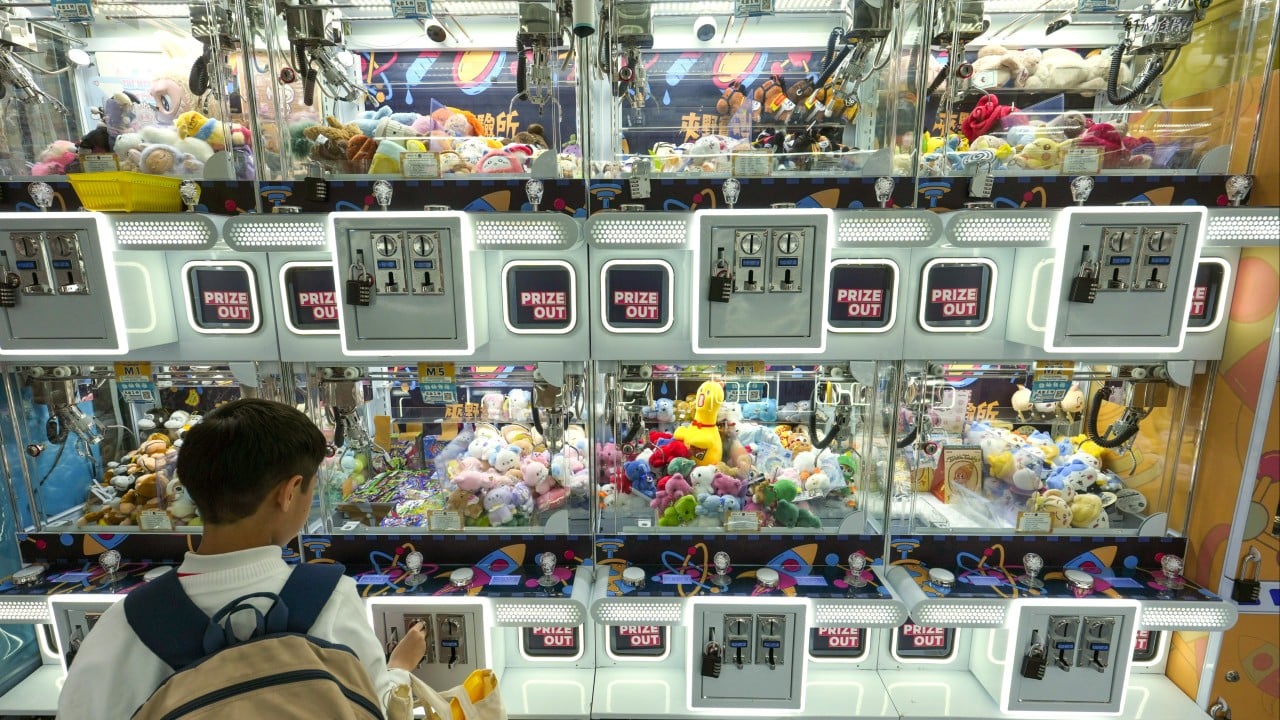
The neon glass boxes hum on the boardwalk, in the faded arcade corners, and just past the sliding doors of the local grocery store. Inside, a plush, oversized bear sits atop a mountain of cheap polyester clones. A child presses his face against the glass. He watches the metal three-pronged hand hover, drop, and close its grip around the bear’s neck. For a fraction of a second, the victory is real. The bear rises. Then, with a limp shudder, the metal fingers relax. The prize plummets back into the pile.
The child blinks, confused. He looks at his remaining quarters. He thinks he just timed it wrong.
He didn't. He was playing a computer program masquerading as a game of skill.
For decades, the claw machine has occupied a strange, unregulated twilight zone in our cultural subconscious. We treat it as a rite of passage, a harmless test of hand-eye coordination, or a minor tax on parental patience. But beneath the flashing lights and cheap synthesizers lies a complex matrix of behavioral psychology and pre-programmed mathematics. A new legislative push is about to rip the curtain away from these neon glass boxes, forcing operators to display the actual odds of winning right on the glass.
It is a small change on paper. In reality, it changes the entire nature of the game.
The Mechanics of Deception
To understand why governments are suddenly turning their attention to the humble arcade claw, you have to understand the mechanics of the modern amusement machine. Most people assume the claw works on simple physics. They believe that if you line up the gantry perfectly, you win.
That assumption is entirely wrong.
Modern claw machines are governed by internal logic boards that allow operators to precisely manage their inventory payout. The owner of the machine doesn’t leave profit to chance. Instead, they configure the machine’s "drop rate" based on the wholesale cost of the prizes inside.
Imagine a hypothetical scenario where a machine is filled with stuffed animals that cost the operator five dollars each. If the operator wants to make a fifty percent profit margin, they program the machine to only deliver a full-strength grip once every twenty attempts. For the other nineteen attempts, the electricity sent to the claw’s electromagnet is deliberately throttled. The claw will drop, it will wrap around the prize, but it will lack the physical force required to lift the weight.
It is engineered to fail.
This isn't a secret within the amusement industry, but it is entirely invisible to the consumer. When you slide your coins into the slot, you are not buying a turn at a game of skill. You are buying a ticket in a hidden lottery where the draw has already been decided by a microprocessor. The proposed legislation seeks to mandate that this payout ratio—the literal odds of the claw maintaining its grip—be clearly posted on the machine alongside the licensee’s official information.
The Psychology of the Near Miss
The real danger of the unblinking arcade machine isn't the loss of a few quarters. It is the psychological conditioning it inflicts, particularly on younger minds.
Behavioral scientists have long studied the phenomenon of the "near miss." When a claw lifts a prize, carries it halfway to the chute, and then drops it, the human brain does not register the event as a loss. It registers it as a near-win. This trigger releases a spike of dopamine, the exact same neurotransmitter responsible for keeping gamblers glued to slot machines in Las Vegas.
The machine mimics a game of skill so perfectly that the player blames themselves for the failure. If I had just nudged the joystick a millimeter to the left, they think. If I had just waited one more second. This cognitive distortion drives the player to dig into their pockets for another coin, convinced that mastery is just one more attempt away.
But you cannot out-skill an algorithm.
By forcing operators to display the odds, the new law aims to inject a dose of cold reality into this dopamine loop. When a player looks at the glass and sees a sign stating "Full grip strength occurs 1 in 15 games," the illusion vanishes. The game is unmasked. It shifts from an enticing challenge of coordination to a transparent math problem.
The Backlash from the Boardwalk
As with any regulation targeting a lucrative industry, the push for transparency has met with quiet resistance. Industry representatives argue that the charm of the arcade lies in the mystery, and that heavy-handed labeling will ruin the nostalgic magic for families. They claim the administrative burden of constantly updating percentage signs every time they swap out prizes from cheap plastic rings to expensive electronics will kill the thin margins of independent arcade owners.
There is a predictable friction when the law enters the realm of childhood nostalgia. We don't want to think of the local arcade as a mini-casino floor. We want to remember the smell of popcorn, the clatter of tokens, and the pure, unadulterated joy of finally hooking that elusive plush prize.
But nostalgia shouldn't serve as a shield for predatory design.
Consider the evolution of other gaming sectors. The video game industry faced massive scrutiny over "loot boxes"—virtual treasure chests bought with real money that contained randomized digital items. Governments worldwide stepped in, demanding that game developers publish the exact drop rates of these items. The sky did not fall. The games remained profitable, but consumers were finally given the autonomy to make informed decisions.
The claw machine is simply the physical ancestor of the digital loot box. It deserves the same scrutiny.
The Glass Becomes Clear
The implementation of these laws will likely change the landscape of our recreational spaces in subtle ways. Some operators may choose to convert their machines into "play-until-you-win" models to avoid the stigma of posting low success rates. Others might upgrade their stock, offering higher-quality prizes to justify a clearly stated, lower probability of winning.
The transparency will undoubtedly spark difficult conversations between parents and children next to the flashing lights. It is easy to say "no" to a child when the machine itself confesses that the odds are stacked against them. It transforms the interaction from a test of parental generosity into a practical lesson in economics and probability.
The next time you walk past a claw machine, look past the bright plush toys and the flashing LEDs. Look at the metal hand dangling from its steel cables. It is a beautiful piece of engineering, designed not to catch, but to let go.
Soon, a small sticker on the glass will tell you exactly how often those metal fingers intend to hold on. The magic might fade, but the truth will finally be within reach.