The air in the museum basement smelled of damp limestone, ancient dust, and hot plastic from a broken laminating machine. It was a Tuesday evening. The public had been gone for hours, leaving behind a silence so heavy you could almost hear the weight of the millions of years pressing down on the display cases.
I was standing under the shadow of a fossilized Trilobite, feeling that familiar, creeping numbness that hits anyone who spends too much time around paleontology. To a kid, a fossil is a dragon bone. To an adult, it often shrinks into a cold, gray rock with a Latin label no one can pronounce. We look at a remnant of the Cambrian explosion and see a chore. We see an obligation to be educated.
Then the night security guard’s kid, a scruffy nine-year-old named Leo, snuck past the velvet ropes. He didn't look at the prehistoric wood louse on the shelf. He looked at my notebook, saw a crude sketch of a Kabuto—a fictional, digital pocket monster from a video game—and his eyes ignited.
"That's a Water/Rock type," he whispered, his voice echoing off the concrete walls. "It uses Battle Armor to stop critical hits. It's basically invincible if you evolve it."
I looked from Leo's animated face back to the dead, stony eyes of the actual 400-million-year-old arthropod in the glass box. The real creature had survived three mass extinctions. The digital one lived inside a Nintendo Switch battery pack. Yet, to Leo, the creature made of pixels was vibrating with life, while the genuine miracle of evolutionary history was entirely invisible.
That gap is where modern education is failing. It is a quiet crisis of imagination. We are surrounded by the remnants of a breathtaking, real-world epic, but we have forgotten how to tell the story.
The Bridge Built of Pixels
Museum curators across the globe have been quietly panicking for a decade. Attendance drops. Attention spans wither under the onslaught of algorithmic feeds. The traditional solution has been to add touchscreens or interactive iPads next to the exhibits, but that misses the point entirely. You cannot cure an addiction to screens by offering a worse screen in a colder room.
The breakthrough did not come from a committee of educators analyzing pedagogical metrics. It came from an unexpected, wildly ambitious collaboration between the National Museum of Nature and Science in Tokyo and The Pokémon Company. They created the Pokémon Fossil Museum, a traveling exhibition that has been quietly transforming how a generation understands the history of our planet.
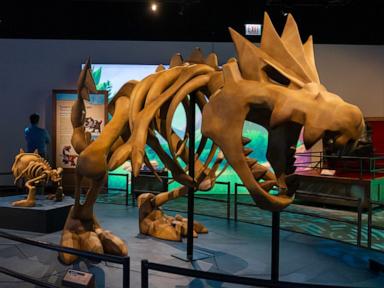
The concept sounds deceptively simple, almost like a corporate gimmick designed to sell plush toys. You place a life-sized model of an Omanyte next to an actual, coiled Ammonite fossil. You display a massive, terrifying skeleton of an Aerodactyl directly beside the delicate, wing-printed limestone of a real Pteranodon.
But when you walk through the space, you realize something profound is happening to the psychology of the visitors. The fiction is not distracting from the reality. The fiction is acting as a lens.
Consider the mechanics of how we learn. Humans are narrative engines; we cannot digest raw data without a story structure to hold it together. When a child looks at a standard museum label that reads "Ammonite, Devonian Period, marine mollusk," their brain registers a filing cabinet. Empty. Sterile.
When that same child sees Omanyte, they immediately think of its attributes. They know it lived in primeval oceans. They know it had to develop a hard shell to defend against brutal predators. They understand its weight, its vulnerabilities, and its struggle for survival because they have guided that creature through hundreds of digital battles. By placing the real fossil next to the digital avatar, the museum instantly transfers that entire web of empathy and emotional investment onto the ancient stone.
The rock becomes alive.
The Archaeology of Our Own Wonder
I watched a woman in her late forties stop dead in her tracks in front of the Tyrantrum display. Tyrantrum is a massive, bipedal dragon Pokémon adorned with a collar of white fur-like feathers. Next to it sat the reconstructed skull of a Tyrannosaurus rex.
For decades, popular culture gave us a T. rex wrapped in dull, lizard-like green skin. Science moved on. Paleontologists discovered evidence of proto-feathers, completely shifting our understanding of how these apex predators looked and regulated their temperature. Yet, textbook printing cycles are slow, and public imagination is stubborn.
The video game, however, updated its mythology in real-time. It gave the digital monster the feathers the real dinosaur possessed.
The woman was staring at the feather tracks on the fictional model, then tracing the bone structures on the real skull with her finger, just inches from the glass. She was smiling. It wasn't the polite smile of someone enduring a cultural outing. It was the sharp, sudden grin of a person who just solved a riddle they didn't know they were playing.
"I thought they were just monsters," she muttered to no one in particular.
This is the hidden mechanics of the exhibition. It leverages a psychological phenomenon known as structural alignment. When we compare two things that share a deep, underlying system of rules, our brains automatically filter out the superficial differences to focus on the core truths. The differences between a cartoon monster and a fossilized apex predator fade away. What remains is the beautiful, terrifying logic of adaptation.
The exhibit forces us to ask the questions that matter: Why did this shape evolve? What broke this bone? What did it feel like to move through an environment that wanted to consume you?
The Anatomy of Extinction
To understand the real gravity of this approach, look at the way the exhibit handles the most difficult concept in natural history: the sheer, devastating finality of extinction.
In the games, players visit a fictional research laboratory where they hand over a piece of rock—a "Helix Fossil" or a "Old Amber"—to a scientist in a white coat. The scientist plugs it into a machine, lights flash, and a living, breathing creature is generated. It is a clean, consequence-free resurrection.
But the museum exhibit pulls a brilliant, heartbreaking bait-and-switch.
As you move through the hall, the colorful, dynamic artwork of the living Pokémon begins to give way to large, monochromatic diagrams detailing the specific geological catastrophes that wiped out their real-world inspirations. You see the ash layers. You see the sudden, violent shifts in ocean chemistry.
The contrast hits like a physical blow. The child realizes that in the real world, there is no laboratory. There is no resurrection machine. When the Ammonites vanished sixty-six million years ago, the line was cut forever. The genetic code, the behavior, the unique way they floated through the dark Mesozoic water—all of it collapsed into silence.
The digital creature becomes a monument to what cannot be brought back.
This is not just about teaching kids the difference between a sauropod and a Bastiodon. It is about instilling a sense of deep-time literacy. We live in a culture obsessed with the next quarter, the next news cycle, the next notification. We measure our lives in seconds and seasons. We are fundamentally blind to the scales of time that matter to the earth.
By using characters that exist entirely in the immediate present of contemporary culture, the exhibit stretches the visitor's timeline backward by three hundred million years. It connects the plastic toy in a child's hand to the tectonic movements that shaped the continents they stand on.
The Stones Remember
Back in the basement on that quiet Tuesday night, I gave Leo my notebook. I watched him flip through the pages, his small fingers smudging the graphite lines of my drawings.
He stopped at a page where I had tried, and failed, to sketch the complex suture lines on an ammonite shell—those intricate, fractal patterns where the inner walls of the shell met the outer casing, designed to withstand the crushing pressure of the deep sea.
"Why did it look like that?" he asked. He wasn't talking about the Pokémon anymore. He was pointing at the photograph of the real fossil pinned to my board.
"To survive the dark," I told him. "The deeper it went, the harder the ocean tried to crush it. Those squiggly lines kept it whole."
Leo looked back at the display case across the room. The little trilobite sat under its low-wattage bulb, unassuming, gray, and impossibly old. The boy didn't run toward it. He didn't make a sound. He just walked over slowly, pressed his nose against the cool glass, and stood there for a very long time, watching a rock breathe.
The magic of this cross-generational experiment isn't that it makes science fun. "Fun" is cheap. Entertainment is disposable.
The magic is that it makes science reverent. It takes the fierce, possessive love that a child has for a fictional universe and hooks it directly into the veins of reality. It proves that the world we inhabit is not a static stage built for us, but an ancient, shifting graveyard of beautiful, bizarre experiments.
We do not need to invent dragons to capture the imagination of our children. We just need to show them that the dragons were real, that they left their bones in our backyards, and that their stories are still being written in the very structure of our DNA.