The Law and Order Myth
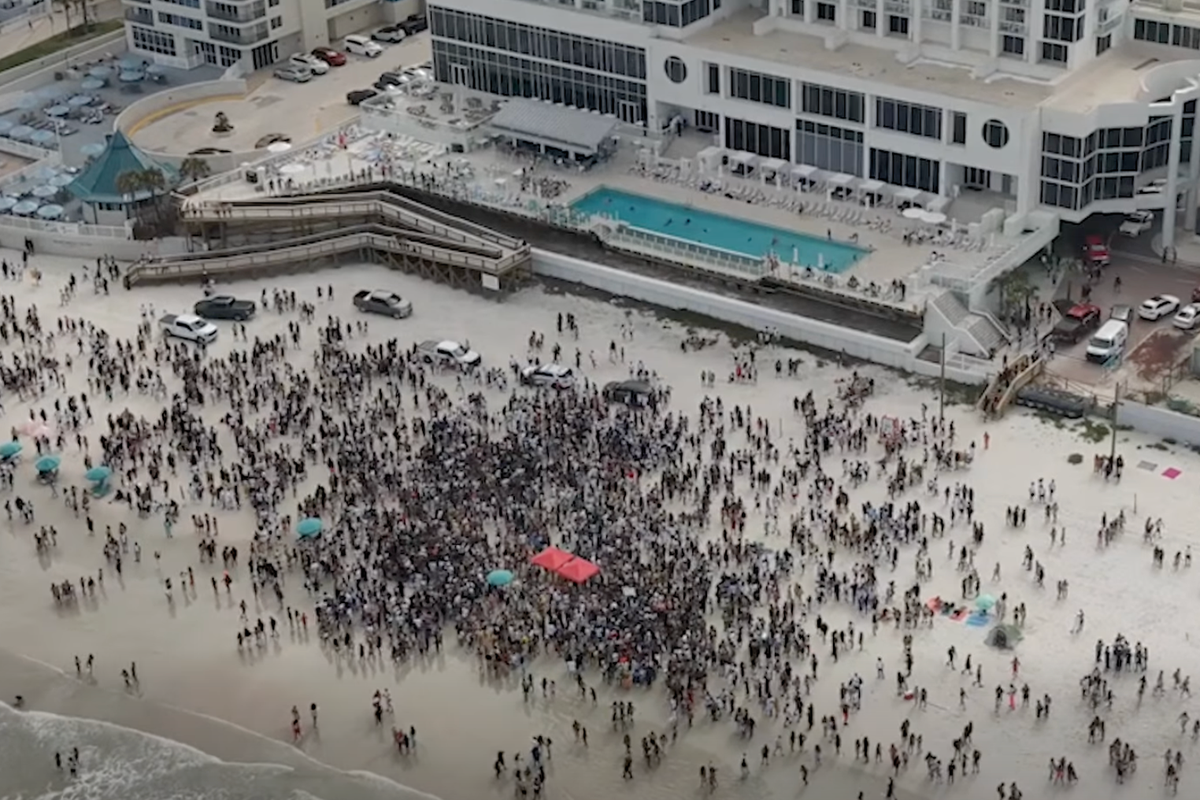
Every March, the same script plays out. Local news anchors in Panama City Beach or Miami Beach put on their "serious" faces. They stand in front of a grainy cell phone video of a street party and talk about "lawlessness" and "takeovers." They interview a mayor who promises to "shut it down."
It is a performance.
The media loves the spectacle of a police line. The politicians love the optics of "protecting our families." But here is the reality they won't say into a microphone: The chaos isn't a failure of the system. It is the system.
Florida’s economy is built on a foundation of managed volatility. These "takeovers" aren't an invasion of outsiders ruining a pristine paradise; they are the natural consequence of a state that has spent fifty years marketing itself as a place where the rules don't apply, only to act shocked when people actually show up and break them.
The Revenue Addiction
Let’s look at the math. In 2023, Florida saw over 140 million visitors. A massive chunk of that tax revenue—the money that keeps Florida’s "no state income tax" dream alive—comes from the very demographics the police are now pepper-spraying.
When a city like Miami Beach implements a "breakup" with spring break, they aren't just fighting crime. They are committing economic arson. They want the high-end traveler—the guy who buys a $400 steak and goes to bed by 11:00 PM—but that guy doesn't fill the volume required to sustain the infrastructure.
You can't build a massive hospitality machine designed for high-density turnover and then complain when the density shows up. It’s like a casino complaining that people are gambling too much.
The "Takeover" is a Marketing Win, Not a Security Failure
The term "takeover" is used to imply a coordinated, hostile act. It isn't. It’s a spontaneous assembly fueled by social media algorithms that prioritize high-energy environments.
Law enforcement agencies claim they are "overwhelmed." I’ve worked in high-risk logistics and large-scale event management for fifteen years. I’ve seen what happens when you actually want to control a crowd. You don't do it with sirens and riot gear after the crowd has already formed. You do it with urban design, flow management, and proactive engagement.
Florida cities choose the riot gear because it’s a better political narrative.
- The Narrative: "We are protecting our streets from thugs."
- The Reality: "We failed to design our cities to handle the very people we spent millions in advertising dollars to attract."
If you look at the geography of these "takeovers," they happen in the same three or four spots every year. If the police are truly "surprised" by a crowd on Ocean Drive in mid-March, they are either incompetent or lying. I’m betting on the latter. It is easier to ask for a budget increase for "emergency response" than it is to admit you have no idea how to manage a modern, digitally-connected populace.
The Classist Architecture of "Safety"
Notice who gets labeled as a "rioter" versus a "reveler."
When a thousand college kids from the Big Ten schools drink themselves into a stupor on a beach, it’s "youthful indiscretion." When a similar number of locals or visitors from different demographics do the same thing on a city street, it’s a "public safety crisis."
The "chaos" is a dog whistle for displacement. These cities want to use these incidents as an excuse to hike parking rates to $100, shut down local businesses that cater to lower-income brackets, and effectively "curate" the beach.
But here is the downside to that contrarian strategy: when you sanitize a destination, you kill its soul. And when the soul dies, the value drops. Ask Atlantic City. They tried to "clean up" and ended up with a sterile environment that nobody wanted to visit. Florida is flirting with the same fate.
The Social Media Feedback Loop
We have to talk about the "Algorithm of Unrest."
A "takeover" is a content farm. Every teenager with a smartphone is a broadcaster. They aren't just there for the party; they are there for the evidence of the party. The more aggressive the police response, the more "viral" the event becomes.
The heavy-handed tactics used by Florida law enforcement actually incentivize more chaos. It raises the stakes. It makes the location "legendary" for the next weekend.
If you want to stop a takeover, you make it boring. You don't bring out the BearCat armored vehicles; you turn off the streetlights and stop the music. But "boring" doesn't get you a segment on Fox News, and it doesn't get a police chief a seat at the governor’s table.
Stop Trying to "Fix" Spring Break
The most common question I hear is: "How do we make the beaches safe again?"
It’s the wrong question. The beaches are, statistically, safer than they were in the 1980s. The crime rates during spring break are often lower per capita than during major sporting events or conventions that get half the scrutiny.
The real question is: "How do we stop being hypocrites about our business model?"
Florida wants the money without the mess. It’s a childish expectation. If you are going to run a state based on tourism, sunshine, and "freedom," you have to accept that freedom is messy.
The Brutal Truth About "Takeover" Prevention
If these cities were serious about stopping chaos, they would do three things tomorrow:
- Abolish the "Curfews" that Create Bottlenecks: Curfews don't disperse crowds; they compress them into a single hour of high-tension confrontation.
- Tax the Platforms, Not the People: If a social media "influencer" organizes a 5,000-person meet-up on public land, they should be billed for the cleanup.
- Invest in Permanent Event Infrastructure: Stop treating March like an unexpected disaster. It happens every year. Build the plazas, the bathrooms, and the security outposts to handle it permanently.
The Cost of the "Breakup"
Miami Beach’s "breakup" with spring break in 2024 was hailed as a success because the streets were empty. But look at the balance sheets. Small businesses—the ones owned by people who actually live in Florida—took a massive hit.
The "chaos" was replaced by a void. And in the world of travel and hospitality, a void is a death sentence. People don't fly to Florida for "quiet and orderly." They fly to Florida for the energy.
When you kill the energy to satisfy a few vocal retirees in high-rise condos, you are eating your seed corn. You are trading your long-term economic engine for a short-term peace of mind that won't last anyway.
The Inevitability of the Next Surge
Nature abhors a vacuum, and so does a twenty-year-old with a spring break budget.
By cracking down on the "traditional" spots, Florida isn't stopping the parties. It’s just pushing them into residential neighborhoods and "unprotected" zones. This is the "Whack-a-Mole" security theory. I’ve seen this fail in every industry from cybersecurity to urban planning.
When you block the main artery, the pressure builds in the capillaries. You end up with "takeovers" in suburban strip malls and quiet residential blocks where there are zero police resources.
The "chaos" in Florida isn't a problem to be solved. It’s a reality to be managed. The more the state tries to "dismantle" the spring break culture, the more violent and unpredictable the eruptions will become.
You can't market "The Wildest Beaches in America" for fifty years and then expect everyone to behave like they’re at a library.
Stop complaining about the monster you spent billions of dollars to create. Either embrace the mess or find a new way to pay your bills. You can't have it both ways.
The police aren't losing the "war" on spring break. They are just the opening act for a show that the state of Florida refuses to cancel because the ticket sales are too good.