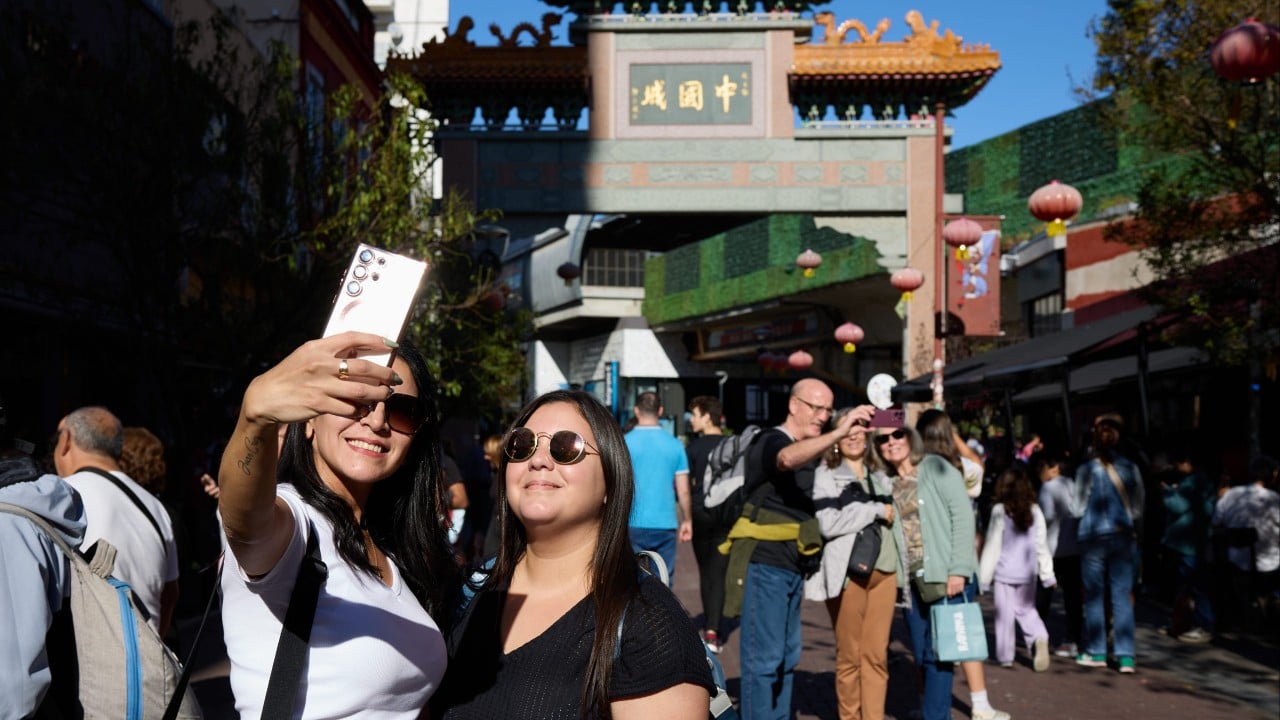
Staying within your own bubble is comfortable. It's safe. For many Chinese people living overseas, that comfort zone becomes a cage. We move thousands of miles across oceans just to end up eating at the same Sichuan spots, scrolling WeChat for ten hours a day, and only befriending people who grew up in the same province. It's a waste.
I've seen it happen in London, Sydney, and Vancouver. Brilliant people with massive potential shrink their worlds until they're essentially living in a miniature version of Shanghai with worse weather. They miss the entire point of being abroad. Integration isn't about "losing your culture" or becoming a carbon copy of the locals. It's about expansion. If you aren't engaging with the society around you, you're just a long-term tourist paying local taxes.
I don't keep to myself. I never have. Doing so would have robbed me of the most valuable insights I've gained while living outside China.
Breaking the WeChat Grip
Social media is the biggest barrier to actual integration today. Years ago, moving abroad meant a clean break. You had to learn the local slang because you didn't have a choice. Now, you can fly to New York and never leave the Chinese digital ecosystem.
The algorithms are designed to keep you inside a familiar loop. You see the same news, the same memes, and the same grievances as people back home. It creates a psychological tether. When you spend all your time on Xiaohongshu looking for "the best authentic bubble tea in Manchester," you're actively ignoring the 99% of the city that doesn't fit into that specific aesthetic.
Stop checking your phone the second you sit on a train. Look at the people around you. Read the local papers, even if the politics seem boring at first. You need to understand the friction and the joy of the place where you actually live, not just the digital ghost of the place you left.
Why We Self Isolate
We need to be honest about why this happens. It's not just laziness. Fear of judgment is a massive factor. Many Chinese expats worry their English or French isn't "perfect" enough to join a conversation at a pub or a neighborhood meeting. They're afraid of being misunderstood or, worse, being seen as an outsider.
The irony? Staying in a bubble only reinforces that outsider status.
There's also the pressure of the "community." Sometimes, other Chinese expats make you feel like a traitor for branching out. I've heard the snide remarks about people being "too Westernized" just because they'd rather go hiking with a local group than play mahjong for the third night in a row. Ignore that noise. Your identity isn't so fragile that a few non-Chinese friends will shatter it.
The Professional Cost of the Bubble
Isolation kills careers. You can be the most talented coder or analyst in the room, but if you only communicate with the "Chinese clique" at the office, you're invisible to leadership.
Business in the West runs on informal networks. It's the "coffee chat" or the quick drink after work where the real decisions get made. If you skip those because you're rushing home to your familiar social circle, you miss the context. You miss the nuances of how power works in your specific industry.
I’ve watched talented Chinese professionals get passed over for promotions not because of a lack of skill, but because they didn't "fit" the culture. And they didn't fit because they never bothered to learn the rules of the game. They stayed in the corner.
Identity Is Not a Zero Sum Game
People think integration is a trade-off. They think if they embrace local traditions, they're somehow throwing away their heritage. That's a logical fallacy.
You can love a good Sunday roast and still make incredible dumplings for Lunar New Year. You can debate local housing policy and still care deeply about what's happening in Beijing or Guangzhou. These things don't cancel each other out. In fact, they make you a more complex, interesting person.
The most successful Chinese people I know abroad are those who act as bridges. They understand both worlds. They can navigate a Western boardroom with ease and then turn around and negotiate a deal with a supplier in Shenzhen. You can't be a bridge if you're only standing on one side of the river.
How to Start Pushing Back
You don't need to change your entire personality overnight. Start small. Join a club that has nothing to do with being Chinese. It could be a run club, a pottery class, or a local volunteer group. The key is to find a shared interest that transcends ethnicity.
When you're around people who don't share your background, you're forced to explain yourself. You have to find common ground. It's exhausting at first. Your brain will hurt from the linguistic and cultural gymnastics. But that's where the growth happens.
Practical Steps for the Next Week
- Delete or Limit the Apps: Set a timer on your WeChat or Xiaohongshu usage. Force yourself to get your news from a local source for at least three days.
- The 50 Percent Rule: Try to ensure at least half of your social interactions in a week are with people outside your "default" group.
- Say Yes to the "Weird" Invitation: If a coworker invites you to something you don't quite understand—a cricket match, a weird experimental play, a housewarming—just go. The goal isn't necessarily to enjoy the event. The goal is to see how other people live.
- Speak Up in Public: Don't just be the quiet observer. Ask a question at a community meeting. Start a conversation with a neighbor about their garden. Break the "quiet" stereotype through sheer repetition.
Life abroad is expensive, difficult, and often lonely. Don't make it harder by building a wall around yourself. The world is much bigger than your social media feed. Go see it. Go talk to it. Stop being a spectator in your own life. Use the city you live in. All of it. Use the library, the dive bars, the community centers, and the parks. If you're going to live overseas, actually live there. Your heritage will still be there when you get home. It isn't going anywhere. But the opportunity to truly understand a different way of life might. Don't let it slip away while you're staring at a screen.