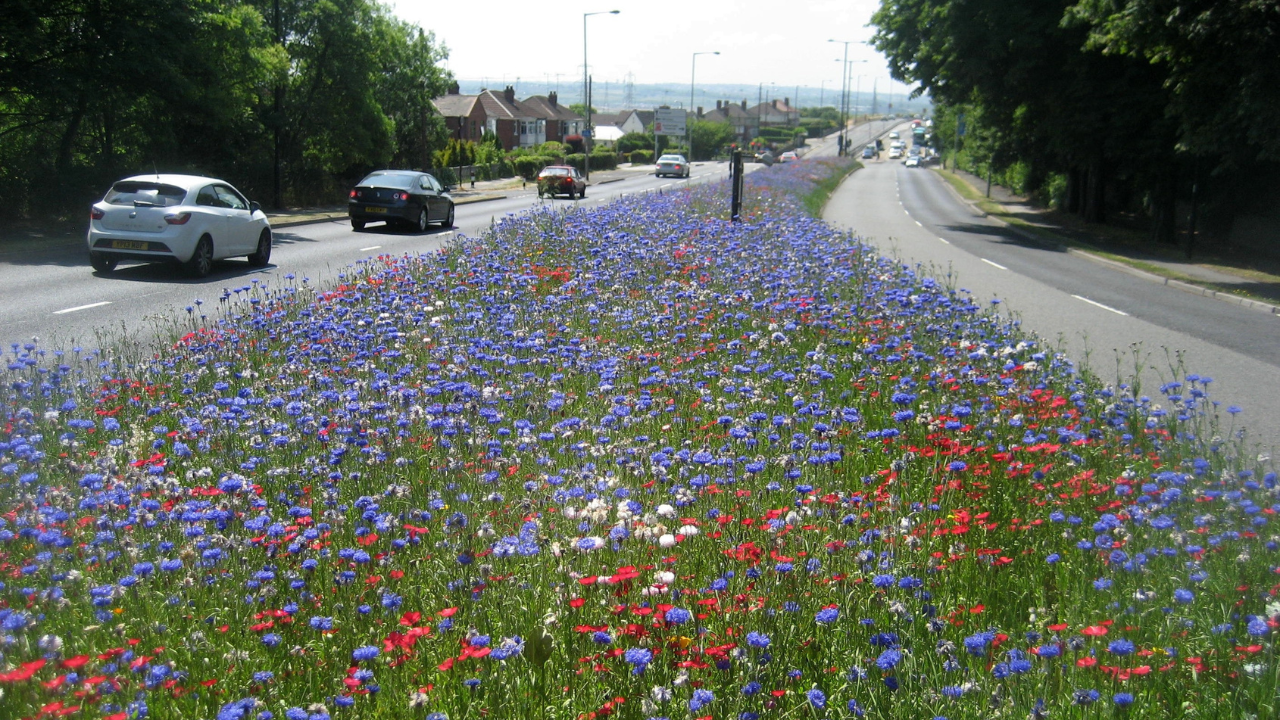
Saving £25,000 is not a victory. It is a rounding error in a municipal budget used to mask a total lack of ecological ambition.
The viral narrative surrounding towns like Weymouth—where eight miles of roadside grass were left to grow wild—is being hailed as a "nature recovery" miracle. The headlines scream about rare orchids and butterflies returning "instantly." They frame the cessation of mowing as a radical act of environmentalism.
It isn't. It is a cost-cutting exercise rebranded as a "green" initiative.
If you stop mowing a lawn, you don't get a meadow. You get a mess of competitive, nitrogen-loving weeds that eventually choke out the very biodiversity you claim to be protecting. We are currently witnessing a massive, nationwide confusion between "rewilding" and "neglect."
The High Cost of Doing Nothing
The "lazy consensus" suggests that humans are the problem and our absence is the solution. This is a fundamental misunderstanding of the British landscape. Our most biodiverse habitats—chalk grasslands, hay meadows, and heathlands—are not "wild." They are the result of centuries of specific, high-intensity management.
When a council stops mowing a verge, they are usually doing so because it saves money on diesel and labor. But true meadow restoration is more expensive than regular mowing, not less.
If you want a meadow, you have to manage the nutrient levels. Most roadside soil is a high-nitrogen environment thanks to decades of car exhaust fumes and runoff. In high-nutrient soil, a few species like perennial ryegrass, nettles, and docks will dominate. They grow fast, they grow tall, and they create a monoculture that smothers delicate wildflowers.
To actually "bring nature back," you can't just walk away. You have to:
- Strip the Topsoil: Remove the nutrient-rich layer to allow specialized plants to take hold.
- Scarify: Break the surface to create space for seeds.
- Sow Yellow Rattle: A parasitic plant that feeds on grass, weakening it enough for flowers to compete.
- The "Cut and Collect" Method: You must mow the grass and, crucially, remove the clippings.
If you leave the clippings to rot, you are just pumping fertilizer back into the ground, ensuring that next year’s crop of "biodiversity" is nothing but six-foot-tall thistles. The £25,000 saved by not mowing is usually spent elsewhere, while the verge becomes an ecological wasteland disguised as a jungle.
The Aesthetic Trap
We have been conditioned to believe that "long grass equals good." This is a shallow, aesthetic-driven environmentalism.
I have spent years looking at "rewilded" plots that are, for all intents and purposes, dead zones. A patch of long grass might look "natural" to a commuter in a Peugeot, but if that patch is 95% couch grass, it provides almost zero pollen for bees and no variety for larvae.
Contrast this with a well-managed, short-sward grassland. When we maintain diverse heights through strategic grazing or timed cutting, we create niches. Some insects need the heat of bare earth; some need the moisture of thick tufts. By simply "letting it grow," councils create a uniform canopy that serves almost no one.
Safety Is Not a Dirty Word
There is a reason we started mowing verges in the first place: visibility.
The "stop the mow" movement often ignores the basic physics of road safety. Tall vegetation at junctions and on bends kills people. When councils prioritize the idea of a bee over the reality of a clear line of sight, they are playing a dangerous game with public liability.
In the Weymouth case, and others like it, there is often a quiet "correction" a year or two later. Residents complain about obscured signs. Cyclists complain about encroaching brambles. Pedestrians find themselves pushed closer to traffic because the "wild" verge has overtaken the pavement.
The inevitable result? The council sends out a tractor to scalp everything back to the mud in the middle of summer—exactly when the insects are most active. This "boom and bust" cycle of management is far more damaging than a regular, predictable mowing schedule.
The Real Biodiversity Crisis
If we actually cared about nature recovery on our roadsides, we would be talking about connectivity, not just "not mowing."
Eight miles of long grass is a drop in the ocean. It’s a performative gesture. The real issue is that our road networks act as barriers to species movement. We should be discussing "green bridges," culvert restorations for amphibians, and the removal of light pollution that disrupts nocturnal pollinators.
Instead, we celebrate a council for keeping its mowers in the shed.
The Actionable Alternative
Stop demanding that your local council "stops mowing." Start demanding that they manage properly.
- Demand Cut and Collect: This is the gold standard. It requires specialized machinery that vacuums up the cuttings. It is more expensive. It is less "efficient" for the budget. But it is the only way to actually lower soil fertility and encourage wildflowers.
- Targeted Mowing: Maintain a "neat" strip (one mower's width) at the edge of the road or path. This signals that the area is being managed, keeps sightlines clear, and allows the interior to be a functional habitat.
- Stop the Seed Mix Scam: Many "wildflower" mixes sold to councils are filled with non-native annuals (like California poppies) that look great for a selfie but provide little value to local specialists. We need native perennials.
We are currently patting ourselves on the back for doing less. We are mistaking budget cuts for a moral victory. If we want a landscape that actually supports life, we have to stop being lazy. Nature doesn't need us to "get out of the way"—it needs us to stop treating the environment like a line item on a balance sheet.
You don't get an ecosystem for free. Pay the £25,000. Hire the specialists. Do the work. Anything else is just weeds.