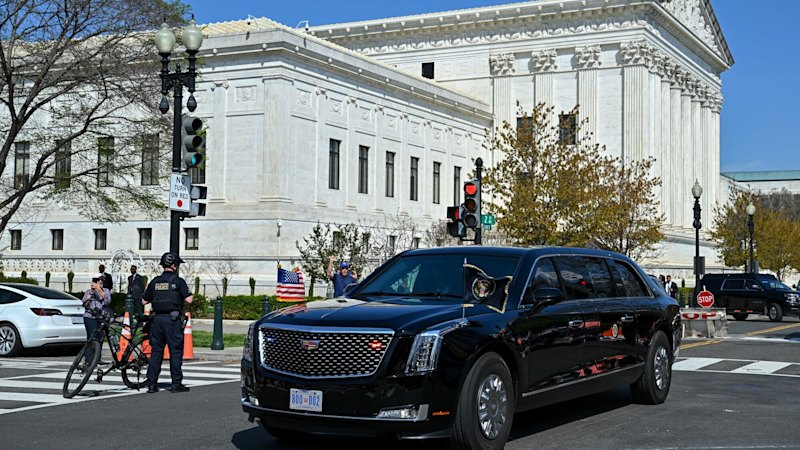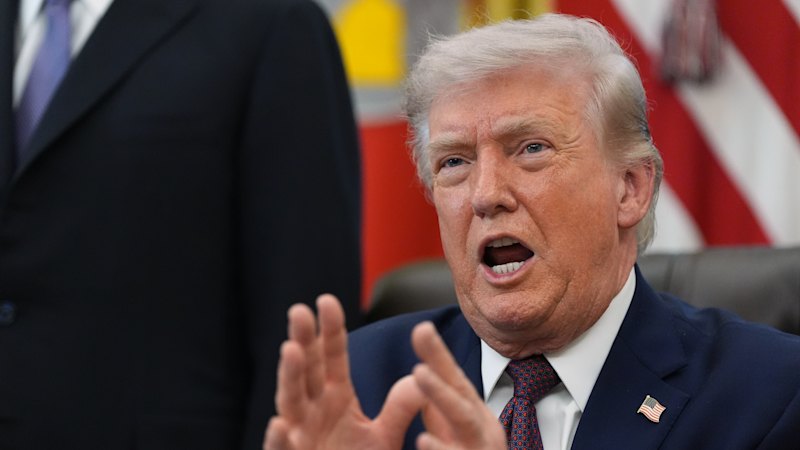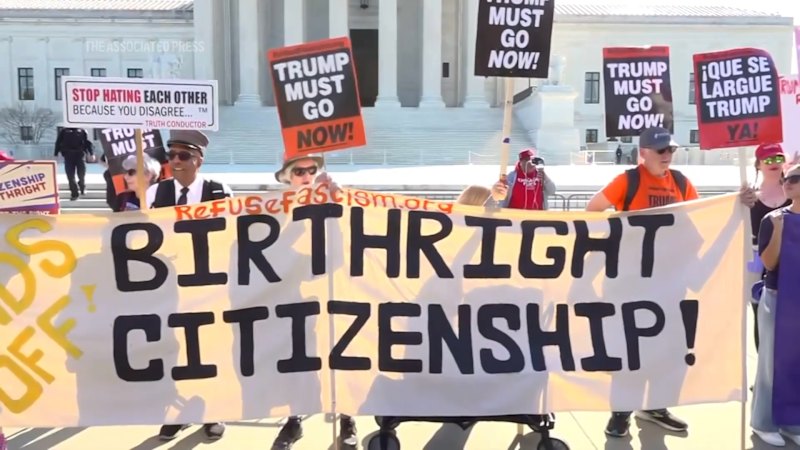
The legal crusade to dismantle birthright citizenship is hitting a granite wall at the Supreme Court. Despite the political theater surrounding Executive Orders and campaign promises, the judicial reality is far more rigid than the rhetoric suggests. Legal analysts and historians agree that the Fourteenth Amendment provides a near-impenetrable shield for children born on U.S. soil, regardless of their parents' immigration status. The high court, even with its current conservative makeup, shows little appetite for the radical historical revisionism required to upend over a century of settled law.
The Ghost of Wong Kim Ark
To understand why birthright citizenship remains secure, one must look back to 1898. The case of United States v. Wong Kim Ark is the definitive anchor of this debate. Wong Kim Ark was born in San Francisco to Chinese parents who were subjects of the Emperor of China. When the government tried to deny him re-entry into the U.S. after a trip abroad, claiming he wasn't a citizen, the Supreme Court stepped in.
The Court ruled that the "jurisdiction" mentioned in the Fourteenth Amendment is territorial, not political. If you are born within the physical boundaries of the United States, you are under its jurisdiction. It does not matter if your parents owe allegiance to a foreign crown or a different republic. This precedent has survived decades of shifting political winds because it relies on a plain reading of the text.
Conservative jurists often champion "originalism," the idea that the Constitution should be interpreted as it was understood at the time of its writing. In 1868, the authors of the Fourteenth Amendment were explicitly trying to move away from the "blood-based" citizenship models of Europe. They wanted a system that was objective and geographical. By staying true to originalist principles, the current Court finds itself boxed in. They cannot strike down birthright citizenship without also striking down the very interpretive method they claim to revere.
The Misinterpretation of Subject to the Jurisdiction
Opponents of birthright citizenship frequently point to the phrase "and subject to the jurisdiction thereof" as a loophole. They argue this implies a requirement of total political allegiance, which undocumented immigrants or foreign tourists cannot provide. They suggest that "jurisdiction" means more than just following the law; it means being a member of the political body.
This argument falls apart under basic legal scrutiny. If an undocumented person commits a crime on U.S. soil, they are prosecuted in U.S. courts. They are, quite literally, subject to the jurisdiction of the United States. The only groups historically excluded from this definition were the children of foreign diplomats—who have sovereign immunity—and members of Native American tribes, who were then considered citizens of their own sovereign nations.
The Diplomatic Exception
Foreign diplomats are not subject to U.S. laws in the same way a resident or visitor is. If a diplomat’s child is born in D.C., they do not get a blue passport because their parents are legally "invisible" to our domestic courts. This is a narrow, specific carve-out. Attempting to expand this tiny exception to include millions of people living, working, and paying taxes in the country is a legal stretch that few justices are willing to make. It would turn the "exception" into the rule, effectively breaking the internal logic of the Amendment.
The Chaos of Retroactive Status
Beyond the ivory towers of constitutional theory lies a logistical nightmare. If birthright citizenship were suddenly restricted, the United States would instantly create a permanent underclass of stateless individuals.
Imagine a scenario where the Court rules that citizenship requires at least one parent to be a legal resident. Overnight, the status of millions of people becomes a question mark. Who tracks the lineage? Does the government begin auditing birth certificates from thirty years ago? The administrative burden alone would collapse the immigration system.
Furthermore, the "consensual" theory of citizenship—the idea that the government must consent to someone becoming a citizen—is a concept that exists nowhere in the Constitution’s text. Our system is designed to be automatic to avoid the very corruption and bias that "consensual" systems invite. If citizenship becomes a gift granted by the state rather than a right earned by birth, it becomes a tool of political patronage.
The Conservative Judicial Dilemma
Justice Clarence Thomas and Justice Antonin Scalia, during his tenure, often emphasized that the Court’s job is not to fix perceived social problems but to apply the law as written. The text of the Fourteenth Amendment says: "All persons born or naturalized in the United States, and subject to the jurisdiction thereof, are citizens of the United States."
It does not say "All persons born to legal residents."
It does not say "All persons born to citizens."
For a textualist, the absence of these qualifiers is the end of the discussion. To add them now would be "legislating from the bench," the very sin that conservative legal circles have spent forty years decrying. This puts the conservative wing of the Court in a bind. They can either satisfy a specific political base by restricting citizenship, or they can maintain their judicial integrity by upholding the text. Most signs point to them choosing the latter.
The Shadow of Statutory Challenges
While a direct challenge to the Fourteenth Amendment is likely to fail, some anti-immigration groups are eyeing a different path: statutory changes. They argue that Congress has the power to define what "subject to the jurisdiction" means through legislation.
This is a dangerous gamble. If Congress can redefine constitutional terms through simple legislation, then the Constitution is no longer the supreme law of the land; it is merely a suggestion that can be edited by whoever holds a majority in the House and Senate. The Supreme Court is historically jealous of its power to interpret the Constitution. It is unlikely to hand that power over to the legislative branch, especially on a matter as fundamental as who belongs to the American polity.
The Reality of Executive Orders
Campaign rhetoric often includes the promise of ending birthright citizenship via Executive Order on "Day One." In the world of constitutional law, this is a non-starter. An Executive Order cannot override a Supreme Court precedent, and it certainly cannot override the Constitution.
Any such order would be stayed by a district court within hours. It would then wind its way through the appellate system, only to face the same 1898 precedent that has stood for over a century. The executive branch manages the enforcement of laws; it does not have the authority to rewrite the qualifications for citizenship. This is a basic separation of powers issue that transcends the immigration debate.
The Economic Ghost in the Courtroom
While the Justices rarely admit to considering economic impact, the subtext of their decisions often reflects a desire for national stability. Removing birthright citizenship would create massive ripples in the labor market and the housing sector.
A country with a massive, growing population of non-citizens who can never gain status is a country primed for civil unrest. The Court knows this. They have seen the "guest worker" models in other nations fail to integrate populations, leading to fractured societies. The American model of "birthright" has been the primary engine of assimilation. It ensures that the second generation is fully invested in the American project. Breaking that engine would be a self-inflicted wound to the national fabric.
The Federalism Argument
There is also the matter of state interests. States like California and Texas have vast populations that would be affected by a change in citizenship rules. These states rely on clear, bright-line rules for determining who is eligible for state-funded programs, licensing, and voting. A murky, lineage-based citizenship system would force states to build their own massive bureaucracies to verify the status of every child born in a local hospital. The Supreme Court generally avoids imposing such unfunded, chaotic mandates on the states unless the Constitution absolutely requires it. Here, the Constitution requires the opposite.
The Hard Truth of Judicial Precedent
The Supreme Court operates on the principle of stare decisis—the idea that yesterday’s decision should guide today's. To overturn birthright citizenship, the Court would have to admit that it has been wrong for 125 years. It would have to admit that the authors of the Reconstruction Amendments didn't understand the words they wrote.
The evidence for such a massive reversal simply isn't there. The arguments against birthright citizenship are largely based on policy preferences and political anxieties, not on a new discovery of historical fact or a flaw in the original legal logic. In the cold light of a Supreme Court hearing, policy preferences lose to the black-letter law.
The wall that Donald Trump wants to build around American citizenship is not made of steel or concrete; it is made of legal theories that have already been rejected by the highest authority in the land. The Fourteenth Amendment was written to end the "Dred Scott" era, where citizenship was a matter of race and bloodline. Reverting to a system where citizenship is conditional would be a retreat into the very darkness the Amendment was designed to extinguish.
The legal reality remains unchanged: if you are born here, you are one of us. No Executive Order or campaign speech can erase the ink on the Constitution. The Supreme Court isn't likely to reject the limit because they are "liberal" or "pro-immigrant"; they will reject it because they are bound by the text they swore to protect. The fight over the border will continue, but the definition of an American remains anchored in the soil.