The air inside an airplane cabin at 3:00 AM is thin, dry, and smells faintly of recycled anxiety. You are suspended thirty thousand feet above the South China Sea, trapped in that purgatory between time zones where your body forgot who it was three meals ago. Most airports at the end of a long-haul flight feel like an interrogation room—harsh fluorescent lights, the squeak of linoleum, and the soul-crushing weight of a three-hour queue at immigration.
But as the wheels of the Boeing 777 touch down on the reclaimed land of Chek Lap Kok, something changes.
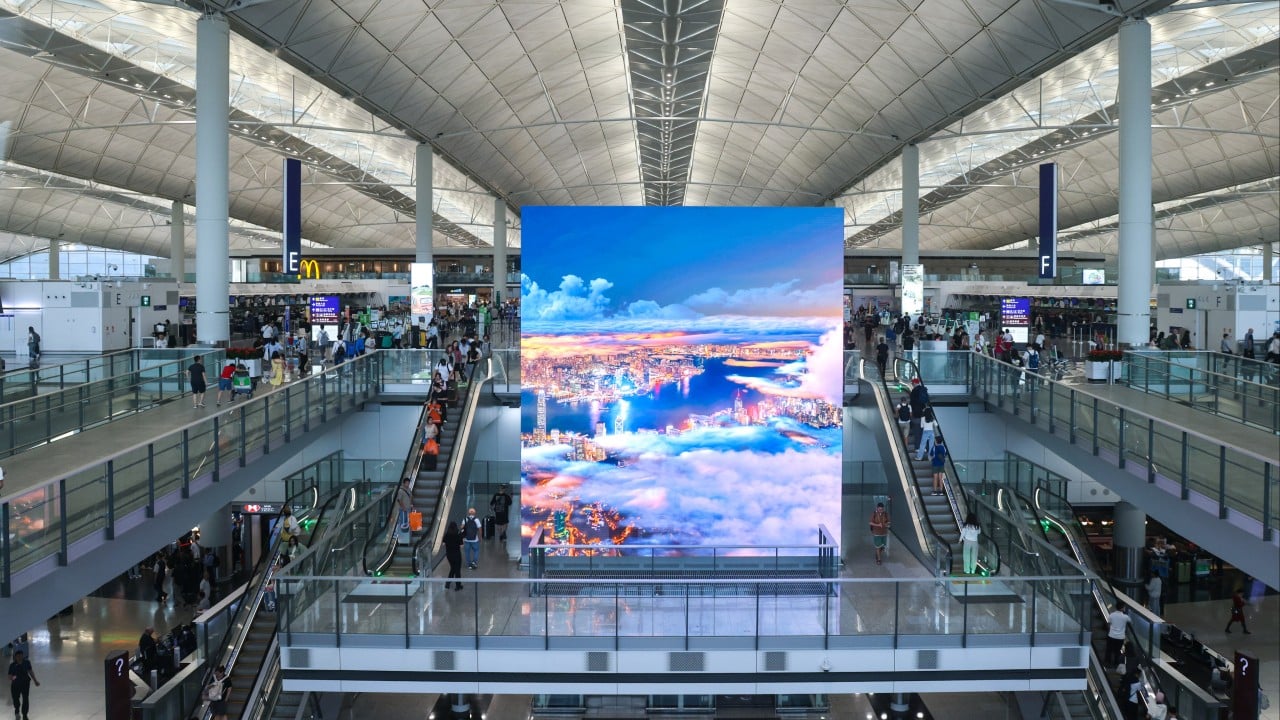
The transition is nearly imperceptible. You move from the cramped tube of the fuselage into a space that breathes. It is high-vaulted and bathed in a soft, intelligent light that mimics the dawn breaking over the Lantau peaks. There is no frantic sprinting for the baggage carousel. There is only a flow.
This April, the Global Travel Awards 2026 confirmed what weary travelers have whispered in lounges from London to New York: Hong Kong International Airport (HKIA) has officially reclaimed its throne as the world’s best. To the casual observer, this is a headline about infrastructure and logistics. To the person who just spent fourteen hours in seat 42B, it is a story about dignity.
The Invisible Architecture of Ease
Efficiency is a cold word. It suggests a factory line, something mechanical and unfeeling. At HKIA, efficiency is a ghost. It works behind the walls so you don't have to think about it.
Consider the hypothetical journey of Sarah, a tech consultant traveling with a toddler and three suitcases. In a standard "best" airport, Sarah is a logistics manager under fire. She is balancing a passport, a crying child, and the constant fear of a missed connection.
At Hong Kong, the "Smart Tower" system—the airport’s digital nervous system—has already tracked her flight’s arrival time to the second. As she steps off the jet bridge, facial recognition technology (opt-in and encrypted, for the privacy-conscious) has already synchronized her identity with her luggage. There is no fumbling for paper. Her face is her boarding pass, her key to the lounge, and her clearance through the e-gates.
This isn't just about "cutting-edge" gadgets. It is about the removal of friction. Every second saved at a security checkpoint is a second of heart rate deceleration for the traveler. The airport won this year not because it has the most marble or the loudest fountains, but because it understands that time is the only true luxury left in the 21st century.
A Bridge Between Worlds
The 2026 award isn't just a trophy on a shelf; it’s a validation of a massive, risky bet the city took a decade ago. While the world shuttered its borders and grew insular, Hong Kong kept digging. The completion of the Three-Runway System (3RS) changed the physics of the region.
Imagine a highway that never has a traffic jam. That is what the third runway represents. It allows the airport to handle 120 million passengers a year—roughly the population of Mexico passing through a single point of entry.
But capacity is nothing without connection.
The real magic happens at the Sky Bridge. Spanning 200 meters and sitting 28 meters above the ground, it is the longest airside bridge in the world. As you walk across it to your gate, an Airbus A380—the largest passenger aircraft in existence—glides underneath your feet. It is a moment of pure, cinematic scale. You feel small, yet entirely in control.
This bridge is a metaphor for the city itself. Hong Kong has always been the world’s middleman, the place where East and West shake hands. By making the physical act of transit beautiful, the airport reminds us that the journey is not merely a chore to be endured. It is the beginning of the story.
The Human Heart in a Glass Box
We often forget that airports are workplaces. Behind the sleek glass of the new Terminal 2 expansion are thousands of people—the cleaners, the air traffic controllers, the chefs at the Michelin-starred ramen stalls.
The Global Travel Awards voters cited "Service Excellence" as a primary driver for the 2026 win. This isn't about being served; it’s about being seen.
There is a specific kind of grace found in the HKIA staff. It’s the worker who notices you looking at the directory and points you toward the Airport Express train before you even open your mouth. It’s the way the cleaning crews maintain the restrooms with a level of precision that borders on the religious.
Why does this matter?
Because travel is inherently vulnerable. You are in a foreign land, often exhausted, clutching your belongings. When an institution treats that vulnerability with respect, it creates a sense of safety that no amount of gold leaf can buy. The 2026 ranking reflects a culture where "the world's best" isn't a goal to be reached, but a standard to be maintained every single hour of every single day.
The Garden in the Machine
The most common complaint about modern travel is the feeling of being trapped in a "non-place"—a sterile environment that could be anywhere from Dubai to Denver.
Hong Kong broke that mold by leaning into its geography.
The "Sky City" development has turned the airport into a destination in its own right. You are no longer "at the airport." You are in a vibrant urban ecosystem. There are rooftop gardens where you can breathe actual air, not just the filtered oxygen of a terminal. There are "vivid" zones where local artists display work that reflects the neon grit and mountain green of the city outside.
Statistics tell us that travelers in 2026 are spending 22% more time at HKIA voluntarily than they did five years ago. They aren't staying because their flights are delayed. They are staying because they want to. They are having business meetings in the 11 SKIES complex, catching a movie in the 4D IMAX, or simply watching the sunset over the South China Sea from the observation deck.
The airport has ceased to be a waiting room. It has become a neighborhood.
The Weight of the Crown
Winning is easy. Staying on top is brutal.
The competition in 2026 was fierce. Singapore’s Changi and Qatar’s Hamad International are not just rivals; they are architectural titans. To beat them, Hong Kong had to prove it could innovate without losing its soul.
It did this by focusing on the "last mile" of the passenger experience. The integration of the Greater Bay Area—where you can check your bags in Shenzhen or Macau and not see them again until you land in London—is a logistical masterpiece. It erased the border without erasing the identity.
But beyond the data points of the Global Travel Awards lies a deeper truth.
We live in a fractured world. We are separated by screens, by politics, and by thousands of miles of ocean. An airport like HKIA is one of the few places left where the human family actually gathers. In the arrivals hall, you see the same scene repeated in a hundred languages: the frantic wave, the dropped bags, the long-awaited embrace.
The world’s best airport isn't the one with the fastest Wi-Fi or the most expensive duty-free watches.
It is the one that brings us home the fastest, with the least amount of bruising to our spirits. It is the place that understands that while we might be passengers on a manifest, we are humans first.
As the sun dips below the horizon and the lights of the runways flicker on like a string of diamonds across the dark water, you realize that you aren't tired anymore. You are exactly where you need to be.
The gate opens. The city waits. You walk through.