The myth of South Korea’s medical supremacy died on the pavement outside emergency room doors. For years, the world looked at Seoul as a blueprint for efficient, high-tech, and affordable universal healthcare. That image has been shattered by "ER shuffling," a grim phenomenon where ambulances carrying critical patients are turned away by dozens of hospitals, sometimes for hours, until the patient dies in transit. This isn't a simple shortage of beds. It is a systemic collapse triggered by a scorched-earth standoff between the government and the medical elite, a lopsided insurance system that rewards cosmetic surgery over cardiac care, and a culture that treats the emergency room like a convenient clinic.
The immediate catalyst is the mass resignation of thousands of trainee doctors. These residents and interns, the literal backbone of university hospitals, walked off the job to protest a government plan to increase medical school quotas by 2,000 students per year. While the state argues more doctors are needed for a rapidly aging population, the medical community views the move as a blunt-force instrument that ignores the deeper rot in how doctors are distributed and paid. In related developments, we also covered: The Mathematical Inequity of Prostate Cancer Diagnostics: Deconstructing the TRANSFORM Trial Expansion.
The Tragedy of the Open Door
South Korea operates on a National Health Insurance (NHI) system that offers some of the lowest barriers to entry in the developed world. You can see a specialist for the price of a cup of coffee. This sounds like a triumph of social policy, but it has created a monster of over-utilization. Patients with minor coughs or bruised toes frequently crowd into the emergency departments of "Big Five" hospitals in Seoul, believing that the prestige of the institution guarantees better care even for trivial ailments.
This congestion means that when a genuine "Code Orange"—a stroke, a massive myocardial infarction, or a traumatic brain injury—arrives by ambulance, the staff is already drowning. The triage system is buckling under the weight of the worried well. Because the law mandates that ERs cannot easily turn away walk-ins, the "shuffling" happens at the ambulance bay. Hospital coordinators, exhausted and understaffed, glance at their monitors and tell paramedics they have no "space," a euphemism for having no available surgeons or ICU nurses to actually treat the incoming catastrophe. Healthline has analyzed this important subject in great detail.
Money Follows the Skin Not the Heart
If you want to understand why South Korean healthcare is failing, follow the money. The reimbursement rates set by the government for essential, life-saving procedures are notoriously low. In many cases, the fee a hospital receives for a complex thoracic surgery barely covers the cost of the sterile equipment and the electricity in the operating theater.
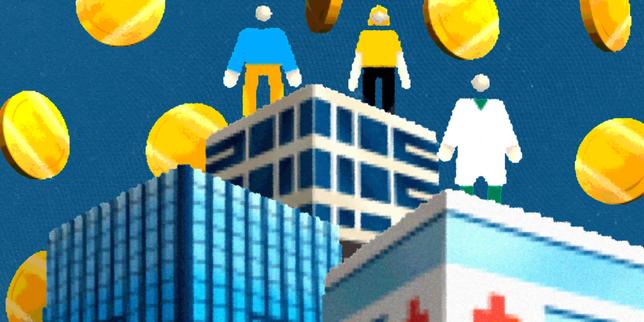
Conversely, the "non-essential" sector—dermatology, plastic surgery, and elective IV drips—is a gold mine. These procedures are mostly paid out-of-pocket, allowing clinics to set their own prices. This has created a massive internal brain drain. The brightest medical students are no longer competing for spots in pediatrics, obstetrics, or emergency medicine. They are flocking to "G-P-D-P" (General Practitioner Dermatology and Plastics).
Why spend 80 hours a week in a high-stress ER dealing with potential malpractice suits and grueling night shifts when you can open a boutique clinic in Gangnam, work 9-to-5, and earn triple the salary? The government's plan to simply add 2,000 more seats to medical schools ignores this gravitational pull. Without fixing the price floor for essential medicine, 2,000 new doctors will simply mean 2,000 more dermatologists.
The Resident Rebellion
The current crisis reached a breaking point because of the industry's over-reliance on cheap labor. In the United States or Europe, trainee doctors make up about 10% to 15% of a large hospital’s staff. In South Korea’s top-tier institutions, that number is closer to 40%. These residents were working 80 to 100 hours a week for modest pay, essentially subsidizing the hospital’s ability to offer low-cost care to the public.
When they walked out, the system didn't just slow down; it stopped. Military doctors and public health physicians have been drafted to fill the gaps, but they are a finger in a crumbling levee. Senior consultants, now in their 50s and 60s, are pulling 36-hour shifts to keep ICUs running. They are burning out. When the veterans finally quit, there will be no one left to train the next generation, even if the government manages to force students back into the classrooms.
The Legal Minefield of Saving Lives
Another factor pushing doctors away from the front lines is the increasing criminalization of medical accidents. South Korea has one of the highest rates of criminal prosecution against doctors for professional negligence in the world. In a culture where the expectation of a perfect outcome is absolute, a failed surgery often results in a police investigation rather than a civil peer review.
This defensive medicine has become a survival tactic. If an emergency physician takes on a high-risk patient with a 10% chance of survival and the patient dies, that physician faces a non-zero chance of a jail sentence. If they turn the ambulance away, they might face an administrative hurdle, but their personal freedom remains intact. The incentive structure is warped toward rejection rather than intervention.
A Geography of Death
The crisis is not evenly distributed. While Seoul struggles with overcrowding, the rural provinces are becoming medical deserts. Small-town hospitals are closing their labor and delivery wards because they cannot find a single obstetrician willing to live outside the capital. This has created a "medical migration" where patients from the south travel hours by high-speed rail to see a doctor in Seoul, further clogging the very system that is already failing.
The government’s proposed quota increase doesn't include a mechanism to force these new doctors to work in underserved areas or unpopular specialties. Without a "regional mandate" or a massive hike in "essential care" fees, the rural-urban divide will only widen.
The Myth of the Quick Fix
The Yoon Suk-yeol administration has taken a hardline stance, threatening to suspend the licenses of striking doctors and even suggesting jail time for strike leaders. This "tough on crime" approach might play well with a public frustrated by medical delays, but it is catastrophic for long-term trust. Medicine is a guild built on mentorship and voluntary sacrifice. You cannot at gunpoint force a surgeon to perform a delicate bypass.
The solution requires more than just more bodies in white coats. It requires a radical restructuring of the NHI fee schedule to make "blood and guts" medicine more profitable than "botox and fillers." It requires a legal shield for doctors acting in good faith during high-stakes emergencies. Most importantly, it requires the South Korean public to accept that the era of "instant, cheap, specialist care for everyone, everywhere" is over.
The ambulances are still circling. Each "No" from an ER coordinator is a signal that the contract between the state, the medical profession, and the people has expired. If the focus remains on headcount rather than the structural incentives that drive doctors away from the bedside, the next "shuffling" death won't be an anomaly. It will be the standard of care. South Korea must decide if it wants a healthcare system that looks good on a spreadsheet or one that actually answers the door when a citizen is dying on the threshold.