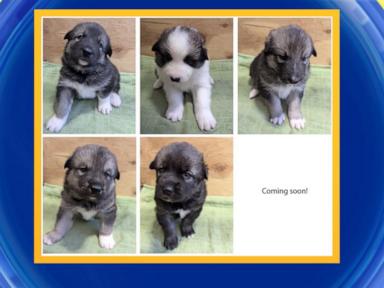
The arrival of a new litter of sled dog puppies at Denali National Park and Preserve is often framed as a simple seasonal photo opportunity. Local news outlets and tourism boards rush to capture the clumsy paws and soft ears of the newest recruits, treating the event as a quaint relic of the Alaskan past. This perspective misses the grueling reality of what these animals represent. These are not pets. They are high-performance biological machines born into the only remaining sled dog kennel in the United States National Park Service. Their birth is a calculated investment in the infrastructure of a wilderness where internal combustion engines are legally barred and physically useless.
While the public sees a viral video, the kennel staff sees a twenty-year commitment to wilderness preservation. These puppies represent the continuation of a bloodline specifically engineered to endure temperatures that would shatter consumer-grade electronics. In an era where "wilderness" is often a curated experience, the Denali sled dogs are the genuine article, performing a job that technology still cannot replicate with the same level of reliability.
The Engineering of an Arctic Athlete
The breeding program at Denali is far removed from the aesthetics-driven world of American Kennel Club dog shows. Here, the focus is on functional morphology. An ideal sled dog requires a specific blend of stamina, coat density, and what mushers call "heart"—the innate desire to pull against a harness even when the wind is screaming at fifty miles per hour.
Unlike the sleek, streamlined Alaskan Huskies seen in the Iditarod, Denali’s dogs are bred for freighting. They are heavier, broader across the chest, and possess thick, double-layered coats. Their paws are wide, acting as natural snowshoes to keep them atop the deep drifts of the park’s interior. When a new litter is born, the rangers are looking for more than health; they are looking for the temperament of a heavy-duty laborer.
The socialization process begins almost immediately. It is a rigorous schedule designed to desensitize the puppies to the thousands of tourists who will eventually visit the kennels. However, the true training is silent. It happens through observation. Puppies watch the older dogs react to the harness. They feel the tension in the kennel when the sleds are brought out. They are being programmed for a life of utility.
Why Engines Fail Where Dogs Succeed
It is easy to wonder why a federal agency with a multi-million dollar budget still relies on 19th-century technology. The answer lies in the Wilderness Act of 1964 and the brutal physics of the Alaskan interior. Large swaths of Denali are designated wilderness areas where motorized vehicles are prohibited to protect the soundscape and the soil. But even if the law changed tomorrow, the dogs would likely keep their jobs.
Snowmobiles—or "snow machines" as they are called in the north—are heavy, prone to mechanical failure in extreme cold, and require a logistics chain of fuel and spare parts. A dog runs on dried fish and kibble. If a snow machine breaks down fifty miles from the nearest road, it is a hunk of dead metal. If a lead dog encounters a thin patch of ice or a hidden crevasse, their instinct for self-preservation often saves the musher’s life.
The dogs provide a sensory feedback loop that no machine can match. They hear the shift of snow before it slides. They smell the approach of a grizzly long before it enters a ranger’s field of vision. This is not romanticism; it is practical risk management in a landscape that kills the unprepared.
The Genetic Debt of the Alaskan Husky
Maintaining this kennel is an exercise in genetic stewardship. The Denali line is a specific subset of the Alaskan Husky, which is not a breed in the traditional sense but a "performance landrace." These dogs are the result of centuries of mixing native village dogs with various working breeds to achieve a specific result.
Modern breeding at the park faces a narrowing window of genetic diversity. As the world moves toward mechanized transport, the pool of true working freight dogs is shrinking. The rangers must carefully manage the lineage to avoid the hip dysplasia and heart defects that plague many modern breeds. Each new litter is a data point in a century-long study of canine performance.
The Lifecycle of a Federal Employee
A Denali sled dog’s career follows a predictable, disciplined arc:
- The Puppy Stage: Focus on socialization and basic commands.
- The Yearling Phase: Integration into small teams to learn the "pull."
- Prime Working Years: Ages three to nine, where they may log thousands of miles patrolling for poachers and hauling supplies for trail maintenance.
- Retirement: The park maintains a strict adoption program, ensuring these athletes spend their final years in homes that understand their specific needs.
The Cost of Tradition
Operating a kennel of thirty to thirty-five dogs is an expensive endeavor. It requires specialized veterinary care, tons of high-protein food, and a staff of rangers who are as much dog handlers as they are law enforcement officers. In a climate of federal budget cuts, the sled dog program is often scrutinized.
Critics might argue that the program is an expensive vanity project, a piece of "living history" that could be replaced by seasonal contractors or occasional helicopter drops. This ignores the carbon footprint of aviation and the fundamental mission of the National Park Service to preserve not just the land, but the traditional relationship between humans and the environment. The dogs are the most visible manifestation of that mission. They are the bridge between the prehistoric inhabitants of the Alaska Range and the modern administrative state.
Beyond the Viral Video
When you see the footage of the new puppies tumbling in the Alaskan grass, remember that you are looking at the future of American conservation. These dogs will eventually be responsible for the safety of rangers and the integrity of the wilderness. They will navigate the shadow of Denali—the mountain the dogs know better than any human ever will.
The success of a litter isn't measured by how many likes a video gets on social media. It is measured years later, in the middle of a whiteout, when a lead dog decides to ignore a musher’s command to go left because he knows the trail to the right is the only one that stays on solid ground. That instinct cannot be manufactured, and it cannot be programmed. It must be bred, born, and raised in the cold.
The next time a "puppy cam" goes live, look past the fluff. Look at the paws that will eventually break trail through miles of unbroken powder. Look at the eyes that will eventually stare down a winter gale. The Denali sled dogs are a reminder that in the most remote corners of the world, the most sophisticated technology is still a wagging tail and a powerful pair of lungs.
The real work starts when the cameras turn off and the temperature begins to drop.