The wind off the Southern Ocean usually carries nothing but the scent of salt and cold, clean space. For generations, poultry farmers in southeastern Australia relied on that wind as a barrier. The continent was an ecological fortress, isolated by thousands of miles of deep water from the grinding biological realities of the northern hemisphere. While Europe, Asia, and the Americas spent years watching their skies with growing dread, the vast flocks of the south remained untouched by the highly pathogenic avian influenza known as H5.
Then, the silence broke.
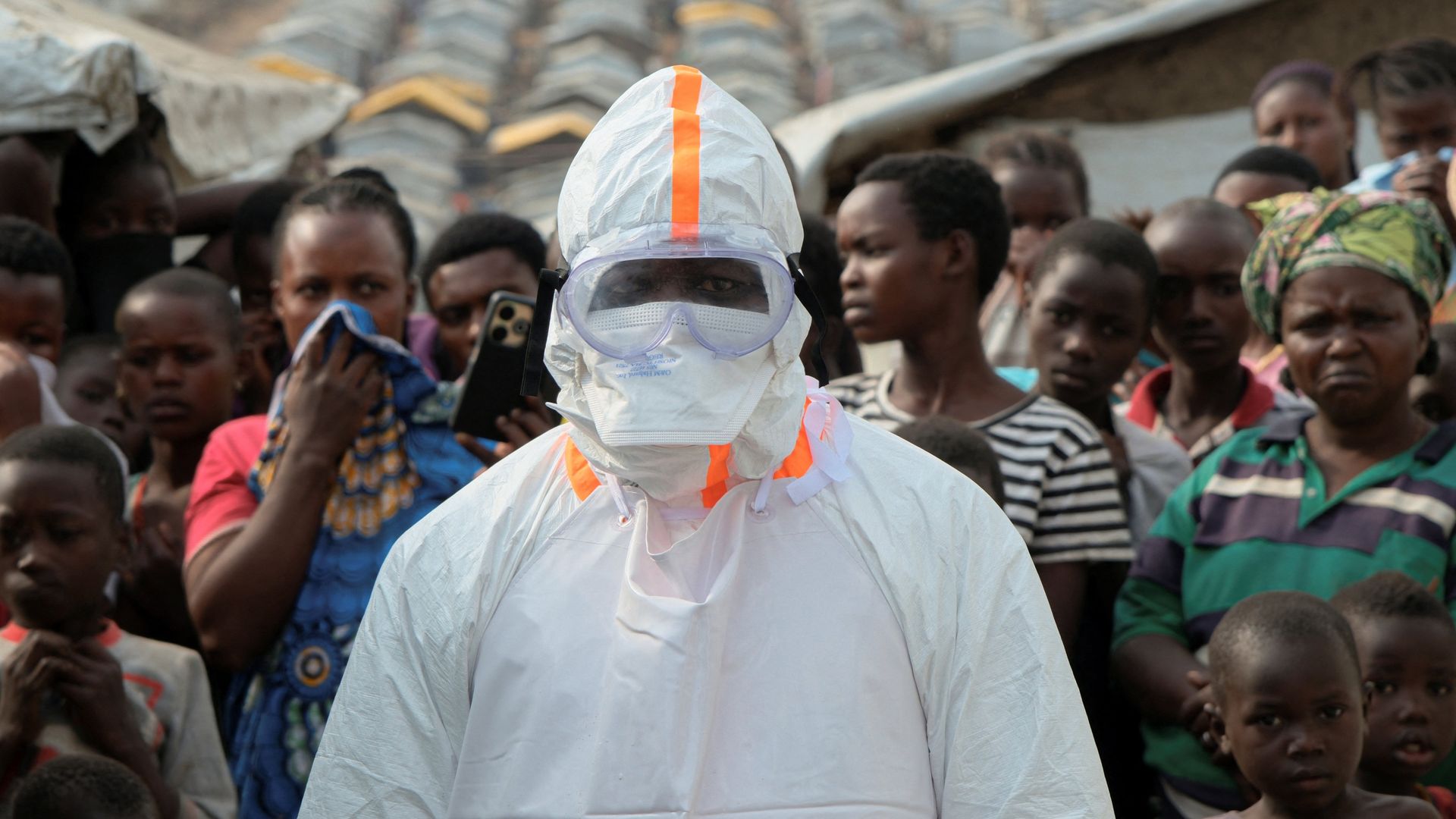
Imagine a single farm shed outside Melbourne. It is dawn. The routine here has been identical for forty years: the hum of ventilation, the clean smell of feed, the predictable, rhythmic scratching of thousands of birds. But on a specific morning, the sound changes. It is too quiet. A handful of birds are lethargic, their heads drooping. By nightfall, dozens are gone. Within forty-eight hours, the entire flock must be culled. The economic loss is staggering, but the psychological toll is worse. The shield had cracked. The virus had finally found a way across the ocean.
We often think of global threats as human inventions—supply chain disruptions, financial market collapses, or digital viruses tearing through fiber-optic cables. But the most sophisticated transport network on earth belongs to nature. Every year, billions of migratory birds cross continents via invisible highways in the sky called flyways. They do not recognize borders, maritime zones, or quarantine checkpoints. For a long time, scientists hoped the sheer distance to Australia, combined with the specific migration patterns of Southern Hemisphere birds, would keep the continent safe from the worst clades of H5. That hope dissolved. The global map of the outbreak is now entirely red.
To understand how we arrived at this point, we have to look past the sterile charts and the acronyms of public health agencies. We have to look at the microscopic mechanics of survival.
Virus strains are restless things. They do not possess intent, but they possess an infinite capacity for trial and error. For decades, avian flu was largely a seasonal tragedy for wild waterfowl and commercial poultry farms. It hit fast, cleared out populations, and retreated. But something shifted over the last few years. The virus stopped retreating. It became a permanent resident of the global wild bird population, turning the annual migrations into a continuous, rolling distribution mechanism.
Consider the scale of the crisis before it even touched Australian soil. In Peru, thousands of sea lions lay dead on Pacific beaches, their respiratory systems overwhelmed. In the high Arctic, polar bears tested positive. In the United States, the virus accomplished a feat that sent shockwaves through the agricultural community: it jumped into dairy cattle, moving quietly from farm to farm through milking equipment and herd transfers.
This is no longer just a story about birds. It is a story about the blurring lines between species.
Every time a virus enters a new mammalian host—whether it is a dairy cow in Texas, a sea lion in Chile, or a pig in Southeast Asia—it plays a genetic lottery. The stakes of that lottery are hard to overstate. Mammals breathe like us. Their cellular receptors are far closer to ours than those of a duck or a chicken. When a virus learns to replicate efficiently in a mammal, it moves one step closer to us.
The human element of this global spread is often measured in statistics—the price of eggs spiking on supermarket shelves, the millions of dollars spent on biosecurity, the number of agricultural workers placed under monitoring. But the true human cost is found in the slow erosion of certainty.
Think of a multi-generational family farm. These are places built on deep predictability. You know the seasons, you know the lifecycle of your livestock, and you know the risks you can fight against, like drought or fox predation. You cannot fight an invisible mist carried on the feathers of a wild sandpiper flying five thousand feet overhead. The pressure changes how people walk through their days. It introduces a subtle, constant anxiety to every routine chore. Every sneeze from an animal becomes a reason to hold your breath.
Public health officials find themselves walking a delicate tightrope. Speak too bluntly about the risks, and you trigger panic, empty shelves, and unnecessary slaughter. Speak too softly, and governments fail to fund the surveillance systems required to catch a mutation before it spreads. It is an exhausting, thankless discipline. Scientists spend twelve-hour days processing nasal swabs and genetic sequences, looking for specific amino acid changes that signal a virus is getting better at binding to human lungs. They are trying to read a book that is being rewritten while they turn the pages.
The current situation in Australia brings this global reality into sharp focus. The continent was the final control group in a massive, involuntary global experiment. For years, researchers could look at Australia to study how ecosystems functioned without the crushing weight of endemic H5 pressure. Now, that control group is gone. The response must be swift, but it must also accept a difficult truth: you cannot quarantine the sky.
Traditional biosecurity relies on physical containment. We build fences, we wash truck tires in disinfectant, we seal doors, and we restrict human movement. These measures are vital, and they save millions of animals from infection every year. But they are designed for terrestrial threats. They assume the enemy arrives on wheels or boots. When the vector is an entire ecosystem of wild birds driven by evolutionary instincts to fly south for the winter, the old playbook reveals its limitations.
We are forced to rethink our relationship with wild spaces. For a long time, modern industrial agriculture operated under the assumption that it could completely decouple itself from nature. We built massive, climate-controlled environments to raise food, believing we had severed the link to the wild world outside the corrugated iron walls. H5 has shattered that illusion. A virus can mutate in a wild goose on a remote wetland, spill over into a backyard flock, and find its way into a high-security commercial facility through a single contaminated droplet of water or a speck of dust carried on the wind.
The solution cannot just be more concrete and better air filters. It requires a fundamental shift in how we monitor global health. We have to start viewing the health of wild animals, domestic livestock, and human populations as a single, unbroken chain. If a link breaks in a remote marshland halfway around the world, the vibration will eventually be felt in a Melbourne suburb or a Midwestern dairy farm.
This interconnectedness is beautiful when we talk about ecology, but it is terrifying when we talk about pathology.
The path forward is filled with uncomfortable choices. Do we begin large-scale vaccination of poultry, knowing it might mask the spread of the virus and make it harder to detect mutations? Do we alter the way we build cities and farms to create wider buffers between human activity and migratory bird habitats? These are not questions with easy answers. They require economic sacrifice, political will, and a willingness to plan for scenarios that might not happen for a decade.
But ignoring the shifting reality is no longer an option. The arrival of the virus in its final continental frontier is a clear signal that the old geographic shields have permanently failed. The world has grown smaller, tighter, and far more fragile.
As dusk falls over the Australian coast, the wild flocks still descend on the wetlands, their silhouettes sharp against the fading orange light. They have performed this ritual for millennia. They are not villains; they are simply living out their ancient programming. But the invisible cargo some of them carry has rewritten the rules of the world beneath them. The southern sanctuary is gone, and the future will belong to how well we learn to watch the horizon.