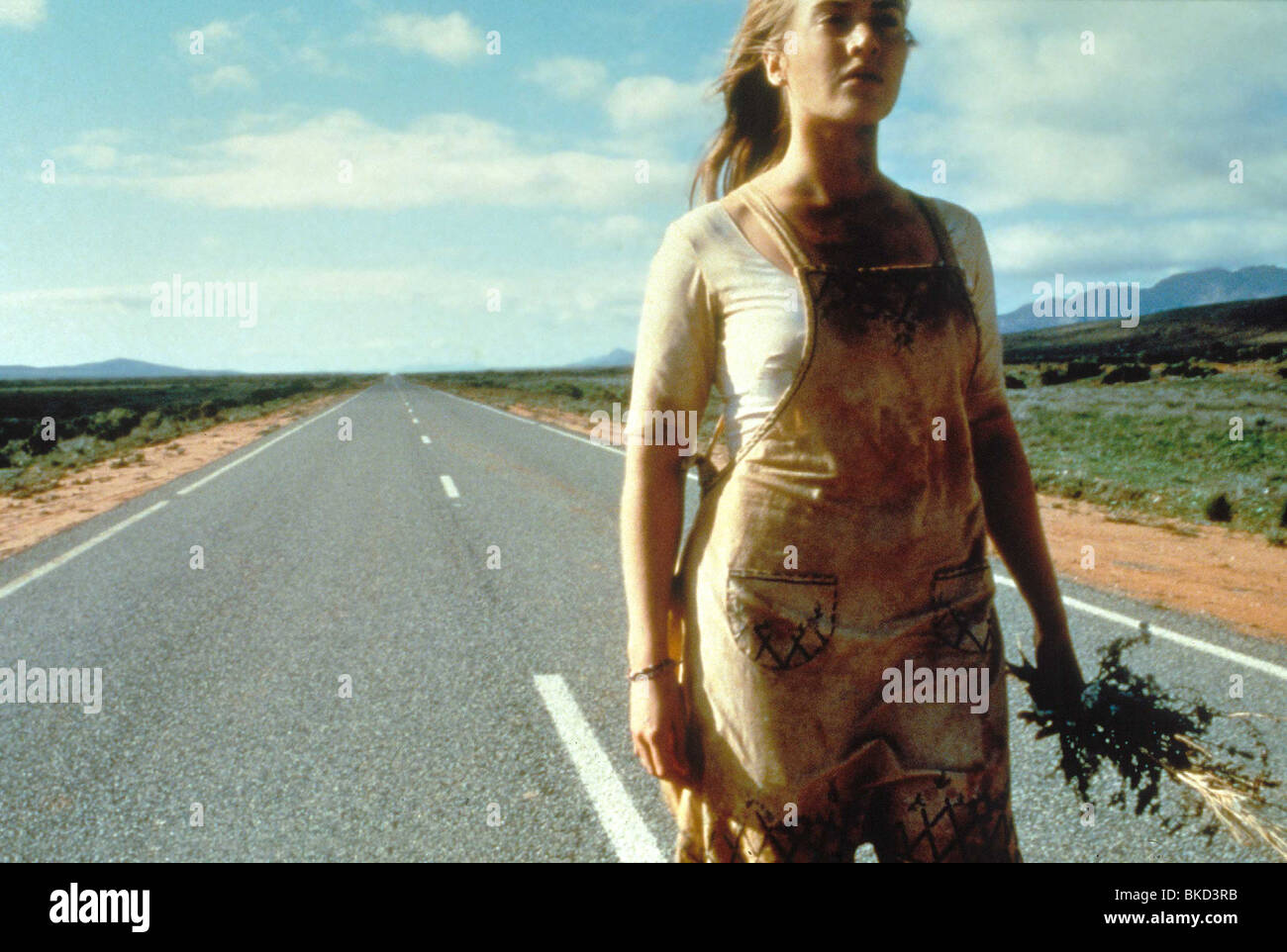
Kate Winslet doesn’t usually play it safe. If you look at her filmography, there’s a specific, jagged line between the blockbuster polish of Titanic and the gritty, unwashed reality of Mare of Easttown. Somewhere in the middle of that evolution—right when she was the biggest star in the world—she did something weird. She went to the Australian outback with Jane Campion. The Kate Winslet Holy Smoke movie is a fever dream of 1999 cinema that people still don't quite know how to categorize.
It’s messy. It’s sweaty. It involves a cult, a very confused deprogrammer played by Harvey Keitel, and a lot of existential screaming.
Most actors coming off a billion-dollar hit would have chased another Oscar-bait period piece or a romantic comedy. Winslet went the other way. She chose a script where she spends a significant portion of the runtime in a desert shack, engaging in a psychological (and physical) war of nerves. Honestly, it’s one of the bravest things she’s ever done on screen. It’s also a film that feels more relevant now, in our era of "wellness" influencers and social media rabbit holes, than it did when it premiered at the Venice Film Festival.
What Actually Happens in Holy Smoke?
The plot is deceptively simple but the execution is anything but. Winslet plays Ruth Barron, a young woman from the Sydney suburbs who travels to India and finds herself—or loses herself, depending on who you ask—in the arms of a religious cult. She becomes a follower of Baba, a charismatic guru. Her family is horrified. They think she's been brainwashed. To "save" her, they trick her into returning to Australia and hire PJ Waters (Harvey Keitel), a high-priced American exit counselor.
Basically, the movie is a three-day standoff in the middle of nowhere.
Campion, fresh off the success of The Piano, wasn't interested in a standard thriller. She wanted to explore the power dynamics between a young woman discovering her own agency and an older man who thinks he’s an expert on the female mind. Things go off the rails fast. The deprogramming doesn't go according to plan because Ruth isn't just a victim; she's a force of nature.
The Performance That Refined Winslet's Career
You’ve got to remember that in 1999, the world still saw Winslet as Rose DeWitt Bukater. She was the English Rose. Then, suddenly, she’s on screen with wild hair, wearing a sari, and shouting about the emptiness of Western consumerism.
Winslet’s commitment to the role of Ruth is total. There is no vanity here. There’s a famous scene where she walks out into the desert, completely naked, just to prove a point to Keitel’s character. It wasn't about being provocative for the sake of it. It was about showing how Ruth used her body as a weapon when her words weren't enough. Critics at the time, like Roger Ebert, noted that Winslet had a "vitality" that made the movie work even when the script got a little too psychedelic.
She wasn't afraid to be unlikable. Ruth is stubborn, sometimes cruel, and deeply confused. Winslet plays every one of those notes without blinking. It’s the performance that proved she was a character actress trapped in a movie star's body.
Why Jane Campion Chose the Outback
The setting is basically a character itself. The Kate Winslet Holy Smoke movie utilizes the Australian desert as a surreal, neon-lit landscape. It doesn't look like a postcard. It looks like a hallucination.
Campion and her cinematographer, Dion Beebe, used saturated colors—deep oranges, haunting blues—to reflect Ruth’s internal state. When she's in India, the world is vibrant and alive. When she’s back in the Australian suburbs, everything feels kitschy and suffocating. The contrast is jarring. It makes you understand why a girl like Ruth would want to run away to a cult in the first place.
The family home is filled with knick-knacks, leopard print, and a general sense of "ordinariness" that feels more threatening than the guru. It’s a brilliant bit of world-building. You see the "normal" life her mother (played by the incredible Julie Hamilton) wants for her, and you realize it’s its own kind of cult.
The Power Shift Between Ruth and PJ
The middle hour of the film is essentially a two-person play. Harvey Keitel plays PJ Waters as a man who is incredibly confident in his ability to "break" people. He has the cool leather jacket, the dyed hair, and the track record of success. He thinks he’s the hero of the story.
But the movie flips the script.
Instead of PJ deprogramming Ruth, Ruth begins to dismantle PJ. She targets his ego, his masculinity, and his loneliness. It’s a fascinating, uncomfortable watch. The sexual tension is thick, but it’s toxic. They are two people trying to colonize each other's minds. By the time PJ is wandering the desert in a red dress—yes, that actually happens—you realize that the "expert" is the one who has completely lost his way.
The Cultural Impact and Misunderstandings
When it was released, Holy Smoke! (as it was officially punctuated) received mixed reviews. Some people found it too weird. Others thought the ending was a bit of a cop-out.
The common misconception is that the film is "anti-religion." It’s actually more complicated than that. It’s about the search for meaning. Ruth is desperate for something "real" in a world that feels fake. Whether it’s the cult or her family’s desperate attempts at intervention, everyone is trying to tell her who she is.
- Feminist Critique: The film is a landmark of the female gaze. Campion focuses on Ruth's desires and frustrations, rather than just making her an object for the male characters to argue over.
- The Keitel/Winslet Chemistry: It shouldn't work. They are from two different worlds of acting. Yet, the friction between Keitel’s Method-adjacent intensity and Winslet’s raw, instinctive power creates a strange magic.
- The Soundtrack: Angelo Badalamenti (the genius behind the Twin Peaks music) provided the score. It’s ethereal and haunting, perfectly matching the "lost in the desert" vibe.
In the years since its release, the Kate Winslet Holy Smoke movie has found a second life. Film students study it for its subversion of the "damsel in distress" trope. Cinephiles point to it as the moment Winslet took control of her own narrative. If you watch it today, you might be surprised by how funny it is. It’s a dark, twisted comedy about the lengths people go to to feel like they belong somewhere.
Why You Should Revisit It Now
We live in a world of algorithmic bubbles. We are all being "programmed" by something, whether it’s a political ideology, a lifestyle brand, or a social circle. Watching Ruth fight to find her own center in the middle of all that noise is incredibly cathartic.
The movie doesn't give you easy answers. It doesn't tell you if Ruth was right or if her family was right. It just shows you the messiness of being human.
If you're looking for a film that challenges you, makes you a little uncomfortable, and features a powerhouse performance from one of the greatest actors of our time, this is it. It’s not a comfortable Sunday afternoon watch. It’s a jagged, vibrant, and deeply human piece of art.
How to Approach the Movie Today
To get the most out of the experience, don't look at it as a standard narrative. Look at it as a character study. Notice the way the camera lingers on Winslet's face when she's trying to decide whether to lie or tell the truth. Pay attention to the sound design—the wind, the buzzing insects, the silence of the desert.
The legacy of the Kate Winslet Holy Smoke movie isn't its box office numbers. It's the fact that it exists at all. It represents a moment where a massive star used her leverage to make something truly uncompromising. That’s rare.
Final Steps for the Curious Viewer
If you want to dive deeper into this era of Winslet’s career or the work of Jane Campion, here is how you should proceed:
- Watch The Piano first. It gives you the context of Jane Campion’s visual language and her interest in women who refuse to speak (or be spoken for) in traditional ways.
- Double-feature it with Heavenly Creatures. This was Winslet’s breakout role. You can see the seeds of the intensity she brings to Holy Smoke! in her performance as Juliet Hulme.
- Read up on the "Exit Counseling" industry of the 90s. Understanding the real-world context of cult deprogrammers makes PJ Waters’ character feel much more grounded in reality, however bizarre he becomes.
- Focus on the "Baba" sequences. Look at the way India is filmed compared to Australia. It’s a lesson in how cinematography can influence a viewer's bias toward a character's choices.
The film is currently available on various streaming platforms and digital retailers. It remains a polarizing piece of work, but that is exactly why it’s worth your time. In a sea of predictable cinema, Holy Smoke! is a lightning bolt.