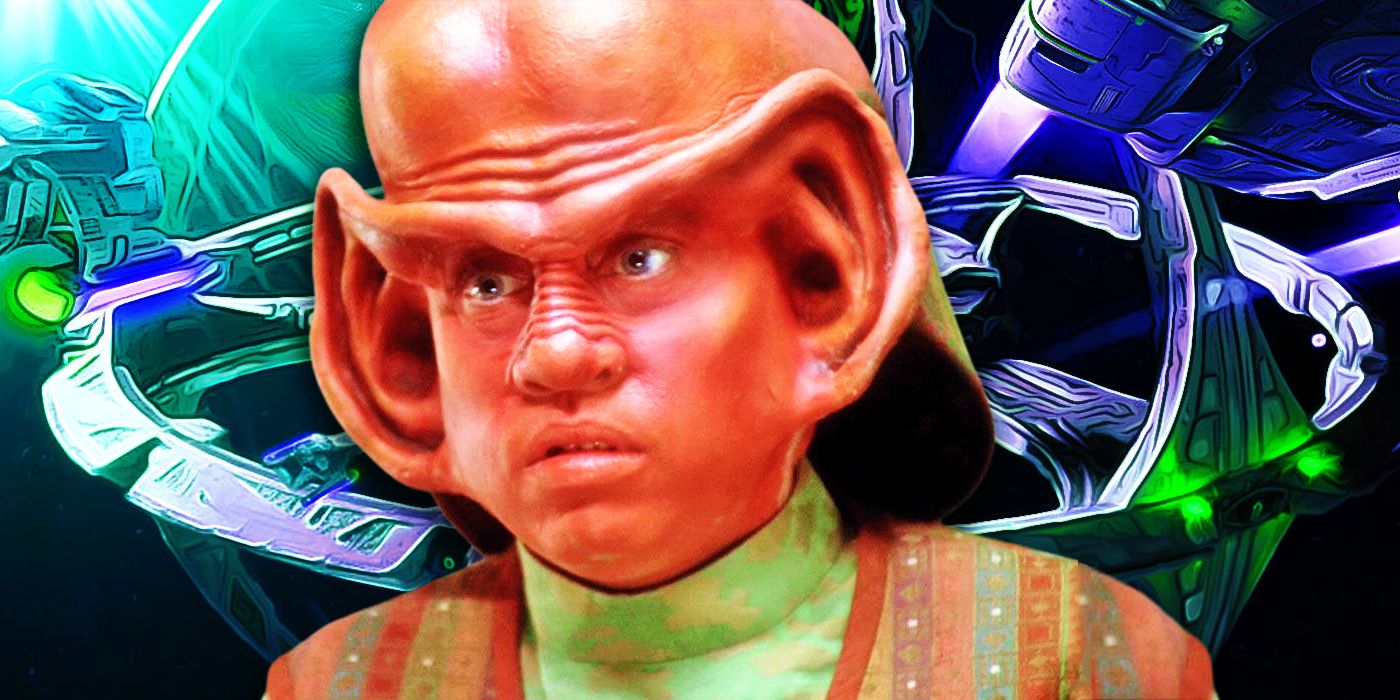
When people talk about the "best" character arc in science fiction, they usually point to a gritty anti-hero or some space prince reclaiming a throne. They're wrong. Honestly, the most grounded, painful, and ultimately triumphant transformation in the genre belongs to a short, big-eared Ferengi teenager who started as a background prankster. If you really look at Star Trek: Deep Space Nine's Nog, you aren't just looking at a supporting alien. You’re looking at a masterpiece of long-form television writing.
Nog didn't have it easy.
In the beginning, he was basically the station's juvenile delinquent. He was the kid who didn't know how to read because his father, Rom, was too caught up in the hyper-capitalist pressure of Ferengi culture to prioritize it. But over seven seasons, Nog became the first Ferengi in Starfleet. He survived a literal war. He lost a leg. He dealt with PTSD in a way that television—especially 90s television—rarely had the guts to show.
The Ferengi Problem and the Breakout
Let’s be real: The Ferengi were a joke in The Next Generation. They were intended to be the new "big bads," but they came off as screeching caricatures of greed. When Deep Space Nine started, Nog was a byproduct of that. He and Jake Sisko were the "mischievous kids" archetype. But the writers, led by Ira Steven Behr, did something weirdly brilliant. They gave Nog a motivation that wasn't about "saving the galaxy." It was about escaping a dead-end life.
In the episode "Heart of Stone," Nog begs Commander Sisko to help him get into Starfleet Academy. It’s one of the most raw scenes in the franchise. He admits he doesn't have the "lobes" for business like his Uncle Quark. He sees his father, a mechanical genius, getting stepped on because he isn't a ruthless businessman. Nog realizes that if he stays on the station or goes back to Ferenginar, he’ll end up just like that—a failure in a society that only values profit. He chooses the uniform because it's his only way to have some dignity.
Think about that. In a show with gods (Prophets) and shape-shifting dictators, the most relatable character is the one trying to break a cycle of generational trauma and low expectations.
Why the Academy Years Mattered
Most shows would have sent Nog to Earth and forgotten about him until he showed up three seasons later as a Captain. Deep Space Nine didn't do that. We saw the growing pains. We saw the cultural clash. Aron Eisenberg, the actor who played Nog, brought a frantic, nervous energy to the role that made his transition to a disciplined officer feel earned. It wasn't a "magic" change.
He had to unlearn everything. The Ferengi Rules of Acquisition weren't helpful in a post-scarcity organization like Starfleet. But he also brought something new to the table. In "The Ascent," we see how Nog’s Ferengi upbringing actually makes him a better survivalist than Jake. He’s observant. He knows how to negotiate. He’s "street smart" in a way that the highly polished Starfleet officers often aren't.
The Siege of AR-558 and the Reality of War
The Dominion War changed everything for the show, but it hit Nog the hardest. By the time we get to "The Siege of AR-558," he’s an Ensign. He’s excited. He’s young. He thinks war is about glory and proving himself.
Then he gets his leg blown off.
This is where Star Trek: Deep Space Nine's Nog transcends being a "TV character" and becomes a cultural touchstone. In the subsequent episode "It's Only a Paper Moon," the show explores his recovery. He doesn't just get a bionic leg and go back to work the next week. He’s terrified. He has phantom pain. He retreats into a holosuite program—a simulated lounge with Vic Fontaine—because the real world is too unpredictable and dangerous.
It’s an incredibly sophisticated look at disability and mental health. He stays in the holosuite for weeks. He walks with a cane even after the doctors say he’s physically healed. Why? Because the trauma is psychological. He’s a kid who realized that the universe is a dark, violent place where "the good guys" lose limbs and friends. Watching him finally step out of that holosuite and accept his new reality is more "heroic" than any space battle in the series.
A Legacy of Representation
It’s worth noting how much Aron Eisenberg’s real-life experience influenced the character. Eisenberg was born with only one partially functioning kidney and underwent multiple transplants, which limited his height. He brought a sense of "proving everyone wrong" to Nog that felt authentic because it was authentic. He wasn't playing a "little person" or a "funny alien"; he was playing a man who refused to be defined by his physical stature or his origin.
The relationship between Nog and his father, Rom, is also one of the best-written dynamics in the show. Watching Rom go from a bumbling waiter to the Grand Nagus, while Nog becomes a decorated war hero, is the ultimate "underdog" victory. They are the characters who weren't supposed to make it.
What Most People Miss About Nog's Ending
By the end of the series, Nog is a Lieutenant Junior Grade. He’s survived the fire. But look at his final scenes. He’s not the same kid who was stealing self-sealing stem bolts. He’s somber. He’s experienced. He’s a bridge between two worlds—the profit-driven Ferengi and the idealist Federation.
He proved that Starfleet isn't just a "humans only" club with some guest stars. He proved that the values of the Federation are only meaningful if they can be adopted by someone who started with absolutely nothing. He didn't have the privilege of a Sisko or the legacy of a Spock. He had to fight for every single inch of ground he gained.
Actionable Insights for Fans and Writers
If you’re revisiting the series or looking to understand why this character works so well, keep these specific points in mind for your next rewatch or creative project:
- Watch the background details: In earlier seasons, notice how Nog slowly transitions from "Ferengi garb" to more structured clothing before he even joins the Academy. It’s a subtle visual cue of his changing mindset.
- Analyze "Heart of Stone" vs. "It's Only a Paper Moon": These two episodes are the "bookends" of his soul. One is about the desperate desire to be something; the other is about the crushing weight of actually being that thing.
- Observe the dialogue shifts: Nog’s speech patterns change. He goes from the high-pitched, manic tone of a Ferengi youth to the clipped, precise cadence of a Starfleet officer, yet he never loses that "Quark-like" ability to see a deal or a shortcut.
- Focus on the Jake-Nog dynamic: It’s the best friendship in Trek. While Jake (the human) rejects the military life to become a writer, Nog (the alien) embraces it to find his humanity. It’s a perfect narrative flip.
To truly appreciate the depth of this arc, one should watch the documentary What We Left Behind. It provides behind-the-scenes context on how the writers viewed Nog not as a sidekick, but as the moral heartbeat of the station’s younger generation. His journey remains the gold standard for how to take a "joke" character and turn them into a legend.