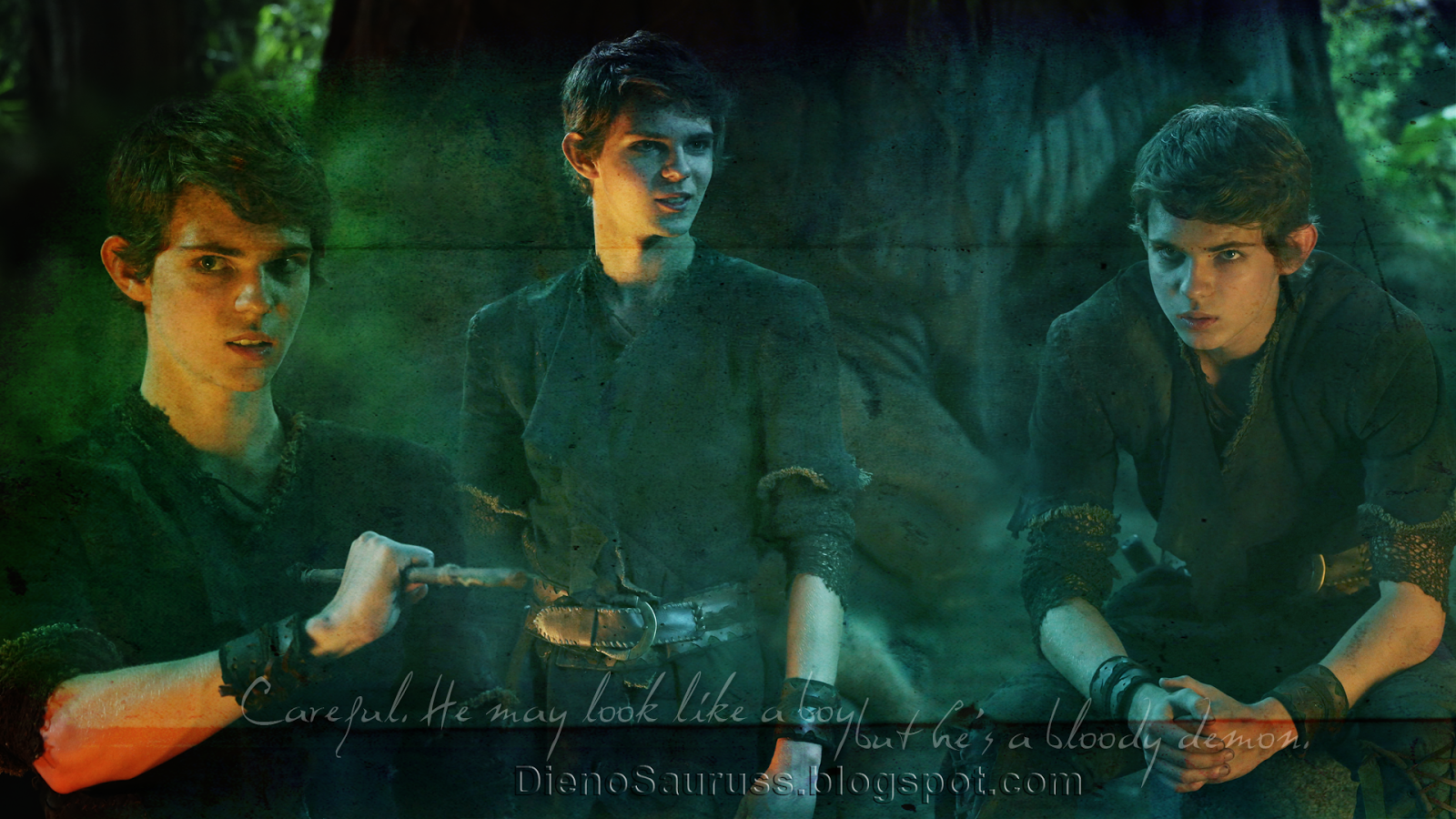
He wasn't a hero. Honestly, the moment Once Upon a Time decided to turn Peter Pan into a cold-blooded villain, the show fundamentally shifted. Most of us grew up with the Disney version—the playful boy who just wanted to hear stories about Captain Hook and tick-tocking crocodiles. But when Once Upon a Time Peter Pan arrived in Season 3, played with a chilling, eyebrow-arching intensity by Robbie Kay, he wasn't looking for a mother. He was looking for immortality. And he didn't care who he had to kill to get it.
It was a massive gamble for Adam Horowitz and Edward Kitsis. Taking the symbol of childhood innocence and turning him into the "Big Bad"? That's bold. Yet, it worked because it tapped into the darker roots of J.M. Barrie’s original text that people often forget.
The Malcolm Problem and the Neverland Origin
The show didn't just make him evil for the sake of a plot twist. They gave him a history that made his cruelty feel personal. Peter Pan wasn't born in Neverland; he was born a man named Malcolm. He was a terrible father to Rumplestiltskin. Let that sink in for a second. The "Dark One," the man who spent centuries manipulating entire kingdoms, was actually the victim of the show's version of Pan.
When Malcolm visited Neverland with his son, he realized he couldn't stay because he was an adult. The Shadow—a terrifying, sentient entity in this universe—offered him a deal. Give up the thing he loved most (his son) to regain his youth. He didn't even hesitate. He let go of Rumple’s hand, transformed back into a teenager, and took the name "Peter Pan" after a wooden doll. It’s a gut-wrenching subversion of the source material.
Why the Neverland Arc Felt Different
The pacing of the third season was weirdly claustrophobic. For eleven episodes, the core cast was stuck in the jungle. Usually, the show bounced between Storybrooke and the Enchanted Forest, but the Neverland arc forced everyone—Emma, Regina, Snow, David, Hook, and Rumple—to work together in a way they never had before.
Pan was always ten steps ahead. He used "The Heart of the Truest Believer" as a MacGuffin, but the real stakes were psychological. He knew everyone's secrets. He played on Emma’s "Lost Girl" insecurities and Regina’s fear of losing Henry. Robbie Kay managed to look like a kid while sounding like an ancient, weary god. It’s a performance that holds up remarkably well even years later.
He didn't use a sword often. He used words.
The Shadow and the Lost Boys
In this version, the Lost Boys weren't just playful scamps in animal onesies. They were a cult. They were kids Pan had kidnapped over decades, brainwashed into a paramilitary force. Felix, Pan’s right-hand man, was genuinely intimidating. There was no "glitter" here; it was all dirt, cages, and Dreamshade—a lethal poison that caused a slow, painful death.
The Shadow itself was a nightmare. Instead of being a detached silhouette that Pan had to sew back on, it was a soul-ripping demon. It guarded the island and did Pan's dirty work. The show basically took every whimsical element of the 1953 film and ran it through a filter of grim, gritty realism.
The Twist That Everyone Remembers
The mid-season finale, "Going Home," is widely considered one of the best episodes of the entire series. Why? Because the stakes felt final. To defeat Once Upon a Time Peter Pan, Rumplestiltskin had to make the ultimate sacrifice. He used his dagger to kill his father, knowing it would also kill him.
But the real kicker was the curse.
Pan had enacted a new curse to turn Storybrooke into a "New Neverland." To stop it, Regina had to undo her original curse. The cost? Everyone goes back to the Enchanted Forest, and Storybrooke ceases to exist. Emma and Henry are the only ones who stay in the "real world," but their memories are wiped. They forget the magic. They forget their family.
It was a bleak ending for a show that usually focused on "Hope." Even though Pan died, he technically won for a while. He broke the family apart.
What People Get Wrong About the Character
A lot of fans think Pan was just "evil because the plot needed it." I disagree. If you look closely at the writing, Pan is a study in narcissism. He represents the danger of refusing to grow up—not in a "stay young at heart" way, but in a "refuse to take responsibility" way.
- He abandoned his child because he found him "inconvenient."
- He manipulated Henry by pretending to be a lonely boy.
- He saw people as chess pieces, not humans.
The show suggests that Neverland isn't a paradise; it’s a prison for people who are too selfish to exist in the real world. That’s a sophisticated take for a network TV show about fairy tales.
Behind the Scenes: Casting Robbie Kay
It’s hard to imagine anyone else in the role. Kay was only 17 or 18 when he filmed most of this. He had to stand toe-to-toe with Robert Carlyle, a veteran actor known for his intensity. Most young actors would have been overshadowed, but Kay leaned into a specific type of stillness. He didn't blink much. He smiled at the wrong times.
Rumor has it the producers were looking for someone who could look "innocent but ancient." They found it. Interestingly, Kay later returned for the 100th episode in the Underworld arc, proving that the writers knew exactly how popular his version of the character had become.
How to Re-watch the Pan Arc Today
If you’re diving back into Once Upon a Time on Disney+ or Hulu, the Pan arc is the peak of the show’s "Dark Disney" era. After this, the series started leaning harder into synergy with movies like Frozen and Brave, which some fans felt lost the original grit.
To get the most out of the Once Upon a Time Peter Pan storyline, keep these things in mind:
- Watch the eyes. Notice how Pan’s expression changes when he’s around Rumple versus when he’s around Henry. It’s a masterclass in code-switching.
- Listen to the music. Mark Isham’s score for Neverland uses these low, rhythmic drums that feel primal and dangerous, a far cry from the sweeping violins of the Enchanted Forest.
- Note the geography. Neverland is filmed to feel like a maze. The characters are constantly lost, reflecting their mental states.
The show eventually brought in Hook’s brother and more backstory regarding the Jolly Roger, but nothing ever quite topped the tension of those first eleven episodes of Season 3. It was a time when the show wasn't afraid to make you hate its most famous characters.
Real-World Influence
The "Evil Peter Pan" trope wasn't entirely new, but Once Upon a Time popularized it for a mainstream audience. Since then, we've seen more "dark" interpretations of the character in literature and film. It tapped into a collective cultural realization: a boy who never grows up and steals children from their beds is actually kind of terrifying.
Actionable Takeaways for Fans
If you're a writer or a creator, look at Pan as a case study in subverting expectations. You take a known quantity—a hero—and you find the one character flaw that could turn them into a monster. For Pan, it was his cowardice and his vanity.
If you're just a casual viewer, pay attention to the dialogue in the episode "Selfless, Brave and True." It sets the stage for the psychological warfare Pan uses later.
- Step 1: Re-watch the Season 2 finale "And Straight On 'Til Morning" to see the setup for the Neverland journey.
- Step 2: Focus on the "Malcolm" flashbacks in the episode "Think Lovely Thoughts." It changes your entire perspective on Rumplestiltskin’s villainy.
- Step 3: Compare this Pan to the original 1911 J.M. Barrie novel Peter and Wendy. You'll be surprised how many "villainous" traits were actually in the book all along.
The legacy of Peter Pan in this series remains one of the high-water marks for fantasy television in the 2010s. It proved that fairy tales don't always need a happy ending—sometimes, they just need a really good villain.