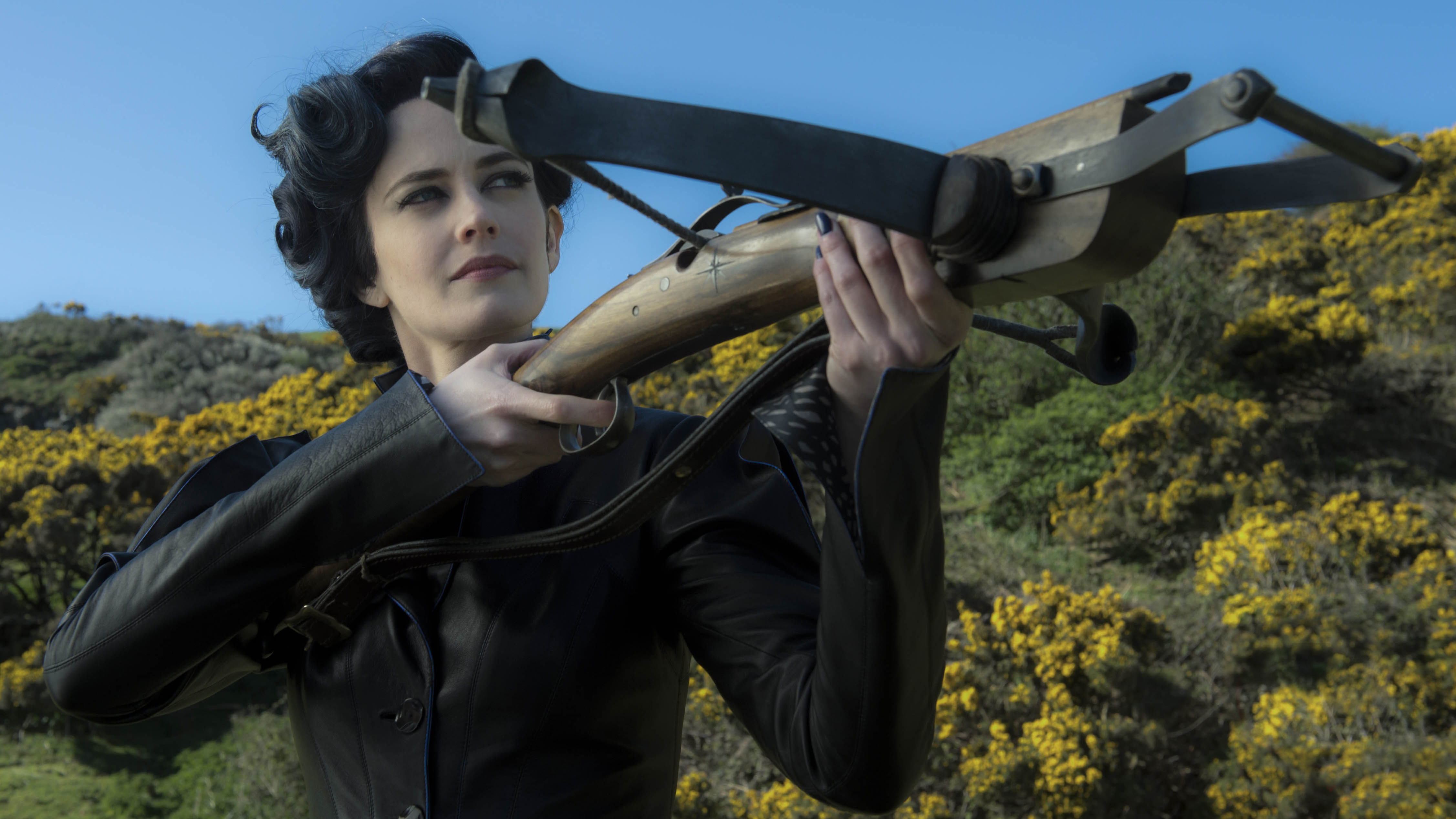
Ever stumbled across an old, grainy photograph at a flea market and felt like the person staring back was actually watching you? That’s basically the origin story of Ransom Riggs’ masterpiece. Most people don't realize that Miss Peregrine’s Home for Peculiar Children started not with a plot, but with a collection of eerie, authentic vintage snapshots. Riggs was a collector of "vernacular photography," those weird, discarded photos from estate sales that nobody wants. He originally intended to make a picture book. His editor, however, saw something different. They saw a story.
It worked.
The book didn't just become a bestseller; it defined a specific aesthetic that dominated the early 2010s. It’s a mix of historical fiction, dark fantasy, and a sort of "found footage" literary vibe. If you haven't read it lately, or if you only know the Tim Burton movie, you’re missing the sheer grit of the original text. The story follows Jacob Portman, a teenager who travels to a remote Welsh island to investigate his grandfather’s mysterious past. What he finds is a "loop"—a pocket of time stuck in September 3, 1940—where children with "peculiarities" live under the protection of Miss Alma LeFay Peregrine.
The Reality Behind the Peculiarities
Riggs didn't just make up these powers out of thin air. He looked at the photos and asked, "Why would this kid be floating?" or "Why does this girl have two mouths?" It’s a reactive way of writing. Instead of the polished, superhero-style powers we see in Marvel movies, the peculiarities in Miss Peregrine’s Home for Peculiar Children feel heavy. They feel like burdens.
Take Millard Nullings, the invisible boy. In many stories, invisibility is a cool spy tool. In this world, it’s a form of isolation. He has to stay naked to remain truly unseen, and he’s been stuck in a 24-hour loop for decades. Think about that. Decades of living the same Tuesday over and over again. It’s enough to make anyone a bit cynical.
Then there’s Emma Bloom. In the book, she has the power of fire. She can conjure it in her hands. The movie famously swapped her power with Olive’s (the girl who floats), likely because floating is more "cinematic" for a romantic underwater scene, but book purists still argue about this change. Why? Because Emma’s fire represents her internal volatile nature. She’s a survivor of a world that literally tried to burn her out.
Why the "Loop" Logic is Actually Terrifying
Time loops are a common trope, but Riggs adds a layer of existential dread. The Ymbrynes—the matriarchal leaders who can transform into birds—create these loops to keep the children safe from "Hollowgasts."
Hollowgasts are what happens when Peculiars try to play God. In an attempt to achieve immortality, a faction of Peculiars led by Caul (Miss Peregrine’s brother) performed an experiment that went horribly wrong. They turned into invisible monsters that can only be seen by a few people, like Jacob and his grandfather. To become "Wights" (human-looking versions of monsters), they have to consume the souls of Peculiars.
The loops aren't just cozy sanctuaries. They’re prisons.
Imagine living through the same air raid every single day. The German Luftwaffe drops bombs on the house every night, and every night, Miss Peregrine resets the clock just seconds before the house is leveled. It’s a loop of trauma. The kids are biologically stuck. They don't age. If they leave the loop for too long, the years catch up to them instantly, and they turn to dust. Honestly, it’s one of the darkest "fountain of youth" scenarios in YA literature.
The Controversy of the Tim Burton Adaptation
We have to talk about the 2016 film. It’s a polarizing topic in the fandom. On one hand, you have Tim Burton, the king of the macabre, directing a story about weird kids in an old house. It sounds like a match made in heaven.
But things got weird.
- The Age Up: Jacob and Emma were aged up to make the romance more traditional for a Hollywood audience.
- The Power Swap: As mentioned, Emma and Olive switched abilities.
- The Tone: The book is genuinely creepy. The movie is... whimsical? It lost that "Found Photo" grit that made the novel feel like a secret you shouldn't be reading.
Samuel L. Jackson as Mr. Barron was a fun addition, but he didn't quite capture the silent, stalking terror of the Wights described in the books. The Wights in the novels are chilling because they could be anyone—your bus driver, your neighbor, your teacher. They have no pupils in their eyes, so they wear sunglasses to blend in. It’s a very "They Live" kind of horror.
The Legacy of the Peculiar Series
Most people don't realize there are actually six books in the series.
- Hollow City
- Library of Souls
- A Map of Days
- The Conference of the Birds
- The Desolations of Devil's Acre
The story expands far beyond the Welsh island. It goes to London during the Blitz, and eventually, in the second trilogy, it moves to America. Riggs explores "American Peculiarism," which is a whole different vibe—more chaotic, less organized than the Ymbryne system in Europe. He delves into the politics of the Peculiar world, showing that even among the "special" people, there are hierarchies, prejudices, and power struggles. It’s not just a fairy tale. It’s a messy, complicated society.
Real Places That Inspired the Setting
While Cairnholm is a fictional island, it's heavily inspired by the rugged coastlines of Wales. The "House" itself in the movie was filmed at Villa Torens in Brasschaat, Belgium. It’s a real, stunning mansion that captures that haunting, dilapidated grandeur.
The historical context is real, too. The fear of the "monsters" in the book is often read as an allegory for the Jewish experience during WWII. Jacob’s grandfather, Abraham, was a Polish Jew who escaped the Nazis. He told Jacob stories about the "monsters" he fled. As Jacob grows up, he assumes these were just metaphors for the German soldiers. The brilliance of the book is that the monsters are both metaphorical and literal.
How to Engage with the Peculiar World Today
If you're looking to dive back into Miss Peregrine’s Home for Peculiar Children, don't just stop at the first book. The series evolves significantly. To get the most out of the experience, follow these steps:
- Look at the Photos First: Before reading a chapter, spend a good three minutes staring at the associated photograph. Try to find the details Riggs noticed—the shadows, the weird angles, the expressions.
- Read the Tales of the Peculiar: This is a companion book of "fairy tales" within the world. It provides the deep lore of the Ymbrynes and the first Peculiars. It’s arguably some of Riggs’ best writing.
- Track the Evolution of Jacob: Notice how he shifts from a bored, cynical Florida teenager to a leader. His growth is one of the more realistic depictions of "the hero's journey" because he constantly doubts his own sanity.
- Explore the Photography: Check out the work of collectors like Robert Jackson or the archives at the Library of Congress. You’ll start to see "peculiar" photos everywhere.
The beauty of this series isn't just in the magic. It’s in the idea that being different is dangerous, but being "normal" is a death sentence for the soul. It’s about finding your people, even if you have to travel back eighty years in time to find them.
To truly understand the depth of the lore, start by re-reading the original trilogy (Books 1-3) as a self-contained arc before moving into the more modern, American-centric sequels. This preserves the atmospheric mystery of the Welsh loops before the world-building becomes more expansive and action-oriented in the later installments. Focus specifically on the transition between Hollow City and Library of Souls, as this is where the "Peculiar" mythology shifts from a survival story into a full-scale epic.