The Department of Justice wants the National Trust for Historic Preservation to back down, and they're using a literal "smoking gun" to make their point. On Saturday night, a shooter identified as Cole Thomas Allen opened fire at a security checkpoint outside the Washington Hilton during the White House Correspondents' Dinner. It was a terrifying moment that left a Secret Service agent wounded and sent Washington into a tailspin. By Sunday afternoon, the DOJ was already in the inbox of the National Trust’s legal team with a blunt message: drop your lawsuit or you're putting the President's life at risk.
But the National Trust isn't budging. Despite the intense political pressure and the "narrow miss" of the assassination attempt, the plaintiffs are standing by their claim that the $400 million White House ballroom project is an illegal overreach. They don't see this as a security issue; they see it as a preservation crisis.
The 9 AM Ultimatum That Failed
The DOJ didn't just ask nicely. Assistant Attorney General Brett Shumate fired off a letter to Greg Craig, the attorney representing the National Trust, giving them until 9 a.m. Monday to voluntarily dismiss the case. Shumate’s argument was visceral. He claimed the shooting proved the Washington Hilton is "demonstrably unsafe" and that the proposed ballroom—which includes a massive military bunker—is the only way to keep the President secure during large events.
Acting Attorney General Todd Blanche doubled down on X, dismissing the entire lawsuit as a "passing aesthetic gripe." From the administration's perspective, the Saturday night shooting was the ultimate validation. They've been arguing for months that the White House needs a secure, internal space for nearly 1,000 guests so the President doesn't have to venture into "soft targets" like public hotels.
The National Trust, however, hasn't flinched. Their position is that the law doesn't have an "emergency ballroom" exception. They're suing because the administration demolished the historic East Wing last fall without the proper congressional approval or the required reviews from the National Capital Planning Commission. To them, the shooting is a tragedy, but it's not a legal reason to let the President build whatever he wants on a national landmark.
National Security or a Blank Check
This case has become a tug-of-war over what "national security" actually covers. District Judge Richard Leon, who has been overseeing this legal saga, famously remarked that national security isn't a "blank check to proceed with otherwise unlawful activity."
Earlier this month, the legal battle hit a fever pitch. Judge Leon blocked above-ground construction on the 90,000-square-foot facility, only allowing work to continue on the underground bunker and medical suite. The DOJ appealed, arguing that you can't separate the two. You can't build a bunker without the floor above it, and you can't secure the floor above it without the reinforced ballroom.
The administration's current strategy is to frame the lawsuit as a direct threat to the First Family. By using the Hilton shooting as leverage, they're trying to win in the court of public opinion what they haven't yet fully secured in the Court of Appeals.
What the Plaintiffs are Actually Fighting For
- Congressional Approval: They argue the $400 million project requires an explicit act of Congress, not just private donations and executive orders.
- Historical Integrity: The demolition of the East Wing happened in a matter of days last October, sparking outrage among historians who claim the site's heritage is being erased for a "vanity project."
- Public Oversight: The lawsuit seeks to force the administration to submit final plans to federal review panels that were bypassed during the initial demolition.
The Fallout of the "False Flag" Noise
It’s worth addressing the elephant in the room. Within hours of the shooting, the internet was flooded with conspiracy theories. Some claimed the timing was "too perfect" for the administration's legal needs. It’s a messy, cynical environment, and the DOJ’s immediate move to use the shooting as a legal hammer hasn't helped quiet the noise.
However, the evidence points to a much more straightforward, and tragic, reality. The suspect, Cole Thomas Allen, reportedly sent an apology note to his family ten minutes before the attack. His manifesto was a rambling critique of the administration. There's no credible evidence that this was anything other than a lone-wolf attack.
But the DOJ’s aggressive letter-writing campaign has given critics an opening. They argue the administration is being opportunistic, using a security failure—one where the Secret Service reportedly chose not to designate the dinner as a "National Special Security Event"—to push through a controversial construction project.
Where the Case Goes from Here
The Monday 9 a.m. deadline has passed, and the lawsuit remains on the docket. Since the National Trust refused to fold, the DOJ is expected to move to dissolve the existing injunction immediately. They’ll likely argue that "extraordinary circumstances" require the court to lift all restrictions on construction.
If you're following this, keep your eyes on the June 5 hearing. That was supposed to be the big showdown in the D.C. Appeals Court. Now, with the Hilton shooting as the new backdrop, the administration will push for an expedited ruling. They want the cranes moving on the above-ground structure before the summer heat hits.
The legal reality is that the shooting doesn't change the Administrative Procedure Act. It doesn't change the National Capital Planning Act. But in a courtroom, "necessity" is a powerful argument. The DOJ is beting that a judge will be hard-pressed to tell the President he can't build a secure room after a gunman almost reached him at his last public gala.
If you want to track the actual filings, keep a tab on the D.C. District Court's electronic records for the National Trust for Historic Preservation v. United States. The next 48 hours will likely see a flurry of motions that will decide if the White House remains a construction site or becomes a permanent fortress.
The National Trust is betting on the law; the White House is betting on the headline. We're about to find out which one holds more weight in 2026.
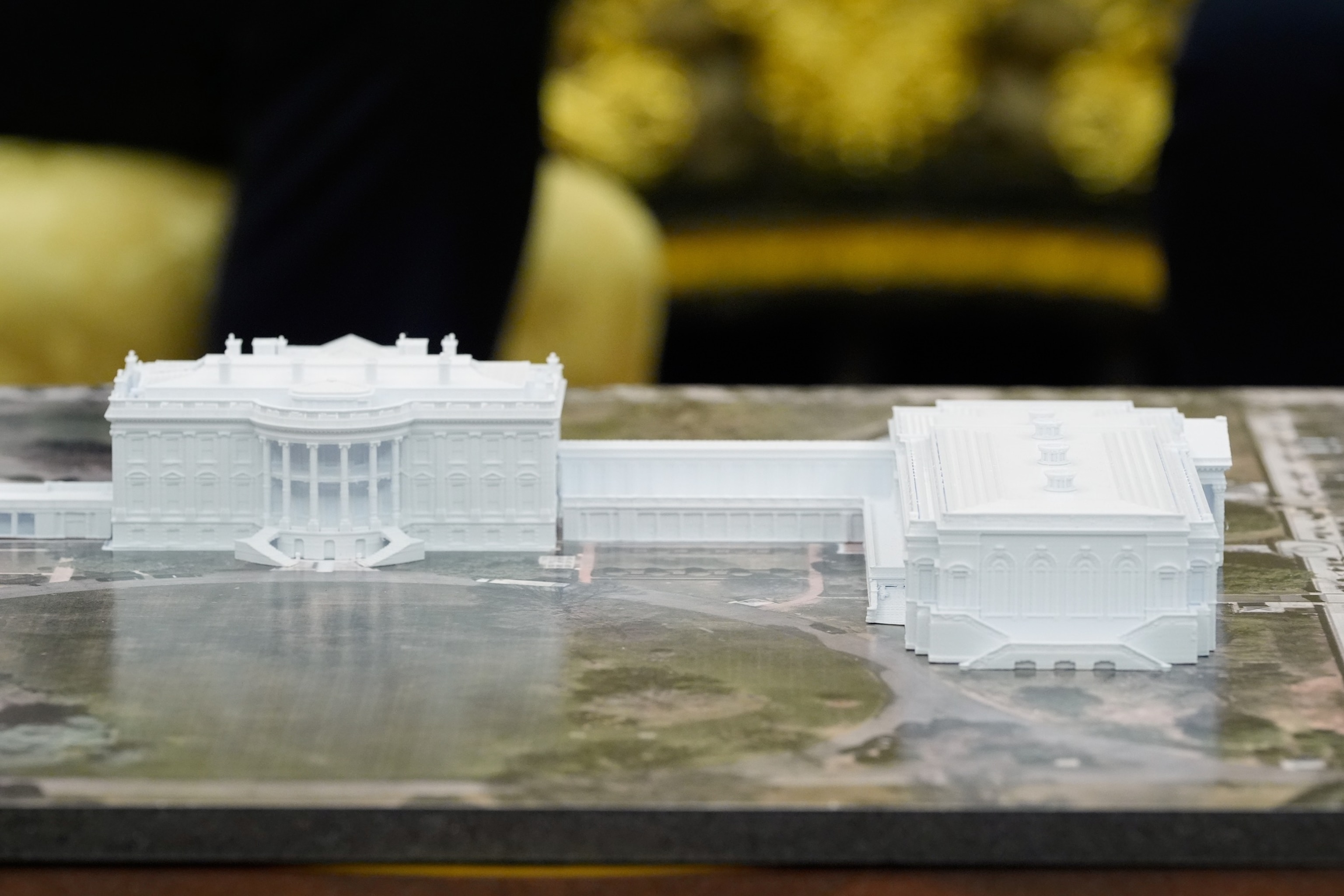
Check the National Capital Planning Commission’s website for the recently "briefed" 3D models of the ballroom to see exactly what $400 million of "security" looks like. It's a lot more than just a dance floor. Residents and tourists in D.C. should expect increased perimeter closures around the East Wing as the DOJ pushes to bypass the remaining red tape.


