The sound of the rainforest at night is usually a thick, comforting wall of noise. Insects buzz, frogs pipe, and leaves rustle under the weight of passing canopy life. But in the North Kivu province of the Democratic Republic of Congo, a new sound has hollowed out the dark. It is the rhythmic, mechanical thud of military boots on red dirt. It is the sudden, sharp crack of gunfire echoing from the hills.
And beneath that, if you listen closely enough, is the sound of shallow, labored breathing inside a mud-walled home.
Ebola does not arrive with a fanfare. It sneaks into a village like a thief, riding in the bloodstream of a mother who just wanted to bury her sister, or a trader returning from a crowded market. By the time the fever announces itself through blood and delirium, the trap has already sprung.
Standard news reports will give you the grim arithmetic. They will tell you that the case numbers are ticking upward. They will note, with a detached journalistic sigh, that the outbreak is unfolding in an active conflict zone. But numbers are cold comfort. They flatten the terrifying reality of trying to stop a deadly virus when the very people you are trying to save look at your hazmat suit and see a monster.
To understand why Ebola is rising again, you have to stop looking at microscopes and start looking at the dirt, the history, and the profound, broken trust of a population caught between a bullet and a plague.
The Monster in the Room
Imagine a woman named Kavira. She is a composite of the countless mothers, daughters, and healthcare workers holding the line in Beni and Butembo, but her fear is entirely real.
Kavira’s oldest son woke up three days ago with a headache that felt like a hammer striking an anvil. Then came the vomiting. Now, he lies on a woven mat in the corner, his skin burning to the touch. Kavira knows what the radio says. She knows the government announcements claim a terrible disease is spreading.
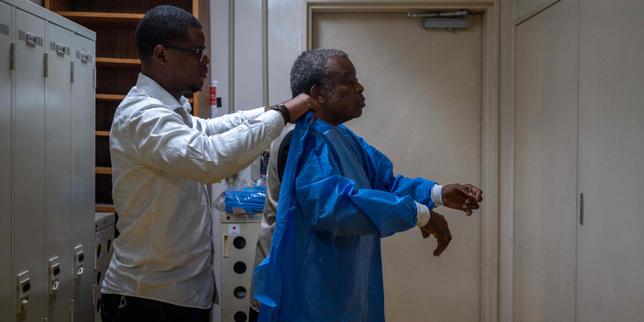
But Kavira also remembers last year. She remembers when men in heavy white suits—looking less like doctors and more like astronauts who dropped from a hostile sky—marched into the neighboring village. They took away a cousin. The cousin died alone, stripped of the traditional burial rites that keep a family soul intact. Then, those same white-suited figures sprayed chemical foam over everything the cousin owned, burning his clothes and his bed.
Now consider the rumor that travels faster than any virus: The foreigners brought the sickness to make money off our deaths. The government is using the fever to wipe out the opposition.
In a region that has endured decades of brutal militia violence, where neighbors disappear in the night and promises from outsiders always come with a hidden price tag, these rumors do not sound crazy. They sound like survival.
So, Kavira does what any terrified mother would do. She shuts her door. She stays quiet. She bathes her son’s forehead with cool water, unknowingly breathing in the microscopic filoviruses shed in his sweat.
This is how an outbreak breathes. It does not expand because the medicine is failing; it expands because the distance between a doctor’s syringe and a mother’s trust is wider than the Congo River itself.
Two Wars at Once
Health workers do not just fight biology here. They fight geography and geopolitics.
The epicenters of the current outbreak are wrapped in a choking net of active conflict. Dozens of armed rebel groups operate in the dense forests of eastern DRC. Ambushes are common. Roadblocks are manned by teenagers with Kalashnikovs and unpredictable tempers.
When an Ebola response team tries to drive out to a remote village to trace contacts—tracking down everyone who might have hugged a sick person or shared a meal—they cannot just pack a cooler of vaccines and go. They need armored escorts. They need to negotiate passage through territory controlled by warlords.
Every time a skirmish breaks out, the medical response grinds to a halt.
Think about the math of an epidemic. If a health worker misses just one day of contact tracing, a single infected person can catch a motorbike taxi to a neighboring town, visit a crowded church, and spark five new chains of transmission. By the time the gunfire clears and the road reopens three days later, the virus has already rewritten the map.
The tragedy is that we actually have the tools to win this fight. We have highly effective vaccines. We have experimental therapeutic drugs that can save lives if administered early. The science is magnificent. It is a triumph of human ingenuity.
But a vaccine sitting in a solar-powered freezer in a heavily guarded provincial capital cannot save a child living twenty miles away behind a rebel frontline. The cold chain of medicine breaks down when the hot reality of war takes over.
The Chemistry of Suspicion
It is easy for someone sitting in a comfortable home thousands of miles away to read about communities resisting Ebola treatment and judge them. It is easy to label it as ignorance.
That judgment is a luxury of the safe.
To bridge the gap, we have to look at the world through the lens of generational trauma. For over a century, eastern Congo has been plundered for its rubber, its coltan, its gold, and its lives. Outsiders usually show up when they want to take something. When international aid organizations pour millions of dollars into a sudden Ebola response while ignoring the chronic malaria, the lack of clean water, and the daily threat of militia massacres that have killed millions over the years, the local population notices.
"Why do you only care about us when we have a disease that might jump on a plane and infect you?"
It is a devastating question. It is also entirely fair.
When health workers arrive with millions of dollars in high-tech gear but the local clinic still lacks basic paracetamol and clean latex gloves for routine births, the disparity breeds a bitter, toxic resentment. The Ebola response becomes an occupying force rather than a healing one.
When a treatment center is built with shiny plastic tarps and chain-link fences, it looks like a prison. To the community, people go in alive, and they come out in body bags.
Changing this narrative requires a profound humility that does not always fit into an international NGO’s quarterly budget. It means trading the armored vehicles for quiet conversations under mango trees. It means listening to the village elders before dictating the rules of a burial. It means recognizing that the local healer, who has the trust of the village, is a far more powerful ally than a dozen press releases issued from Geneva.
The Unseen Threshold
The real danger of the rising numbers in the DR Congo is not just that the virus will slip across the porous borders into Uganda or Rwanda, though that threat is real and constant. The deeper danger is the normalization of the crisis.
We risk entering a phase where the world checks the dashboard, sees fifty new cases, shrugs, and attributes it to the tragic status quo of a broken place.
But there is nothing normal about a hemorrhagic fever. There is nothing routine about a virus that dissolves the body’s internal architecture until blood leaks from every pore. Every single digit added to that official tally represents an agonizing death, a family shattered, and a community retreating further into a defensive crouch of terror and suspicion.
The frontline is not a laboratory. It is a dirt path where a health worker, sweating through three layers of protective gear, sits down with an angry father who is holding a machete, and gently tries to explain that she only wants to save his daughter.
The sun sets fast in the equator. As the shadows stretch across the red clay of North Kivu, Kavira’s son takes a jagged, final breath.
If she calls the response team, she knows what will happen. Men in white will come. They will take his body away in a plastic sack. They will treat his remains like biohazardous waste. She will not be allowed to wash his skin, to comb his hair, or to whisper the ancestral words that ensure his spirit does not wander the forest alone.
She looks at her other children sitting across the room, their eyes wide with a quiet, terrible understanding. She looks at the open door, leading out into the dark, volatile night where the guns are silent for now, but never for long.
She has to make a choice. It is the same choice hundreds of families are facing along the ridge lines and river valleys of the Congo right now. It is a choice between the disease they do not understand, and the world they understand all too well.
Whatever she decides, the fever keeps whispering.