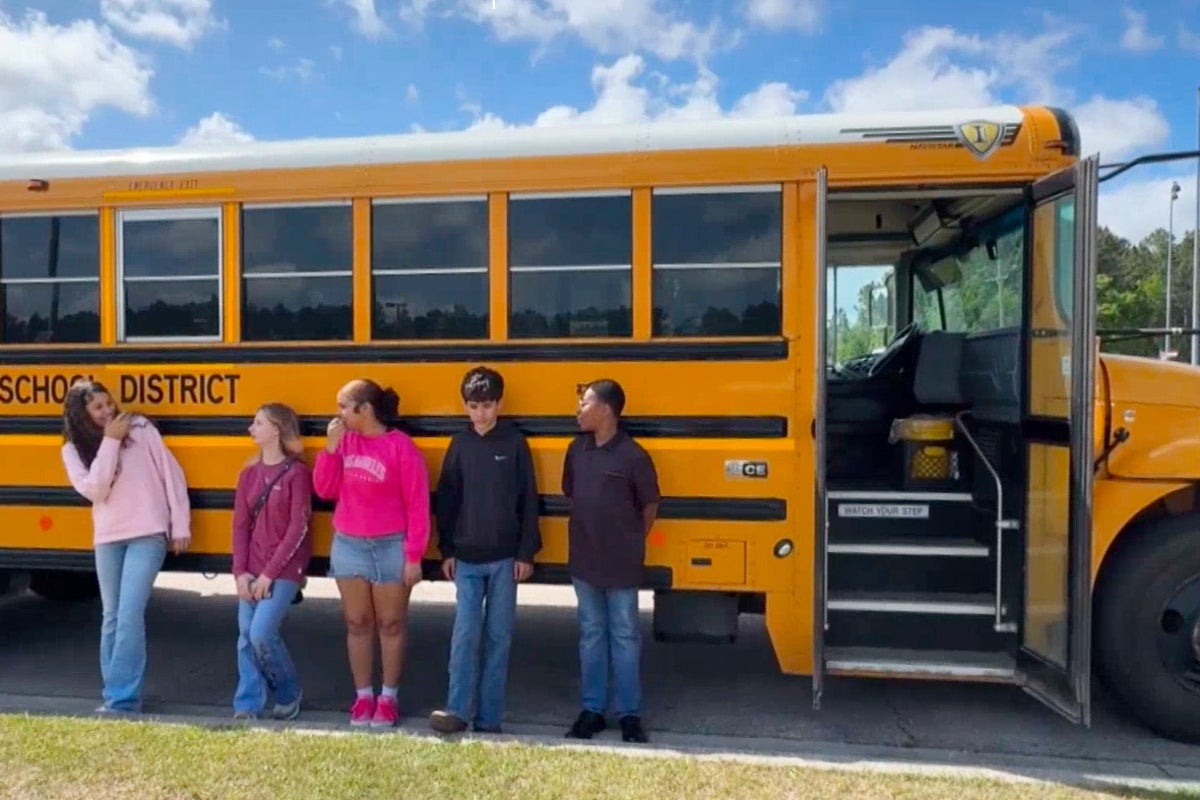
Dillon Reeves didn't have a phone. While his classmates were glued to their screens, scrolling through social media or playing games, the 13-year-old was looking ahead. That simple lack of distraction might be the reason dozens of families in Warren, Michigan, didn't have to attend funerals in 2023. Most middle schoolers are treated like children who need constant supervision, but when their bus driver lost consciousness at 40 miles per hour, the kids in the back were the only adults in the room.
We often talk about the "dangers" of kids being bored or disconnected from technology. This story flips that narrative on its head. It shows that situational awareness isn't just an old-school virtue—it’s a survival skill.
The Moment Everything Went South on Masonic Boulevard
It was a Wednesday afternoon. The bus from Carter Middle School was heading home, filled with about 65 students. Everything seemed routine until the driver, a 40-year-old woman with a clean record, started feeling "dizzy." She followed protocol by radioing the base to say she wasn't feeling well and planned to pull over.
She never made it to the curb.
She passed out while the bus was still in gear, moving at a steady clip down a busy road. Her hands fell from the wheel. Her foot slipped. The massive vehicle began veering toward oncoming traffic. This is where most stories end in tragedy. You’ve seen the headlines before. A medical emergency leads to a multi-car pileup, and the fallout is devastating.
But Dillon Reeves saw it happening in real-time. He was sitting about five rows back. He didn't hesitate. He didn't look for an adult to tell him what to do. He dropped his backpack, ran to the front, and grabbed the steering wheel.
Moving Fast Without a License
Watching the surveillance video from inside the bus is chilling. You see the driver's head slump. You see the panic start to ripple through the seats. Then you see Dillon. He stepped into the well of the driver’s seat, grabbed the wheel with one hand, and slammed on the brake with the other.
He didn't just stop the bus; he stopped it safely. He managed to keep the vehicle in its lane, avoiding a head-on collision with a car just feet away. Once the bus groaned to a halt, he didn't celebrate. He started shouting instructions. He told his classmates to call 911 immediately.
Think about that for a second. A seventh-grader had the presence of mind to manage a massive piece of machinery and a crisis-stricken crowd simultaneously. He’d watched the driver operate the bus every day. He paid attention. Most of us go through life on autopilot, but this kid was a student of his environment.
Why the No Phone Rule Actually Mattered
Dillon's parents, Steve and Ireta Reeves, later told reporters that their son doesn't have a cell phone. In a world where 13-year-olds feel naked without a screen in their palms, Dillon was an outlier. His father called him an "old soul."
It’s easy to dismiss that as "boomer" talk, but the tactical advantage of being "unplugged" in that moment is undeniable. If Dillon had been watching a TikTok, those five seconds of reaction time would’ve been gone. The bus would’ve been in the ditch or through a storefront before he even looked up.
Distraction is a luxury we can't always afford. We spend so much time worrying about what's happening in the digital space that we ignore the physical world around us. This incident serves as a massive wake-up call for how we train—or fail to train—the next generation to handle real-world emergencies.
The Response From the Warren Community
Warren Police Commissioner Bill Dwyer didn't mince words when he called Dillon’s actions "extraordinary." The city threw a ceremony. They gave him an award. But the real reward was the fact that 66 people walked away from a potential catastrophe without a single scratch.
The bus driver was hospitalized and underwent testing. It was a freak medical event. No one was at fault, but everyone was at risk. The school district, Warren Woods, praised the quick thinking of the entire student body, noting that while Dillon was the hero at the wheel, other students stepped up to help their peers and contact emergency services.
It highlights a gap in how we view middle schoolers. They’re often seen as impulsive or unreliable. This event proved that under extreme pressure, some kids can outperform the adults.
Lessons in Emergency Readiness for Parents
You don't need to wait for a bus driver to pass out to teach your kids how to handle a crisis. Most parents focus on "stranger danger" or online safety, but the "what if" scenarios of physical safety are just as vital.
Dillon knew how to stop that bus because he was observant. He knew where the brake was. He knew how the wheel felt. He understood the mechanics of the world he lived in.
Start by having "boring" conversations with your kids. If we're in a car and I stop talking, what do you do? If the fire alarm goes off and I'm not in the room, where's the exit? Don't make it a lecture. Make it a game of "what's the move?"
Situational awareness isn't a gift you're born with. It’s a muscle you build by looking at the world instead of a screen. Dillon Reeves proved that a little bit of attention can save a lot of lives.
Go home today and ask your kid if they know how to put a car in park or how to call for help if your phone is locked. Don't assume they know. Make sure they do. One day, that knowledge might be the only thing standing between them and a disaster.