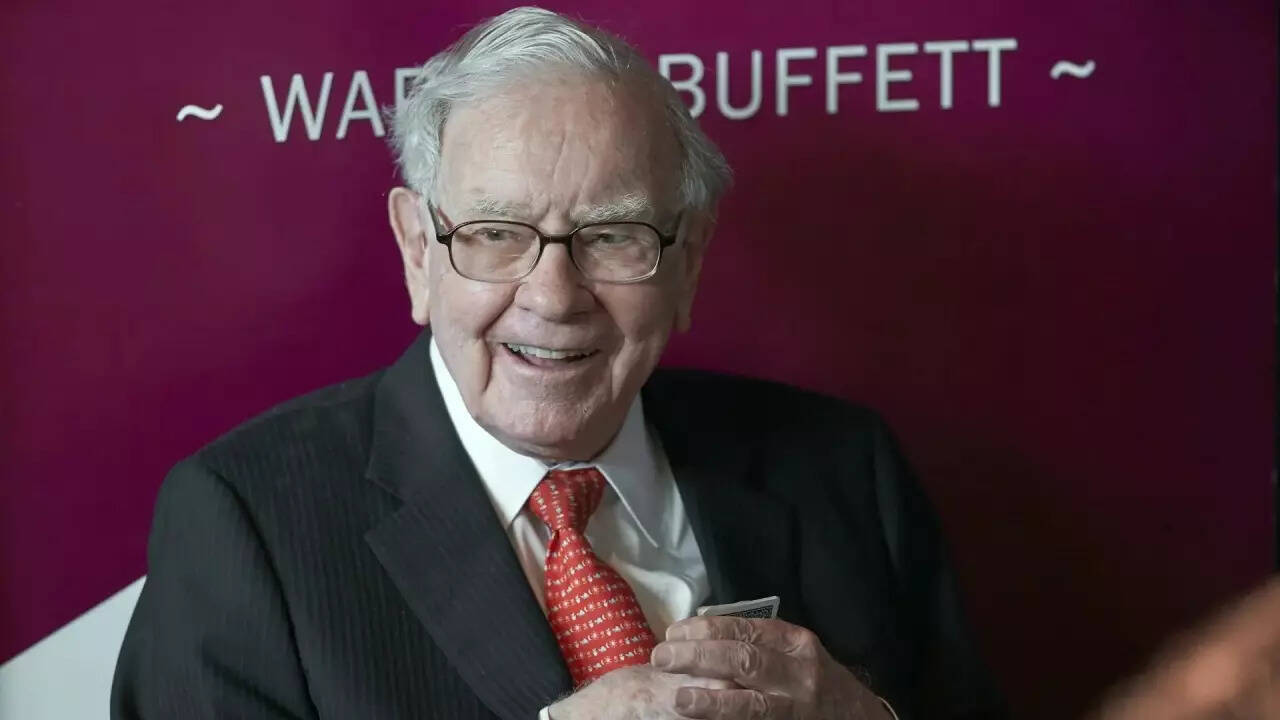
Most people look at Warren Buffett and see a giant pile of cash. They track his Berkshire Hathaway stock portfolio, copy his trades, and try to decode his value investing formulas. They think the ultimate prize is his $140 billion net worth.
They are missing the entire point.
If you actually study his decades of annual letters and candid interviews, you realize something quickly. Buffett views money as a byproduct, not the goal. The real genius lies in how he runs his life. He has built a framework for happiness, time freedom, and integrity that anyone can copy, even if you don't have a dime in the stock market.
Forget the compound interest charts for a minute. Let's talk about the actual Warren Buffett life lessons that matter when the markets close.
The No Asshole Rule for Your Inner Circle
Wall Street is notorious for toxic relationships and sharp elbows. Buffett chose a different path. He famously advises people to measure their success in life by how many of the people you want to have love you actually do love you.
It sounds soft. It's actually incredibly practical.
You can buy prestige. You can buy attention. You can't buy genuine affection. Buffett has spent decades intentionally surrounding himself with people who ground him, most notably his late business partner Charlie Munger. They worked together for half a century without a single major argument. Why? Because they shared a baseline of absolute trust.
Look at your own calendar. Who are you spending time with? If you tolerate toxic people because they help your career or boost your status, you're making a bad trade. Buffett would tell you to short those relationships immediately.
Guard Your Calendar Like a Billionaire Guards Capital
Bill Gates once tracked every single minute of his day. Then he met Buffett. Buffett showed him his appointment book. It was mostly empty.
"You've got to keep control of your time," Buffett remarked during a joint interview with Gates. "Productivity isn't about filling every slot."
If you say yes to every meeting, coffee chat, and minor request, you let other people run your life. You become reactive. Buffett spends hours every day just sitting in his office, reading and thinking. No distractions. No endless Slack notifications.
To get this kind of freedom, you have to get comfortable with a short word. No.
Saying no doesn't make you rude. It makes you focused. If a billionaire can leave his schedule wide open to think deeply, you can probably skip that optional Zoom meeting that should have been an email.
Write Your Own Inner Scorecard
This is perhaps the heaviest philosophical concept Buffett talks about. He divides the world into people who operate on an Inner Scorecard versus an Outer Scorecard.
An Outer Scorecard means you judge yourself by what the world thinks of you. Do you have the right car? The impressive job title? The verified badge on social media?
An Inner Scorecard means you judge yourself by your own standards.
Buffett poses a classic thought experiment to clarify this. Would you rather be the world's greatest lover but have everyone think you're the worst, or the world's worst lover but have everyone think you're the greatest?
If you choose the first option, you use an Inner Scorecard.
When Berkshire Hathaway refused to buy tech stocks during the dot-com bubble of the late 1990s, the media called Buffett washed up. Critics said the game had passed him by. He didn't care. He knew his system worked, and he refused to break his rules just to please the crowd. A few years later, the bubble burst, and his strategy proved right. Base your self-worth on your own metrics, not the shifting opinions of outsiders.
The Cost of a Broken Reputation
It takes 20 years to build a reputation and five minutes to ruin it. Buffett tells this to every new manager who joins Berkshire Hathaway. He reminds them that if they lose money for the firm, he will be understanding. If they lose a shred of reputation for the firm, he will be ruthless.
We live in an era of shortcuts. People hype up mediocre products, exaggerate their achievements on resumes, and bend rules for quick wins.
Don't do it.
Integrity isn't some old-fashioned moral obligation. It's a massive competitive advantage. When people know you don't lie, cheat, or steal, your transaction costs drop to zero. Deals get done on a handshake. Opportunities find you because you are the safe bet in a world full of scammers.
Marry the Right Person
When asked about the most important decision a person makes, Buffett doesn't talk about stocks, careers, or universities. He talks about marriage.
"You want to associate with people who are the kind of person you’d like to be," Buffett said at a 2017 event. "The most important person in that regard is your spouse."
Your partner dictates your daily environment. They can feed your anxieties or fuel your growth. They can push you toward reckless greed or anchor you in sanity. Buffett credit his first wife, Susan, with shaping his entire worldview and teaching him how to open up to the world. Choose a partner who makes you want to be a better human, not just someone who looks good in photos.
Read 500 Pages Every Single Day
Early in his career, Buffett was asked about the key to success. He pointed to a stack of books and said to read 500 pages like that every day. He explained that knowledge builds up, just like compound interest.
Most people stop learning the day they graduate. They scroll through social media feeds, consume bite-sized videos, and wonder why their attention spans are shot.
Deep reading is a superpower.
You don't need to hit 500 pages tomorrow. Start with 20. Read biographies of people who failed and bounced back. Read history. Read industry reports. The goal is to build a massive library of mental models so that when life throws a complex problem your way, you have a framework to solve it.
Keep Your Lifestyle Boring
Buffett has lived in the same five-bedroom house in Omaha, Nebraska, since 1958. He bought it for $31,500. He famous drives moderate cars and eats breakfast at McDonald's, rarely spending more than four dollars on a meal.
This isn't performative misery. It's an optimization strategy.
When you upgrade your lifestyle every time you get a raise, you trap yourself on a treadmill. You have to keep working high-stress jobs just to fund the lifestyle. By keeping his fixed costs low, Buffett ensured that he never had to make a decision out of financial desperation.
True wealth is the ability to walk away from things you don't want to do. If a massive mansion and a supercar require you to sell your soul to pay the mortgage, they aren't assets. They are golden handcuffs.
Focus on Your Circle of Competence
You don't need to be an expert on everything. You just need to know exactly what you don't know.
Buffett and Munger built their empire by staying inside what they call their "circle of competence." If a business is too complex—like a highly technical bio-tech startup or a convoluted financial derivative—they simply put it in the "too hard" pile and move on.
Society pressures us to have opinions on every news story, every technology, and every trend. It's a trap.
Be comfortable saying, "I don't know enough about that to have an opinion." Focus your energy on the few areas where you actually possess real skill or knowledge. Double down there. Let everyone else waste energy pretending to be experts on everything.
Invest in Your Own Ability First
During periods of high inflation or economic chaos, people always ask Buffett where they should put their money. Gold? Real estate? Bitcoin?
His answer never changes. Invest in yourself.
Nobody can tax your talent. Nobody can steal your skills. If you become an exceptional writer, a brilliant coder, or a masterful salesperson, you will always find a market.
Start by improving your communication. Buffett often tells students that a public speaking course he took from Dale Carnegie changed his life. He was terrified of speaking in public before that. He says that single course increased his value by 50 percent. Find your weaknesses, spend a little money or time to fix them, and build an unshakeable skill set.
Price vs. Value in Everything
Price is what you pay. Value is what you get.
Buffett uses this phrase for stocks, but it applies to every corner of your life.
A cheap piece of furniture that breaks in six months has a low price but terrible value. A high-quality tool that lasts a lifetime might have a steep price, but its value is immense.
Apply this to your time. An hour spent scrolling mindlessly is free in terms of price, but it costs you massive value in mental clarity. An hour spent exercising or sleeping well costs effort, but the value returned is priceless. Stop looking at the immediate sticker price of your choices. Start looking at the long-term yield.
To apply these principles today, don't try to overhaul your entire life at once. Pick one area. Clear out your calendar for tomorrow afternoon by declining one non-essential meeting. Buy a book instead of opening an app tonight. Or simply sit down and define what your own Inner Scorecard looks like. Define your own version of success, then ruthlessly cut away everything else.