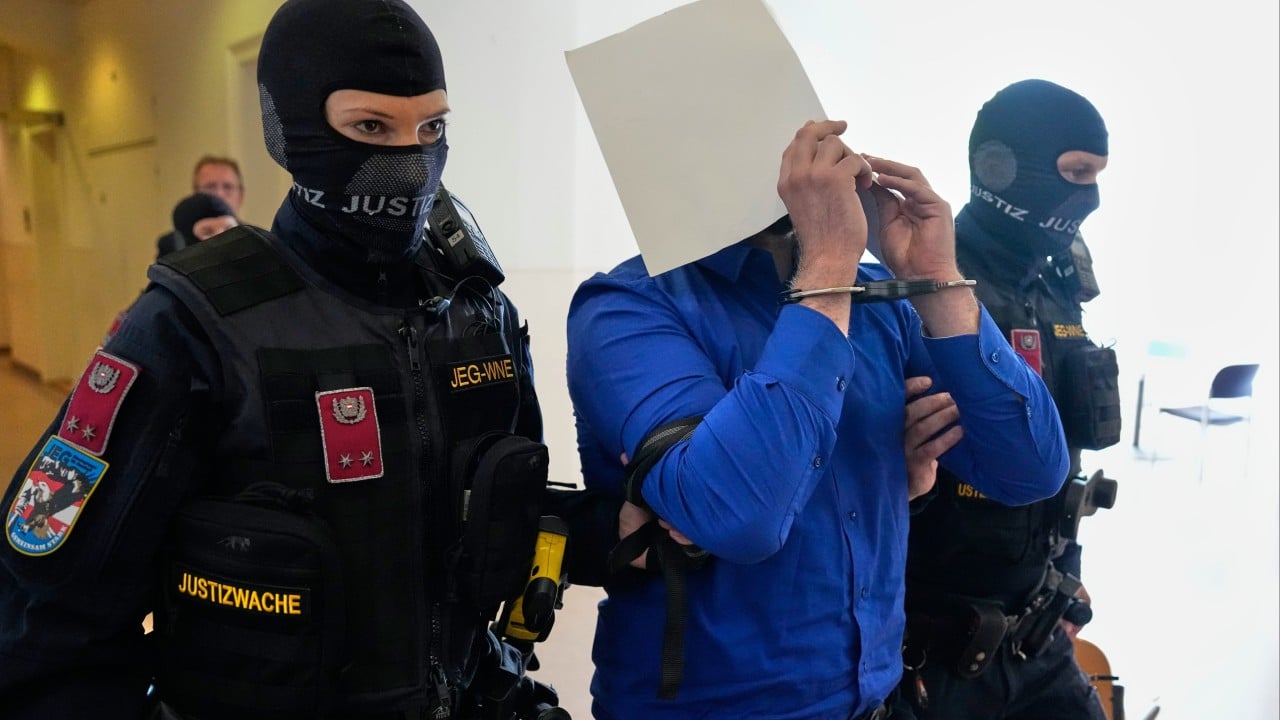
The cancellation of Taylor Swift’s three concerts in Vienna during the late summer of 2024 was not merely a logistical headache for event promoters. It was a stark manifestation of a changing threat environment. A nineteen-year-old Austrian citizen, influenced by Islamic State ideology, stood at the precipice of executing an attack designed to maximize civilian casualties on an unprecedented scale. His confession, surfacing in the subsequent months of judicial proceedings, provided a chilling blueprint of how a singular, radicalized individual could halt a global cultural phenomenon. This was not a random act of violence. It was a calculated attempt to use the high-profile nature of the Eras Tour as a vessel for extremist messaging.
The suspect admitted to preparing an explosive device using chemical precursors and detonators stolen from his workplace. His path to radicalization followed a well-documented trajectory, shifting from online propaganda consumption to a commitment to violent action. While authorities arrested him and his accomplice just days before the scheduled performances, the proximity of the event remains a point of intense scrutiny for security experts. We must look past the immediate shock of the cancellation to understand how the intersection of digital radicalization and physical infrastructure creates a volatile situation for global tours.
The operational reality of the Vienna plot exposes the vulnerability inherent in modern, large-scale entertainment. Stadiums are built for access, spectacle, and density. They are designed to funnel thousands of people through specific chokepoints and maximize the energy of a shared experience. Terrorist organizations recognize this architecture. They see these venues not as places of art or commerce, but as theaters for psychological warfare. When you combine the massive, devoted fan bases that characterize the current pop music environment with the global connectivity of extremist recruitment networks, the risk assessment shifts from standard security measures to national intelligence priorities.
For years, the music industry operated under the assumption that physical security—metal detectors, bag checks, perimeter fencing—was sufficient to deter bad actors. The Vienna incident shattered that assumption. The threat did not emerge from a breach of the venue’s perimeter. It emerged from a domestic actor who intended to strike before the gates even opened. This requires a fundamental reassessment of how tour operators and local governments perceive threat horizons. The security boundary can no longer exist solely at the ticket turnstile. It must be a continuous, intelligence-driven process that begins months before a tour bus arrives in a city.
The intelligence cooperation that foiled the Vienna plot serves as both a success story and a warning. Austrian authorities received critical information from foreign intelligence partners, including the United States, which allowed them to track the suspect’s movements and procurement of materials. Without that specific, actionable intelligence, the security services would likely have been operating in the dark. This level of international data sharing is often described as the backbone of counter-terrorism, yet it is notoriously difficult to maintain. It relies on the alignment of national priorities and the willingness of agencies to trade sensitive information. When global political tensions rise, that alignment is often the first casualty. We cannot bank on intelligence agencies catching every individual actor before they act.
The digital radicalization process that fueled the Vienna suspect continues to accelerate. Extremist organizations have moved away from centralized command structures and toward a model that encourages self-initiation. They provide the ideological justification and, increasingly, the technical know-how for individuals to plan attacks in isolation. This decentralized approach makes it incredibly difficult for law enforcement to identify threats before they manifest in the physical world. The teenager in Vienna did not need a training camp or a handler to formulate his plan. He needed an internet connection and a motivation rooted in global grievances.
This dynamic creates a massive challenge for local authorities. How do you police a population where the next threat might be a neighbor, a coworker, or a classmate who has spent months engaging with encrypted content in total anonymity? Surveillance can only go so far. At a certain point, the sheer volume of data makes it impossible to distinguish between genuine threats and rhetorical noise. We are seeing a move toward AI-driven monitoring of digital spaces to flag suspicious procurement of materials, such as the chemicals the Vienna suspect acquired. However, these tools are reactive by nature. They alert us to what has already begun, rather than predicting the intent before the first step is taken.
The financial and social fallout from the cancellation also deserves attention. The entertainment sector thrives on the promise of reliability. Fans spend thousands of dollars on tickets, travel, and accommodation based on the expectation that the show will go on. When security concerns force a cancellation, the economic impact is immediate and significant for the host city. Vienna saw millions in lost revenue, but the deeper cost is the erosion of public trust. When people begin to view large gatherings as potential targets rather than centers of community, the social fabric of the city begins to thin.
We are entering an era where the cost of security will inevitably be passed on to the consumer. Expect ticket prices to climb as insurance premiums for major tours skyrocket and the private security budget for global icons increases. This is not just a trend for high-profile performers. Every major event, from sports championships to music festivals, will likely face higher hurdles for compliance and protection. Smaller venues, which lack the budget for sophisticated counter-terrorism measures, may become the next logical targets for actors looking for an easier path to notoriety.
The transition from a secure environment to a target is rarely linear. It is a slow accumulation of risk factors that often go unaddressed until a near-miss occurs. The Vienna plot was a near-miss. Had the intelligence sharing been slower or the suspect more skilled in his tradecraft, the outcome would have been catastrophic. We are currently living in a state of suspended animation, waiting to see if this incident serves as a wake-up call or merely a temporary disruption. The tools to mitigate these risks exist, but they require a level of integration between law enforcement, private security, and the tech sector that is currently absent.
Society must also reckon with the allure of the high-profile target. Perpetrators of these plots do not just want to inflict damage. They want to hijack the news cycle and force a global conversation. By attacking a figure as culturally ubiquitous as Taylor Swift, the extremist aims to ensure that their message reaches millions of people who would otherwise never encounter it. This is the logic of the modern extremist. They use the platform of the victim to amplify their own twisted ideology. Denying them this amplification is a crucial part of the defense, yet it is nearly impossible in an information ecosystem that thrives on the rapid dissemination of shocking events.
The investigative process into the Vienna plot continues to peel back layers of a sophisticated, albeit amateurish, web of planning. Prosecutors are dissecting the suspect’s communication logs, mapping his contacts, and tracing his path through various online forums. This is meticulous, time-consuming work. It is the kind of work that happens in the shadows, far removed from the public discourse that follows the cancellation of a concert. But it is here, in the details of the investigation, that we find the truth about how we might prevent future occurrences.
If there is a lesson to be taken from the events in Austria, it is that the safety of our public spaces is no longer a given. It is a product of constant vigilance, rapid intelligence synthesis, and an uncomfortable acknowledgment that the threats we face are adapting faster than our protective institutions. The Era of the Eras Tour, and indeed all such massive cultural milestones, carries a heavy weight. It is the weight of protecting the joy of millions from those who would use that joy as a lure for destruction. We are not just protecting a concert; we are protecting the ability to gather without fear.
The investigation into the Vienna plot will eventually close, but the underlying conditions that made it possible remain. Radicalization has not vanished, and the desire to disrupt Western society through targeted violence against symbols of normalcy will likely persist. Every time a major tour announces a list of global dates, a new set of threat vectors opens up. Security planners are already updating their playbooks, running new simulations, and refining their coordination protocols. They understand that the next time, there may be no warning, no intelligence tip, and no opportunity to stop the clock before it runs out.
The reality remains uncomfortable. We are gambling on the hope that the systems in place are enough to hold back the tide of individual, ideologically driven violence. The Vienna incident was a sharp reminder of how thin that barrier truly is. When the lights go down and the music stops, the silence that follows is not always peaceful. Sometimes, it is the sound of a system holding its breath, waiting to see if the next threat has already arrived.