The air in the boardroom at Kering headquarters doesn't smell like expensive perfume. It smells like adrenaline and the faint, metallic tang of anxiety. When sales figures for a brand as storied as Gucci begin to stall, the silence that follows isn't just quiet. It is heavy. For years, the house had been defined by a maximalist, geek-chic aesthetic that turned every sidewalk into a Wes Anderson film set. It worked. Until it didn't.
Luxury is a fickle god. It demands constant sacrifice and, more importantly, constant evolution. The problem facing the Pinault family—the titans behind the Kering empire—wasn't just a dip in the quarterly reports. It was a crisis of identity. The maximalist party was over, the guests were hungover, and the floor was covered in glitter that no one wanted to clean up. They needed a shock to the system. They needed someone who understood that "sexy" isn't a look, but a feeling of power.
The Architect of the Edge
Enter the man often whispered about in the same breath as revolution: Demna.
Known primarily for his scorched-earth approach at Balenciaga, Demna Gvasalia represents a departure from the whimsical and a lunge toward the visceral. To understand why Kering would lean on his sensibilities to reinvigorate Gucci is to understand the difference between a costume and a silhouette. Gucci had become a costume. Demna deals in silhouettes that demand space.
Imagine a woman walking into a high-stakes meeting. In the previous era, she might have worn a pussy-bow blouse and loafers adorned with embroidered bees. She looked charming. She looked approachable. Now, consider the alternative. She walks in wearing a jacket with shoulders so sharp they could cut glass, draped in a fabric that clings not out of desperation, but out of design. She doesn't look charming. She looks dangerous.
That is the "sexy" Demna brings back to the table. It is a calculated, aggressive allure. It’s a return to the provocative energy that Tom Ford used to save the house in the nineties, but updated for a world that has grown colder and more cynical.
The Weight of the GG
The numbers tell a story that the runway often tries to hide. Gucci accounts for a massive portion of Kering's total operating profit. When Gucci sneezes, the entire luxury sector catches a cold. In recent cycles, the brand saw a 4% comparable revenue decline while rivals like Hermès and LVMH’s top performers continued to climb.
This isn't just a business slump. It is a shift in how the ultra-wealthy spend their "flex" capital.
The "quiet luxury" movement—that beige, understated wave of cashmere—threatened to make Gucci’s loud logos look like relics of a louder, less sophisticated time. To fight back, the brand couldn't just go quiet. It had to go deep. The strategy involves a delicate pivot: stripping away the kitsch and replacing it with craftsmanship that speaks for itself.
Think of it like a master chef who has spent years making overly sweet desserts. Suddenly, he realizes the palate of his customers has changed. They want salt. They want smoke. They want something that lingers on the tongue long after the meal is over. Demna’s influence is the smoke.
A Hypothetical Walk Through the New Ateliers
Let’s look at a hypothetical artisan named Sofia. She has worked in the leather goods department outside Florence for thirty years. For the last decade, her days were spent appliquing snakes and flowers onto handbags. It was labor-intensive, but eventually, it felt like assembly-line whimsy.
Now, the instructions from the top have changed. Sofia is told to focus on the grain of the leather. The hardware must be heavy, intentional, and sleek. The "sexy" isn't in the decoration; it’s in the tension of the stitch. She feels the difference in her hands. The product feels more like an heirloom and less like a trend.
This shift toward "reinvigoration" is really a shift toward longevity. By leaning into a more provocative, streamlined aesthetic, Gucci is betting that customers will pay more for a feeling of timeless confidence than for a fleeting moment of "it-girl" fame.
The Invisible Stakes of the Rebrand
Why does this matter to someone who will never buy a $4,000 trench coat? Because fashion is the lead indicator of our cultural temperature. When we move from the whimsical to the "sexy" and structured, it reflects a society that is tired of playing games. We are entering an era where people want to feel armored.
The stakes for Kering are billions of dollars in market valuation. The stakes for the fashion world are even higher. If Gucci fails to pivot, it signals that the era of the "mega-brand" might be fracturing. If they succeed, they prove that a legacy house can shed its skin and emerge stronger, sleeker, and more relevant than ever.
The transition hasn't been without its friction. Critics argue that moving away from the colorful, inclusive world of the previous creative direction might alienate the very Gen Z fans who saved the brand five years ago. But luxury isn't a democracy. It’s an aspirational hierarchy. And right now, the world is aspiring to a certain kind of dark, polished elegance that only a handful of designers can execute without looking like they are trying too hard.
The Human Element in the Hype
Beyond the neon lights of the runway, there is a human exhaustion with the "new." We are overstimulated. We are tired of the scroll. By stripping back the noise and focusing on "sexy" as a form of presence, Demna is offering a way out of the chaos.
It is a return to the body.
When you put on a garment that fits perfectly, that emphasizes the line of your back or the strength of your stride, your heart rate changes. You stand differently. You speak differently. That is the product Gucci is actually selling. They aren't selling leather; they are selling a transformation of the self.
The gamble is that the modern consumer would rather be envied than be liked. It’s a bold, perhaps even controversial, bet in an age of "community-driven" marketing. But then again, Gucci was never meant to be common. It was meant to be a dream.
As the lights dim on the latest showcase, the fashion world holds its breath. The silhouettes are longer. The colors are moodier. The skin is showing, but it’s doing so with a smirk, not a giggle.
The house is being rebuilt, stone by heavy stone, into a fortress of desire. Whether the world will storm the gates or turn away in search of something softer remains the multi-billion dollar question hanging in the Tuscan air. The party isn't over. It’s just moved to a room where the lighting is lower and the stakes are much, much higher.
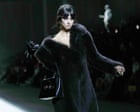
A single model pauses at the end of the pier, the wind catching a coat that looks like liquid onyx, and for a moment, the decline in the stock price feels like a ghost from another life.