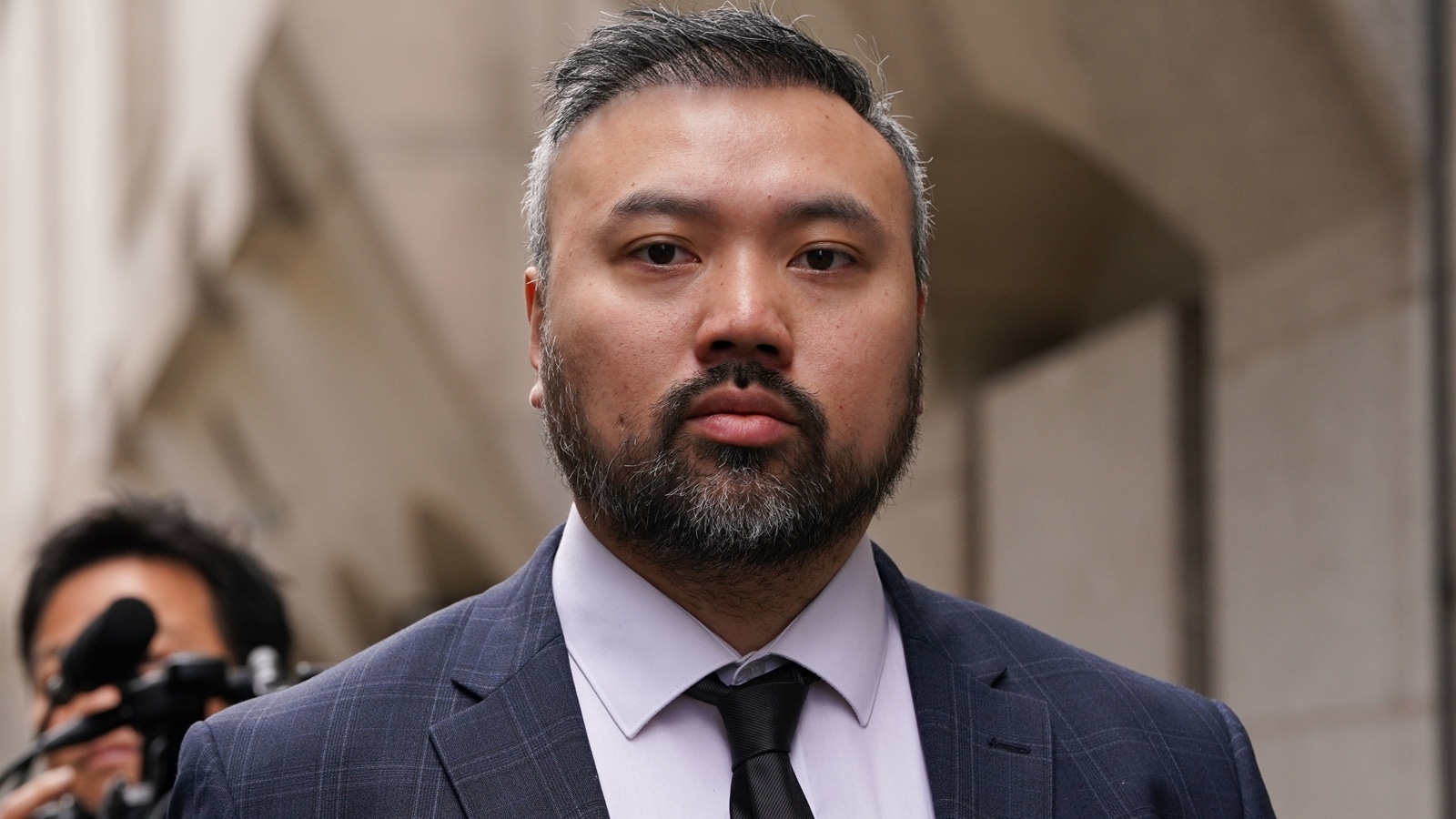
The idea of a foreign state running its own "shadow police" on British soil sounds like something out of a Cold War thriller. But for the Hong Kong community in the UK, it’s been a lived reality. This week, the Old Bailey confirmed those fears. A UK Border Force official and a former Hong Kong police officer were found guilty of assisting a foreign intelligence service. It’s a landmark conviction under the 2023 National Security Act, and it’s a massive wake-up call for how we handle transnational repression.
You might think "spying" involves high-tech gadgets and state secrets. In this case, it was much more personal. It was about tracking down people who thought they’d finally escaped the reach of the Hong Kong authorities.
The men behind the shadow policing
The two men at the center of this are Chi Leung "Peter" Wai and Chung Biu "Bill" Yuen. On the surface, they looked like part of the establishment. Wai, 40, was a UK Border Force officer and a special constable for the City of London Police. Yuen, 65, was a retired Hong Kong police superintendent working for the Hong Kong Economic and Trade Office (HKETO) in London.
Think about that for a second. You have a man with access to Home Office databases—the very systems that track who enters and leaves the UK—allegedly working for the people his targets were running from.
The prosecution’s case was simple but devastating. They argued that these men weren't just doing "private security work," as they claimed. They were operating as an extension of the Hong Kong police. They were surveilling dissidents, tracking pro-democracy activists like Nathan Law, and even monitoring British politicians.
When the law is ignored
One of the most "sinister and chilling" aspects of this case—to use the words of Commander Helen Flanagan from Counter Terrorism Policing—was the sense of entitlement. These men were caught after a botched attempt to break into the home of Monica Kwong, a woman accused of fraud in Hong Kong.
They didn't call the local police. They didn't go through legal channels. They allegedly tried to force their way in themselves. Prosecutors said they acted as if UK law simply didn't apply to them. They were acting as the law, or at least the law as defined by Beijing and Hong Kong.
During the trial, the jury heard how Wai used his position in the Border Force to search for people of interest. This wasn't just a side hustle. It was a betrayal of his oath of office. He was also convicted of misconduct in a public office because he treated sensitive government data like a personal search engine for his handlers.
The human cost of the mission
We can't talk about this case without mentioning Matthew Trickett. He was a former Royal Marine and a UK immigration enforcement officer who was charged alongside Wai and Yuen. Shortly after being released on bail in May 2024, he was found dead in a park in Maidenhead.
His death was ruled a suicide, but it cast a long, dark shadow over the proceedings. It underscored the high stakes involved when people get caught in the gears of international espionage.
For the pro-democracy campaigners living in the UK, this wasn't just news. It was a confirmation of the "transnational repression" they’ve been shouting about for years. Hong Kong authorities have put bounties on the heads of activists living abroad. Now we know they have people on the ground in Britain actively trying to collect.
What this means for UK-China relations
The timing couldn't be worse for the British government. Keir Starmer’s administration has been trying to balance a difficult relationship with Beijing. They want the trade, but they can't ignore the security risks.
Security Minister Dan Jarvis didn't mince words after the verdict. He’s summoned the Chinese ambassador. The message is clear: this won't be tolerated. But saying it and stopping it are two different things.
The conviction of Wai and Yuen is the first major test of the National Security Act 2023. This law was specifically designed to give police more power to tackle "hostile state activity." It expanded the definition of spying to include the kind of "assisting" that these men were doing.
The message to the community
If you're a Hong Konger who moved to the UK for safety, this verdict is a double-edged sword. On one hand, it’s a relief to see the British justice system take these threats seriously. It shows that "shadow policing" has consequences.
On the other hand, it’s terrifying. It proves that the reach of the state you fled is longer than you hoped. It proves that the person checking your passport at the border or the official at a trade office might be watching you for reasons that have nothing to do with their job description.
The UK government needs to do more than just summon ambassadors. They need to ensure that our institutions—Border Force, the police, the civil service—are insulated from this kind of infiltration.
If you or someone you know feels targeted by foreign agents, don't stay silent. The Met Police have a dedicated team for this. Use the official channels. The conviction of Wai and Yuen proves that when the evidence is there, the law will actually step in. Don't let the "shadow police" win by staying in the dark.
Check your digital security. Be careful about what info you share with unofficial organizations. Most importantly, remember that you’re under the protection of British law now—and as this case shows, that law finally has some teeth.


