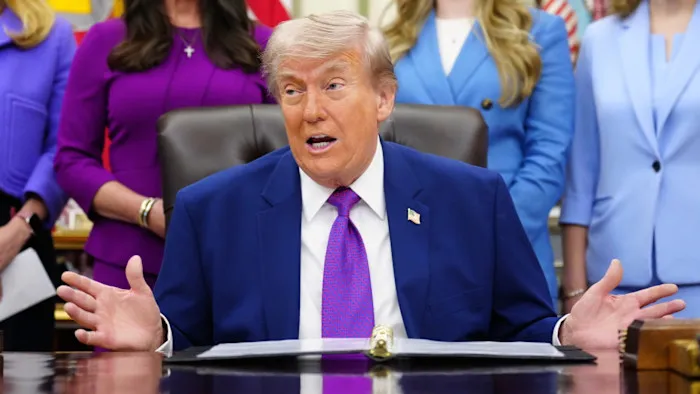
The mainstream media is hyperventilating over "life support" diplomacy because they are addicted to the sedative of a fake peace. When Donald Trump rejects a "peace proposal" from Tehran, the standard reaction is to mourn the loss of stability. This is a fundamental misunderstanding of how power functions in the Middle East. Stability is not the goal; leverage is.
What the pundits call "peace" is actually just a subsidized stalemate. For decades, the West has been obsessed with the idea that if we just sign the right piece of paper, Iran will stop acting like a revolutionary state and start acting like a Westphalian democracy. It hasn't happened. It won't happen. By walking away from a compromise that satisfies no one, the current administration isn't "failing" at diplomacy. It is finally recognizing that the old framework is a carcass.
The Myth of the Rational Actor
Most geopolitical analysts operate on the flawed premise that every nation-state wants the same thing: economic prosperity and a seat at the global table. They view Iran through a lens of Western logic. If we lift sanctions, they will invest in infrastructure. If we allow them to sell oil, they will stop funding proxies.
This is a dangerous delusion.
The Iranian regime is not a corporate board of directors; it is a theological entity with a survivalist mandate. Since 1979, their entire identity has been built on "Death to America." You cannot "negotiate" away a core identity with a 2% reduction in uranium enrichment. When Trump rejects a ceasefire, he isn't being "reckless." He is acknowledging that a ceasefire is just a tactical pause for the Islamic Revolutionary Guard Corps (IRGC) to reload.
I have watched diplomats waste years in five-star Geneva hotels trying to find "middle ground" with people whose literal job description is to destroy that ground. Rejection is the only honest form of communication left in this relationship.
The Sanctions Paradox
You will hear that sanctions have failed because Iran is still standing. This is like saying a bulletproof vest failed because the person wearing it still has a bruise. Sanctions are not designed to flip a regime overnight; they are designed to increase the "cost of business" for militancy.
Without the current pressure, the IRGC’s budget would be tripled. Imagine the drone swarms in Ukraine and the ballistic missiles in the Red Sea, then multiply that by three. That is what "peace" looks like when it involves unfreezing assets for a revolutionary state.
- Fact: The Iranian Rial has lost over 90% of its value in the last decade.
- Reality: This hasn't stopped the regime, but it has forced them to choose between domestic bread and foreign bullets.
- The Nuance: When the U.S. rejects a deal, it is effectively choosing to keep the regime in a permanent state of domestic crisis management.
Why "Life Support" is a Good Thing
The term "life support" implies that the death of the ceasefire is a tragedy. In reality, the death of a bad deal is the birth of a realistic strategy. We are moving away from the era of "strategic patience"—which was just a polite way of saying "doing nothing while they build a bomb"—and entering an era of "maximum friction."
Friction creates heat. Heat creates cracks.
The "lazy consensus" says that we must avoid escalation at all costs. But what they ignore is that the absence of American escalation is an invitation for Iranian escalation. Look at the Houthi rebels in the Bab el-Mandeb strait. They didn't start firing at global shipping because Trump was mean on Twitter; they started because they perceived a vacuum of consequence.
The Energy Markets are Smarter Than the Media
If the world were truly terrified of a Trump-led collapse in Iran negotiations, oil prices would be $150 a barrel tomorrow. They aren't. Why? Because the market knows something the pundits don't: The world has decoupled from Iranian supply.
Between the Permian Basin in Texas and the capacity in Guyana and Brazil, the "Iranian Oil Weapon" is a relic of the 1970s. We are no longer held hostage by the threat of a closed Strait of Hormuz. We have the technical and logistical capacity to bypass the drama. The "instability" that journalists crave for their headlines is largely ignored by the people actually moving the world's energy.
The Trap of the "Grand Bargain"
Every administration falls for the "Grand Bargain" trap. They think they can solve everything—nuclear, human rights, proxies, missiles—in one go. It is a vanity project for Secretaries of State.
The contrarian truth is that the Middle East is not a problem to be "solved." It is a series of tensions to be managed. Trump’s rejection of the current proposals is a refusal to buy into the fantasy that a single document can fix a 1,400-year-old sectarian divide.
By keeping the ceasefire on "life support," the U.S. maintains the status of the "unpredictable hegemon." In game theory, being predictable is the fastest way to lose. If Tehran knows exactly what we will accept, they will build a strategy to circumvent it. If they are constantly guessing whether the next move is a drone strike or a new round of banking sanctions, they are forced to play defense.
The Actionable Pivot: Strategic Volatility
For business leaders and investors, the lesson here is simple: Stop hedging for "peace" and start pricing in "volatility."
Peace in the Middle East is a low-probability event. Conflict management is the baseline.
- Diversify supply chains away from the Persian Gulf.
- Invest in defense tech that focuses on asymmetric threats (drones, cyber).
- Ignore the "breaking news" about peace talks. They are theater.
The "peace" being offered was a slow-motion surrender. Rejecting it isn't an act of war; it’s an act of clarity. The era of the diplomat is over. The era of the strategist has returned.
If you want a stable world, you don't get it by signing a deal with a regime that hangs its own citizens from cranes. You get it by making that regime's survival so expensive and so difficult that they can no longer afford to be a global menace. Trump isn't killing the peace; he's killing the lie.
Stop mourning the ceasefire. It was a ghost anyway. Focus on the reality: the only way to deal with a revolutionary power is to outlast them, outspend them, and refuse to give them the one thing they need to survive: your validation.