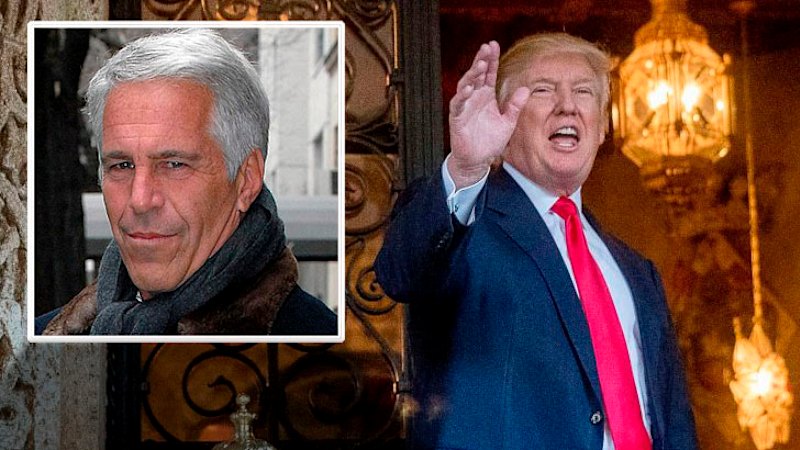
Donald Trump just hit a major legal wall in his $10 billion fight against Rupert Murdoch. On Monday, U.S. District Judge Darrin P. Gayles tossed out the President’s defamation lawsuit against the Wall Street Journal and its heavy-hitting parent companies. The case was built on a scandalous 2003 birthday letter sent to Jeffrey Epstein, but the judge wasn’t buying the legal arguments.
If you’re looking for a quick answer on why the case collapsed, it’s simple: the "actual malice" bar is incredibly high. Trump couldn't prove the Journal knew the story was fake or acted with reckless disregard.
The Letter That Sparked a Billion Dollar Feud
The drama started last July. The Wall Street Journal published a report detailing a "bawdy" birthday gift for the late sex offender Jeffrey Epstein’s 50th birthday. According to the story, the gift was an album filled with messages from Epstein's high-profile friends. One of those entries allegedly featured a drawing of a naked woman with a handwritten note: “Happy Birthday — and may every day be another wonderful secret.”
The signature at the bottom? Donald Trump.
Trump didn't just deny it. He went nuclear. He labeled the drawing a "fake" and sued everyone in sight—Rupert Murdoch, News Corp, Dow Jones, and the specific reporters who broke the story. He claimed the report was a malicious attempt to smear his reputation by tying him to the disgraced financier.
Why the Judge Tossing the Case Matters
Judge Gayles didn't rule on whether the letter was real or fake. Honestly, that’s a question for a later day—if the case even gets there. Instead, the 17-page ruling focused on the legal mechanics of defamation.
When you’re a public figure—and it doesn't get more "public" than being the President—you have to meet the standard set by New York Times v. Sullivan. You can't just prove a story is wrong. You have to prove the journalists involved essentially lied on purpose or were so sloppy they didn't care about the truth.
Judge Gayles wrote that Trump’s complaint came "nowhere close" to meeting this standard. The Journal had reached out to Trump’s team before publishing. They looked at the evidence. They did their homework. Simply telling a reporter "that’s fake" isn't enough to stop a story from running if the outlet has other reasons to believe it's real.
Murdoch and Trump are No Longer Best Friends
The most interesting part of this isn't just the law. It’s the politics. For years, Rupert Murdoch and Donald Trump were seen as an unbeatable duo in the media. Fox News and the Wall Street Journal were the reliable megaphones for the Trump brand.
That ship has sailed.
This lawsuit marks a definitive break. Trump even admitted he called Murdoch personally to try and kill the story before it hit the stands. Murdoch didn't budge. The fact that Trump included Murdoch’s name specifically in a $10 billion suit shows just how personal this has become.
What Actually Happens Next
This isn't necessarily the end of the road, but the clock is ticking. The judge dismissed the case "without prejudice." That’s legalese for "try again, but do better."
- Refiling: Trump has until April 27 to submit an amended complaint.
- The "Malice" Problem: His legal team needs to find actual proof—emails, internal memos, or testimony—showing the Journal staff doubted the letter’s authenticity but published anyway.
- The Congressional Subpoena: The letter at the heart of this was later released by Congress. This makes it even harder for Trump to argue the Journal was acting in bad faith, as they weren't the only ones looking at the document.
Trump’s legal team is already calling it a "powerhouse" case and promising a comeback. We’ll see. Typically, when a judge says your complaint is "conclusory" and "insufficient," you’re facing a very steep uphill climb.
If you’re following the Epstein fallout, this case is a prime example of how hard it is to litigate your way out of the "friend of Jeffrey" narrative. The courts generally protect the press when they’re reporting on documents obtained from an estate or a government investigation.
Don't expect a settlement here. The Journal has stated they stand by the "reliability, rigor, and accuracy" of their work. They’re digging in. Trump is digging in. We’ll know by the end of April if this legal battle has a second act or if the Epstein letter becomes just another permanent footnote in the Trump archives.