The alarm clock is a starting gun. Every weekday at 7:45 AM, Sarah stares at the ceiling of her third-floor walk-up and calculates the price of her own time. She is a data analyst, which means her brain naturally sorts the world into trade-offs and probability curves. Today, the curve is jagged.
Rain is streaking the window. In the old world, Sarah would walk to the corner, wait for the 42 bus, and surrender to the damp smell of wet wool and the rhythmic lurch of a diesel engine. It costs $2.25. It takes forty minutes if the driver is having a good day. If not, she’s late for the stand-up meeting.
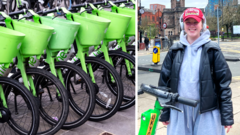
But there, tucked into a charging hub near the curb, sits a neon-green Lime bike. It represents a different kind of math. It’s faster. It’s exhilarating. It’s also $1 to unlock and $0.39 a minute, meaning a twenty-minute ride costs nearly ten dollars. That is a luxury tax on a Tuesday.
This is the silent friction of the modern commute. We aren't just choosing between a seat and a saddle; we are choosing between the predictable boredom of public infrastructure and the expensive freedom of private tech. Now, Lime is trying to break that math wide open with a subscription model that aims to make the green bike feel less like a splurge and more like a limb.
The Tyranny of the Per-Minute Tally
For years, the micro-mobility industry operated on the "vending machine" logic. You want a snack? You pay for the snack. But humans don’t think about their commute as a series of isolated snacks. We think about it as a fixed utility, like water or electricity.
When you pay by the minute, you aren't enjoying the city. You are watching a digital clock bleed your bank account. You hit a red light and you feel a surge of genuine resentment—not because of the delay, but because that red light just cost you eighty cents. It turns a ride through the park into a high-stakes race against your own wallet.
Lime’s new "Prime" subscription is a direct psychological attack on that stress. By offering a flat monthly fee—roughly the price of two lattes—they strip away the unlock fees and offer discounted rates. It is an attempt to move the bike from the "expensive backup plan" category into the "primary identity" category.
Consider the numbers. In major urban centers, a monthly bus pass averages between $70 and $120. If a commuter uses a scooter or e-bike twice a day without a subscription, they can easily clear $300 a month. That isn't a commute; it's a second car payment. By flattening that cost, Lime is trying to bridge the gap between the $2 bus ride and the $15 Uber.
The Ghost in the Public Machine
We have to talk about why Sarah is even looking at the bike while it's raining.
Public transit is the backbone of civilization, yet in many cities, that backbone is suffering from chronic osteoperosis. It’s about the "last mile" problem. The bus gets you to the neighborhood, but it doesn't get you to your door. It leaves you in the gap.
Statistics from the American Public Transportation Association often highlight a sobering reality: nearly 45% of Americans have no access to any public transit at all. In cities where they do, reliability is the phantom that haunts every station. When a subway line goes down or a bus simply fails to appear on the GPS tracker, the "cheap" commute becomes the most expensive thing in the world because it costs you your professional reputation.
This is where the green bikes win. They offer agency. You are the pilot. You aren't waiting for a system that might fail you; you are engaging a tool that is ready when you are. The subscription is the "buy-in" for that sense of control.
A Tale of Two Cities (And One Credit Card)
Let’s look at Marcus. Marcus is a freelance graphic designer who lives in a "transit desert." For him, the bus is a myth.
Before the subscription models arrived, Marcus spent $18 a day on rideshare apps because the walk to the nearest train was two miles through an industrial zone with no sidewalks. He was trapped in a financial pincer movement. When he started using an e-bike subscription, his monthly transport costs dropped by 60%.
But this isn't just about Marcus saving money. It's about the shift in how the city breathes.
When people like Marcus and Sarah opt out of the bus, the city changes. If the "choice" riders—those who can afford the subscription—leave the public system, the political will to fund that system often withers. This is the invisible stake. The convenience of a Lime Prime pass is a miracle for the individual, but it poses a question for the collective: Are we building a two-tiered city where the fast lanes are reserved for those with a subscription?
The Physics of the New Commute
There is a visceral difference in the way these two modes of transport treat the human body.
On the bus, you are cargo. You are pressed against the glass, observing the world as a cinematic projection. You are passive. There is a certain Zen to it, a chance to read or stare into the middle distance, but it is a disconnected experience.
On a bike, you are a participant. You feel the temperature drop by three degrees when you pass under a bridge. You smell the sourdough from the bakery on 4th Street. Your heart rate sits at a steady 110 beats per minute.
Lately, the e-bike has leveled the playing field of physics. You no longer need to be an athlete to arrive at the office without a sheen of sweat. The motor does the heavy lifting, turning a grueling climb into a gentle glide. It is the democratization of effort.
This technological "cheat code" is why the competition with the bus has reached a fever pitch. If the physical barrier to biking is gone, and the financial barrier is being lowered by subscriptions, the bus is left with only one advantage: the roof over your head.
The Math of the Rainy Tuesday
Back in Sarah’s apartment, the math is reaching its conclusion.
She looks at her Lime app. Because she has the subscription, the "Unlock Fee" is $0. The ride will cost her about $5.80. The bus is $2.25.
She thinks about the 42 bus. She thinks about the person who always plays TikToks without headphones at full volume. She thinks about the humidity of forty people in a closed metal box.
Then she thinks about the bike. She has a high-quality raincoat. She has a helmet. She has the subscription, so she feels like she’s already "paid" for the right to use it. To let it sit there would be a waste of her monthly investment. This is the "sunk cost" magic that subscription services rely on, and it works perfectly.
She grabs her keys.
The Concrete Reality
We often treat these shifts as minor tech news, but they are actually the first tremors of a tectonic shift in urban geography.
Lime and its competitors are currently operating in over 280 cities globally. In 2023 alone, users took over 150 million trips. These aren't just joyrides; a massive percentage of these are "utilitarian" trips—people going to work, to the doctor, to the grocery store.
The subscription model is the final piece of the puzzle. It transforms a gadget into a garment. It makes the bike a part of your daily wardrobe.
But as we lean into this green, electrified future, we have to look at the pavement beneath the wheels. The rise of the subscription commuter is putting unprecedented pressure on city planners to build protected lanes. A bus can handle a pothole. A scooter rider hitting a six-inch rift in the asphalt is a medical emergency.
The "race" for the commute isn't just about who has the better app or the cheaper monthly pass. It’s about who owns the street.
Sarah wheels the bike out of the rack. The motor hums a low, futuristic chord as she taps the throttle. She merges into traffic, a small green dot moving through a sea of yellow taxis and idling buses. She is wet, yes, but she is moving. She is on time. She is in control.
As she zips past the 42 bus, which is currently stuck behind a double-parked delivery truck, she doesn't look back. The bus is a relic of a time when we were willing to wait. The bike is the avatar of a world that refuses to.
The rain continues to fall, but the numbers finally add up.