The clicking sound of a plastic dial is the percussion of a failing marriage.
It happens at 11:14 PM in a semi-detached house in the suburbs. Mark is sweating under a summer duvet, his skin tacky against the sheets. He creeps into the hallway, bare feet silent on the carpet, and notches the thermostat down to 18°C. He exhales, a small victory for the warm-blooded. Three hours later, Sarah wakes up with chilled toes and a tightening in her chest. She doesn't just feel cold; she feels disregarded. She turns it back to 22°C with a forceful snap.
This isn't actually about the temperature. It never is.
We like to think of our homes as sanctuaries, but they are actually complex, interconnected energy ecosystems where every flip of a switch is a statement of priority. We argue about the heating, the lights left on in empty rooms, and the long, steaming showers that turn bathrooms into tropical rainforests. On the surface, it’s a dispute about the utility bill. Beneath that, it’s a fight about who gets to be comfortable and who has to sacrifice.
The Invisible Ghost in the Kitchen
The kitchen is the heart of the home, but it is also the primary battlefield for the energy-conscious. Consider the kettle.
The kettle is a small, silver-plated thief. It takes roughly the same energy to boil a liter of water as it does to run a lightbulb for twenty-four hours straight. Most of us fill it to the brim, even when we only need a single cup of chamomile tea. It feels like a trivial error. Yet, when one partner watches the other fill that kettle to the maximum line for the fourth time in a day, it becomes a micro-aggression.
"Why are you boiling the whole ocean?" Mark asks, his voice tight.
Sarah doesn't see a wasted kilowatt. She sees an unnecessary critique of her morning routine. She sees a man who cares more about a few cents on the monthly bill than her ability to make a quick cup of tea without thinking.
The data backs up the friction. Research into domestic energy habits shows that the kettle is one of the top five points of contention in multi-person households. It’s followed closely by the "ghosts" of the living room: the gaming consoles and televisions left on standby. These devices sit there, humming softly, draining small but steady streams of power. To one person, it’s just the hum of a house at rest. To another, it’s the sound of money bleeding through the floorboards.
The Great Heating Schism
The thermostat is the ultimate arbiter of domestic peace. Biologically, we are not built to agree on this. Metabolic rates vary wildly. Men generally have more muscle mass, which generates heat even when they are sitting still. Women often have lower core temperatures and more sensitive blood flow to their extremities.
When Mark sets the house to 18°C, he is biologically comfortable. Sarah, meanwhile, is entering a mild state of physiological stress. Her body is trying to conserve heat. Her hands are cold. She cannot focus on her book because her brain is sending signals that she is in an inhospitable environment.
This leads to the Great Heating Schism.
We try to solve it with logic. We cite the cost of natural gas. We talk about the carbon footprint. We suggest "putting on a jumper." But telling a cold person to put on a jumper is like telling a hungry person to look at a picture of a sandwich. It doesn't solve the primal sensation of lack.
The stakes aren't just financial. A 2023 study on household dynamics suggested that persistent disagreements over home temperature can lead to a measurable decline in relationship satisfaction. It creates a "thermal resentment." If the person who pays the bill dictates the temperature, the power dynamic becomes skewed. If the person who stays home all day dictates it, the person coming home from work feels like a guest in their own space.
The Shower as a Sanctuary and a Sin
Then there is the water.
There is a specific kind of domestic tension that only occurs when the hot water runs out. Usually, it happens because someone spent twenty-five minutes standing under a deluge, pondering their life choices or singing along to a podcast.
Water heating is typically the second-largest energy expense in a home, accounting for about 18% of the utility bill. But for the person in the shower, those twenty-five minutes are a form of therapy. It is the only place in the modern world where you cannot be reached by Slack notifications, crying children, or the relentless pinging of a smartphone.
When the other person knocks on the door, complaining about the cost or the lack of hot water for the dishes, they aren't just asking for the tap to be turned off. They are interrupting a ritual. They are saying, "Your peace of mind is costing us too much."
We find ourselves tallying up sins. You left the bathroom light on. You didn't wait for a full load before starting the dishwasher. You leave your laptop charger plugged in even when the laptop is in your bag. These aren't just observations; they are the ledger we keep when we feel the balance of the relationship is shifting.
The Psychology of the "Off" Switch
Why does one person in every household become the "Light Monitor"?
You know this person. They follow others through the house, turning off lights like a silent, judgmental shadow. This behavior is rarely about the 0.5 cents it costs to run an LED bulb for an hour. It is about a desire for order in a chaotic world.
For the Light Monitor, an empty room with a glowing bulb is a symbol of waste, negligence, and a lack of mindfulness. It suggests that the person who left the room is drifting through life without considering the consequences of their actions. For the person who left the light on, the Light Monitor is a nagging presence who values efficiency over ease.
Consider a hypothetical scenario: David and Elena. David grew up in a house where money was tight. Every light left on was a potential disaster. Elena grew up in a house where light was safety. To her, a dark house feels cold and unwelcoming.
When David snaps the switch off behind Elena, he thinks he’s being responsible. Elena feels like he’s extinguishing her sense of comfort. They aren't arguing about electricity. They are arguing about their childhoods.
The Technology Trap
We thought smart homes would solve this.
We bought Nest thermostats and Hive systems, thinking that if we could just automate the energy, the arguments would vanish. Instead, the battlefield just moved to our phones. Now, Mark can sit at his desk at work, open an app, and see that Sarah has turned the heat up at home. He can turn it back down from three miles away.
This is the advent of remote-control gaslighting.
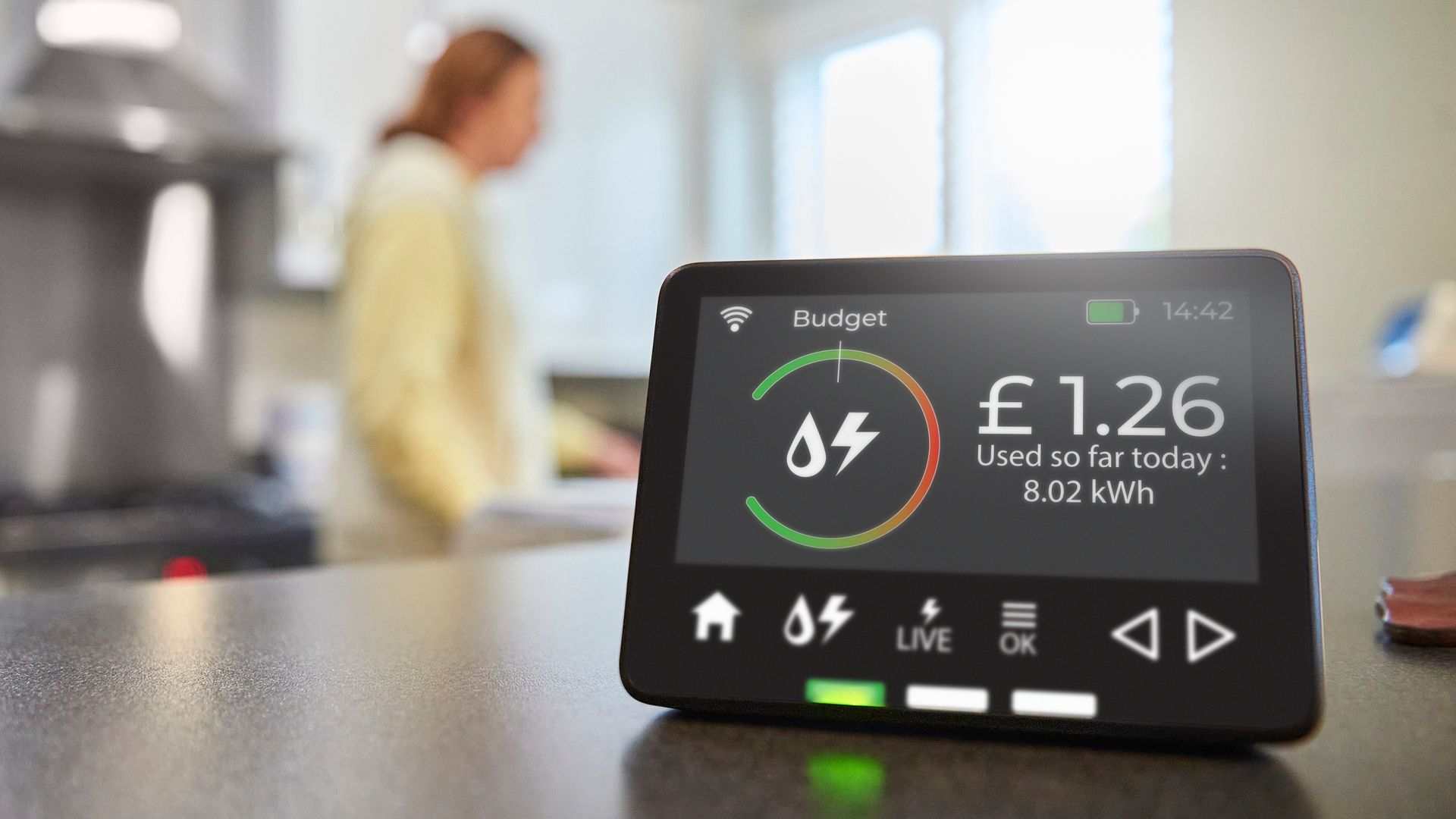
Technology hasn't removed the human element; it has weaponized it. It has made our energy habits transparent, and transparency isn't always a good thing for a marriage. When we can see exactly how many kilowatt-hours the washing machine used on a Tuesday afternoon, we have more data points to use in our next disagreement.
The real cost of energy isn't the number at the bottom of the bill. It is the steady erosion of the "team" mentality. When we stop being two people trying to live a comfortable life together and start being two auditors trying to catch each other out, the energy of the relationship itself begins to flicker.
The Ledger of Small Resentments
There is a term in psychology called "perceptual salience." It means we notice things that stand out to us based on our own biases.
If you are the one who pays the electricity bill, every glowing red standby light on the television is salient. It screams at you. If you are the one who feels the damp in your bones, the draft from the window is salient.
We try to bridge this gap with "energy-saving tips." We buy draught excluders that look like long, fabric sausages. We put foil behind the radiators. We buy air fryers because we heard they use less power than the oven. These are the band-aids we apply to the friction.
But the friction remains because we haven't addressed the invisible stakes. We haven't admitted that we use energy to regulate our emotions. We use the heat to feel safe. We use the long shower to feel alone. We use the bright lights to feel productive.
When we ask someone to change their energy habits, we are asking them to change their emotional regulation strategy. That is a much bigger ask than "turn the light off when you leave."
The Cold Bed and the Warm Heart
Last night, the dial clicked again.
Mark lay in the dark, listening for the sound of Sarah’s footsteps. He knew she was cold. He also knew the bill was 30% higher than it was last year. He felt the weight of the mortgage, the price of groceries, and the thinning of their savings. To him, 18°C was survival.
Sarah lay beside him, her back a frozen wall. To her, 18°C was a lack of love.
The silence between them was heavy, powered by nothing and costing everything. Eventually, Mark reached out. He didn't move toward the thermostat. He moved toward her. He pulled the extra blanket from the foot of the bed—the one he usually hated because it made him feel trapped—and spread it over her side.
He didn't fix the energy crisis. He didn't lower the bill. He didn't even win the argument.
He just acknowledged that the person next to him was more important than the logic of the grid. He realized that you can't optimize a soul. You can't put a timer on empathy. Sometimes, the most efficient use of energy is the heat generated by two people finally deciding that being right isn't nearly as important as being warm.
The light under the bedroom door stayed on for another ten minutes. For once, nobody got up to turn it off.