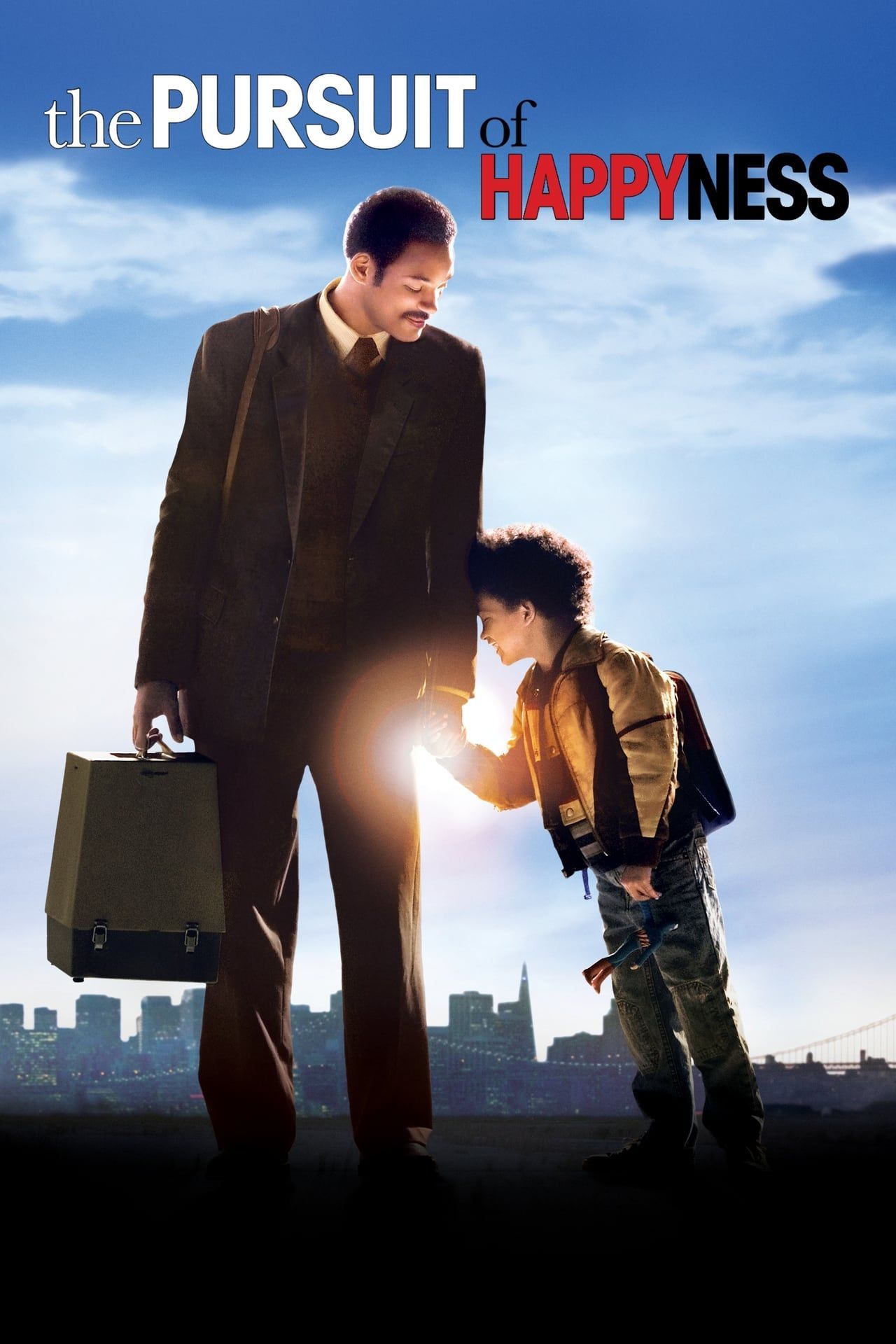
Everyone remembers the subway bathroom scene. It’s the moment in The Pursuit of Happyness where Will Smith’s character, Chris Gardner, locks the door and puts his foot against it while a stranger bangs from the other side. He’s holding his son, trying to turn a cold tile floor into a "dinosaur cave" through sheer imagination. It’s brutal. It’s uncomfortable. Honestly, it’s one of the most gut-wrenching depictions of the "American Dream" ever put on celluloid.
But here’s the thing.
The movie, while a massive box office hit in 2006, often gets flattened into a simple "pull yourself up by your bootstraps" narrative. People think they know the story because they saw the trailer or caught the ending on cable. They think it’s just about a guy who got a job at Dean Witter Reynolds and became a millionaire.
The reality? It was way messier.
The Gap Between the Movie and the Real Chris Gardner
When we talk about The Pursuit of Happyness, we have to talk about the real Chris Gardner. Hollywood loves a polished arc, but the actual events in 1980s San Francisco were arguably more harrowing than what Steven Conrad wrote in the screenplay.
In the film, Gardner is selling bone density scanners. In real life, he was a medical supply salesman, sure, but he was also dealing with the fallout of a crumbling relationship and a domestic dispute that landed him in jail for ten days just as his internship was supposed to start. Imagine that. You finally get your foot in the door of a high-stakes brokerage firm, and you have to show up in the same clothes you wore to jail because you don't have time to go home.
That actually happened.
He wasn't just "unlucky." He was caught in a systemic vice.
One major difference people often miss: in the movie, Christopher Jr. is a toddler. In real life, Gardner's son was only about fourteen months old when they were homeless. If you’ve ever looked after a one-year-old, you know that’s a completely different level of difficulty. Carrying a stroller, diapers, and a suit through the streets of San Francisco isn't just a struggle—it's an Olympic feat of endurance.
Why the "Y" Matters
You've probably noticed the misspelling in the title. It’s not a typo by the marketing team. It’s a direct reference to a mural Gardner saw outside his son's daycare. It bugged him. He saw "Happyness" written with a "Y" and it stuck.
It represents the idea that happiness is something you have to define for yourself, even when the world around you can't even spell it right. It’s about the "pursuit," a word famously penned by Thomas Jefferson in the Declaration of Independence. Gardner has often pointed out in interviews that Jefferson didn't guarantee happiness. He only guaranteed the right to pursue it.
You have to do the running.
The Dean Witter Internship: A Calculated Gamble
Most people think Gardner got the internship because he solved a Rubik's Cube in a taxi. While the cube was a real craze in 1981, and Gardner was indeed exceptionally bright, his entry into the world of finance was less about puzzles and more about relentless networking.
He wasn't a finance guy by trade. He was a veteran. He had served in the Navy as a medic.
When he entered the Dean Witter Reynolds program, he was one of 20 interns. Only one was going to get a full-time job.
Twenty people. One slot. No salary.
Think about that. We live in an era where unpaid internships are (rightfully) scrutinized for being exploitative. Gardner was doing an unpaid internship while literally sleeping in the BART station bathroom or at the Glide Memorial United Methodist Church. He would arrive early and stay late, making 200 calls a day.
He was competing against people who went to Ivy League schools, people who went home to hot showers and cooked meals. He went home to a line at a homeless shelter.
The Psychology of "Flow" in the Pursuit
There’s a concept in psychology called "flow," popularized by Mihaly Csikszentmihalyi. It’s that state where you’re so engaged in a task that time disappears.
Gardner wasn't in flow. He was in survival mode.
But there is a specific kind of mental clarity that comes when you have zero safety net. When he was on those phones, he wasn't just selling stocks; he was selling his right to exist in a stable environment. This is where the movie gets it right. Will Smith’s performance captures that frantic, vibrating energy of a man who knows that if he hangs up the phone, he might not eat.
Beyond the Screen: What Happened Next?
The movie ends with that iconic shot of Chris Gardner walking through a crowd, clapping for himself, tears in his eyes because he finally got the job. It's a great "movie moment."
But the real story of the The Pursuit of Happyness continued long after the credits rolled.
- Gardner Rich & Co: In 1987, Gardner started his own brokerage firm in Chicago with just $10,000 in capital and a single piece of furniture: a wooden deck.
- The Multi-Millionaire Phase: He eventually sold a minority stake in his firm in a multi-million dollar deal.
- The Shift to Philanthropy: After his wife Holly passed away in 2012, Gardner underwent a massive perspective shift. He realized he didn't want to spend the rest of his life just making more money.
He started traveling the world as a motivational speaker. He became an advocate for organizations that fight homelessness and violence against women. He realized that the "pursuit" doesn't end when you get the paycheck. It just changes shape.
Lessons That Actually Work (No Fluff)
If you're looking at your own life and feeling like you're stuck in your own version of that subway bathroom, Gardner's story offers more than just "hope." It offers a blueprint.
1. Protection of the Dream
There’s a famous quote in the film where Gardner tells his son: "Don't ever let somebody tell you you can't do something. Not even me."
This isn't just sentiment. It’s a defense mechanism. When you are trying to change your life, people—often people who love you—will try to project their own fears onto you. They’ll tell you to "be realistic." Realism is often just a socially acceptable term for pessimism.
2. The "Power of Presence"
Gardner didn't have the best suit. He didn't have the best car. But he had presence. He showed up. In the brokerage world of the 80s, that meant being the first person to pick up the phone and the last person to put it down.
In today’s world, presence is rarer. We’re distracted. If you want to stand out in a competitive field, your greatest asset isn't necessarily your degree—it’s your ability to focus intensely on one goal while everyone else is scrolling.
3. Acknowledging the Role of Luck
We have to be honest here. Gardner is an outlier.
For every Chris Gardner, there are thousands of people who work just as hard and don't become millionaires. The "American Dream" narrative can be dangerous because it implies that if you aren't successful, you just didn't work hard enough.
That's not always true. Gardner had a high mathematical aptitude and a specific set of interpersonal skills that happened to align perfectly with the 1980s bull market. Hard work is the prerequisite, but timing and talent are the catalysts.
The Actionable Pivot: How to Apply This Now
You don't need to be homeless to apply the "Happyness" mindset. Whether you're trying to pivot careers, start a business, or just get your head above water, here is how you actually move the needle based on Gardner's real-world tactics.
Audit your "Sales Calls" In Gardner's world, it was 200 phone calls. In your world, it might be 10 LinkedIn reach-outs, 2 cold emails, or 1 networking coffee. If you aren't hitting a specific number of "asks" every day, you aren't pursuing; you're just wishing.
Identify your "Bone Density Scanner" What is the dead weight in your life? Gardner spent a lot of time lugging around machines that were hard to sell. Sometimes we cling to a business idea, a job, or a lifestyle because we’ve already invested so much into it. If it’s not working, sell what you can and pivot.
Master the "Small Win" Gardner didn't wake up and think "I'm going to be a millionaire." He thought "I need to get into the shelter by 5:00 PM so my son has a bed."
Survival is built on small, 24-hour goals. If you're overwhelmed by a massive ambition, shrink your horizon. What do you need to do in the next six hours to ensure tomorrow is 1% better?
The pursuit isn't a sprint. It’s a series of grueling, ugly, and often lonely steps. But as Gardner showed, those steps can eventually lead you out of the subway station and into a life you actually recognize as your own.
Next Steps for Implementation:
- Step 1: Define your "One Slot." What is the one goal that, if achieved, renders most of your other problems manageable?
- Step 2: Schedule your "Deep Work" blocks. Gardner's "uninterrupted" time was his lifeblood. Block out two hours where your phone is in another room.
- Step 3: Evaluate your circle. Are you surrounded by people who "spell it with a Y"—people who understand that happiness is a work in progress, not a finished product?