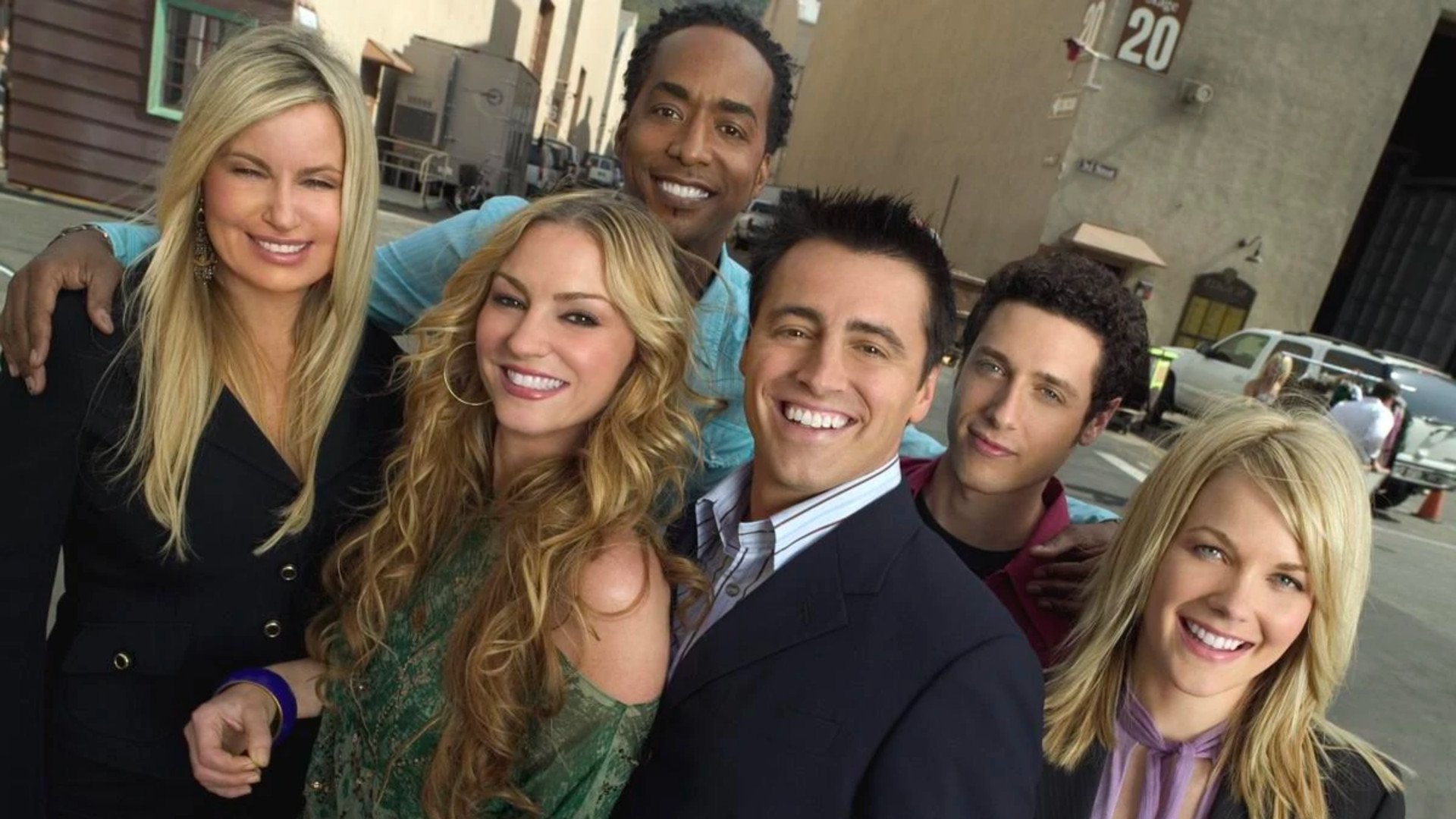
It was the impossible task. Imagine being the guy who has to keep the lights on after the biggest party in television history ends. That’s exactly where Matt LeBlanc found himself in September 2004. Friends had just vanished from the NBC lineup, leaving a massive, 50-million-viewer-sized hole in the cultural zeitgeist. The solution seemed obvious to network executives: take the most lovable, least complicated character and ship him to Hollywood.
But Joey wasn't just another sitcom. It was a massive gamble that eventually became a cautionary tale for every showrunner in Burbank.
The setup that should have worked (but didn't)
When Joey Tribbiani packed his bags for Los Angeles, the premise actually made sense on paper. He was an actor. L.A. is where actors go. He needed a fresh start away from the shadow of Chandler and Monica’s new suburban life. To fill the void of the Central Perk gang, the writers gave him his sister Gina (played by the brilliant Drea de Matteo, fresh off The Sopranos) and his genius nephew Michael (Paulo Costanzo).
It had the pedigree. Shana Goldberg-Meehan and Scott Silveri, veterans from the original Friends writing staff, were at the helm.
The premiere pulled in 18.6 million viewers. That’s a monster number by today’s standards, but even then, it was a solid start. People wanted to love it. They really did. But something felt... off. The rhythm was different. The "Joey-isms" that felt charming in a group of six started to feel a bit thin when he had to carry the entire emotional weight of a scene. He went from being the heart of a group to a guy who seemed perpetually confused by his own life.
The problem with the "Flanderization" of Joey Tribbiani
In TV writing, there’s a term called "Flanderization." It’s named after Ned Flanders from The Simpsons. It describes the process where a single trait of a character—like Ned’s religiosity or Joey’s dim-wittedness—eventually swallows the whole person.
By the time Joey hit its second season, the lead character felt like a caricature. In Friends, Joey was a protector. He was loyal. He had a specific kind of street-smart wisdom. In the spin-off, he often felt like a child in a man's suit. Fans noticed. You can only watch a guy fail to understand basic concepts so many times before you stop rooting for him and start feeling bad for him. That's a death sentence for a sitcom.
Why the supporting cast couldn't save the show
Drea de Matteo was, and is, a powerhouse. Bringing her in as Gina was a stroke of genius. She brought a sharp, New York edge that balanced Joey’s softness. However, the chemistry wasn't the same as the lightning-in-a-bottle magic of the original six.
Sitcoms live or die on the "hangout factor."
Do you want to spend 30 minutes in a room with these people? With Friends, the answer was a resounding yes for a decade. With Joey, the dynamic felt forced. The show tried to recreate the "Joey and Chandler" vibe by pairing him with Michael, but the uncle-nephew dynamic has different boundaries. It lacked the peer-to-peer friction that makes for great comedy.
- Jennifer Coolidge as Bobbie Morganstern: She was arguably the funniest part of the show. Her portrayal of Joey’s high-strung, over-the-top agent was gold.
- The Alex Garrett Situation: Andrea Anders played the neighbor/love interest. While she was great, the "will-they-won't-they" felt like a pale imitation of Ross and Rachel.
- The Missing Cameos: NBC famously struggled to get the other five friends to show up. Imagine if Chandler had dropped in for one Thanksgiving episode. The ratings would have spiked, but the show was determined to stand on its own two feet. Maybe too determined.
The brutal reality of the 2005-2006 TV season
The mid-2000s were a weird time for network TV. The "Must See TV" era was crumbling. Reality TV was cheaper and pulling massive numbers. Joey wasn't just competing with other sitcoms; it was competing with a changing audience appetite.
By the middle of the second season, the writing was on the wall. NBC moved the show to Tuesday nights, then pulled it from the schedule entirely during the May sweeps. It was a cold, calculated move. There were eight episodes of the second season that didn't even air in the US during the initial run. They were eventually burned off on international markets or digital platforms years later.
Honestly, it's kind of heartbreaking. Matt LeBlanc is a phenomenal comedic actor. He proved it later with Episodes, where he played a satirical version of himself. He has timing that most actors would kill for. But even the best driver can't win a race if the engine is missing a few cylinders.
The legacy of a "Failure"
Is it fair to call Joey a failure?
It ran for 46 episodes. Most shows don't make it past the pilot. It won a People's Choice Award for Favorite New TV Comedy. But when your older brother is one of the most successful shows in the history of the medium, "pretty good" looks like a disaster.
The show’s real legacy is as a textbook example of the "Spin-off Curse." It taught networks that you can’t just port a character over and expect the audience to follow without the context that made them special in the first place. You can't have the meatballs without the spaghetti.
Lessons for the modern streaming era
Nowadays, we see spin-offs everywhere. Better Call Saul is the gold standard because it took a side character and gave him a completely different world with a different tone. Joey tried to give us more of the same, but in a way that felt diluted.
If you're a fan of sitcom history, the show is worth a rewatch just to see the craft. There are genuinely funny moments. The production value was high. But it serves as a reminder that characters are often defined by the people they surround themselves with. Joey Tribbiani wasn't just a guy who liked pizza and acting; he was the glue of a specific group of friends in Manhattan. Without them, he was just a guy in Hollywood looking for work.
Actionable Insights for Your Next Binge Watch:
- Watch for the Tone Shift: If you go back and watch the pilot, notice how much more "mature" the lighting and sets look compared to the bright, poppy colors of the Friends set. It was a conscious choice to make it look like a "prestige" sitcom.
- The "Episodes" Connection: After watching a few episodes of Joey, jump over to Matt LeBlanc's later show, Episodes. It provides a fascinating, meta-commentary on his career and the struggles of being a sitcom star trying to find a second act.
- Appreciate the Guests: Look out for guest stars like Lucy Liu and Adam Goldberg. The show had the budget to bring in top-tier talent, and those individual performances are often the highlights of the series.
- Context Matters: Remember that this show existed before the era of social media. The "backlash" happened in living rooms and watercooler conversations, not on Twitter. The slow fade of its viewership tells a much more honest story than a viral trend ever could.
The story of the show isn't just about a flop. It’s about the difficulty of saying goodbye to a cultural phenomenon. Sometimes, the best way to honor a character is to let them walk off into the sunset with their friends, rather than forcing them to start over in a city where they don't quite belong.