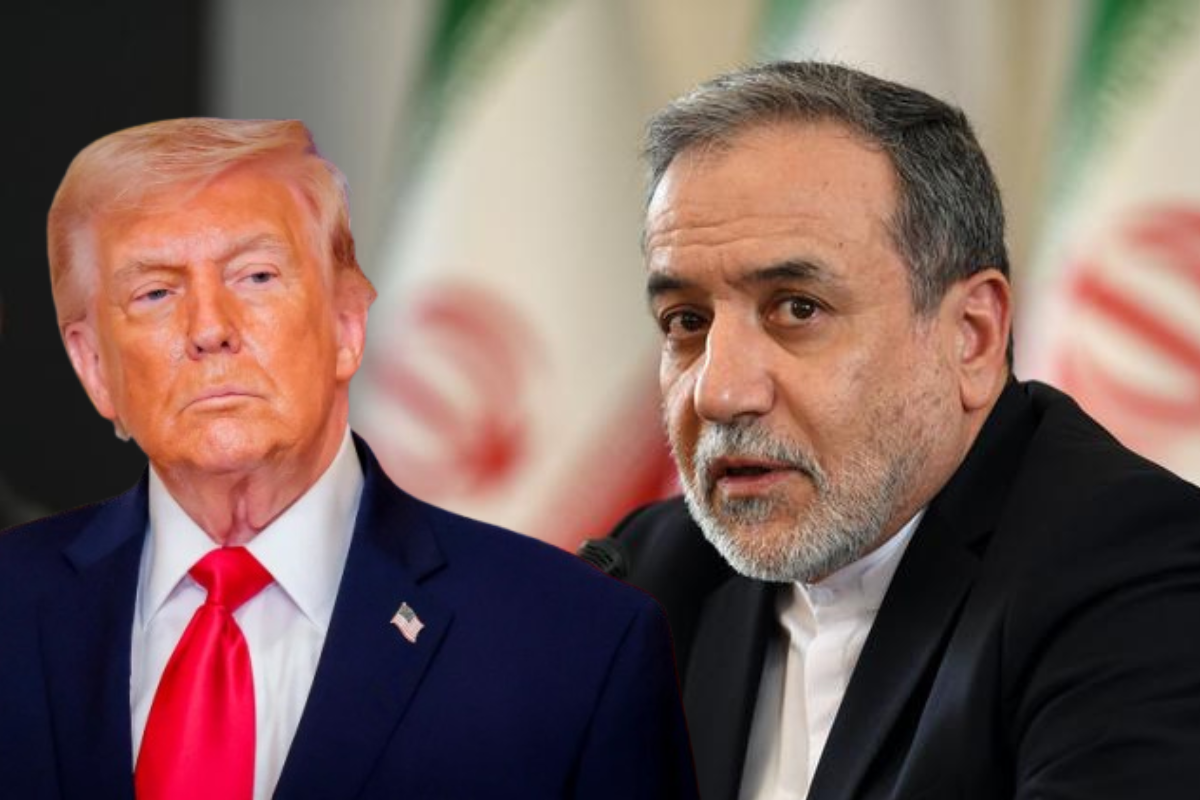
The Strait of Hormuz is not a mere waterway. It is a jugular vein for the global energy market, and right now, Iran is holding the scalpel. Recent declarations from Tehran’s foreign ministry have shifted from vague warnings to a specific, exclusionary doctrine. The message is blunt. The Strait remains open for "friends," but it is a shuttered gate for "enemies," specifically the United States and Israel. This is not just typical Middle Eastern posturing. It is a calculated stress test of international maritime law and global economic resilience.
If the Strait closes, the world stops. Roughly 21 million barrels of oil pass through this narrow pinch point every single day. That represents about 20% of global petroleum liquid consumption. When Iranian officials suggest they have the "right" to selective transit, they are effectively declaring the end of the 1982 United Nations Convention on the Law of the Sea (UNCLOS). They are betting that the world’s dependence on crude will outweigh its commitment to international legal frameworks.
The Geography of a Global Choke Point
To understand the weight of Iran’s threat, you have to look at the map. The Strait of Hormuz is only about 21 miles wide at its narrowest point. However, the shipping lanes used by massive tankers are even tighter. These lanes consist of two-mile-wide channels for inbound and outbound traffic, separated by a two-mile buffer zone.
Most of these lanes sit within the territorial waters of Iran and Oman. While UNCLOS provides for "transit passage"—allowing ships to move through territorial waters for the purpose of continuous and expeditious transit—Iran never ratified the treaty. They argue that they are only bound by "innocent passage," a much more restrictive standard. Under innocent passage, a coastal state can suspend transit if it deems the movement of foreign ships prejudicial to its peace, good order, or security.
Tehran is now weaponizing this legal ambiguity. By claiming the Strait is "only closed for enemies," they are attempting to create a two-tier system of maritime sovereignty.
The High Cost of the Shadow War
For years, the conflict between Iran, Israel, and the U.S. played out in the dark. We saw "limpet mine" attacks on tankers, seized container ships, and mysterious drone strikes. Those days of plausible deniability are over. The current rhetoric suggests a move toward overt kinetic intervention.
If Iran follows through on its threat to block specific nations, the insurance industry will be the first to buckle. Maritime insurance premiums for the Persian Gulf have already seen massive spikes during periods of tension. A formal "selective blockade" would make the area uninsurable for any vessel associated with Western interests.
Consider the logistical nightmare. A Japanese-owned tanker, flying a Liberian flag, carrying oil destined for a refinery in South Korea, but operated by a crew with ties to a U.S. maritime union. In the modern shipping world, "enemy" status is hard to define. Iran’s threat to filter traffic based on political allegiance would create a chaotic screening process that would inevitably lead to a total standstill of traffic.
The Military Reality of a Blockade
Could Iran actually hold the Strait? The U.S. Fifth Fleet, based in Bahrain, is designed specifically to prevent this. However, Iran doesn't need a traditional navy to cause a catastrophe. Their strategy relies on "asymmetric" warfare.
- Fast Attack Craft: Swarms of small, armed boats can harass and overwhelm larger vessels.
- Mobile Anti-Ship Missiles: Batteries hidden along the rugged Iranian coastline can target tankers with precision.
- Sea Mines: Perhaps the most effective tool. Even the rumor of mines in the water can halt all commercial traffic for weeks.
- Loitering Munitions: Low-cost drones that can target the bridge or engine rooms of tankers, disabling them without sinking them.
The goal isn't necessarily to win a naval battle against the U.S. Navy. The goal is to make the cost of transit so high that the global economy screams for a ceasefire or a diplomatic concession.
Beyond Oil The LNG Factor
While oil dominates the headlines, the Strait of Hormuz is also the primary exit point for Qatar’s Liquefied Natural Gas (LNG). Qatar is one of the world's largest exporters of LNG. Europe, having largely cut itself off from Russian gas, is now deeply reliant on Qatari shipments.
A blockade in the Strait doesn't just mean higher prices at the gas pump in Los Angeles. It means cold homes and shuttered factories in Germany. This is the leverage Iran is counting on. They aren't just threatening Israel or the U.S.; they are holding the energy security of the European Union and the manufacturing hubs of Asia hostage.
The Failure of Alternative Routes
Every time tensions rise, analysts point to pipelines. Saudi Arabia has the East-West Pipeline, and the UAE has the Abu Dhabi Crude Oil Pipeline. These are designed to bypass the Strait of Hormuz by moving oil to the Red Sea or the Gulf of Oman.
The reality is underwhelming. These pipelines have a combined capacity of roughly 6.5 million barrels per day. That is a fraction of what moves through the Strait. Furthermore, the Red Sea is no longer a safe alternative. The rise of Houthi rebel attacks on shipping in the Bab el-Mandeb Strait has proven that even if you bypass Hormuz, you are still within the reach of Iranian-aligned forces. There is no easy exit.
The Economic Fallout of a Selective Blockade
If Iran successfully blocks U.S. and Israeli-linked ships, the immediate result is a bifurcated market. We would see a "Grey Market" for oil, where ships pretend to have no Western ties to ensure safe passage. This increases corruption, reduces transparency, and adds significant "risk premiums" to every barrel of oil.
$100 oil would become a memory. Analysts have suggested that a total closure of the Strait could send prices north of **$200 per barrel**. Such a spike would trigger a global recession, collapse emerging markets, and potentially lead to civil unrest in countries sensitive to food and fuel prices.
Iran knows this. They are using the threat of global economic ruin as a shield against further military escalation. It is a high-stakes game of chicken where the "enemies" have everything to lose and Tehran believes it has already lost enough under sanctions to justify the gamble.
The Tech Edge of Maritime Denial
Iran’s domestic arms industry has focused heavily on anti-access/area-denial (A2/AD) capabilities. They have developed long-range drones and precision-guided missiles that are specifically designed to counter the technological advantages of Western carrier strike groups.
In a narrow waterway like Hormuz, the "optical horizon" is short. This favors the defender on the coast. Iranian shore-based radar and electro-optical sensors can track every movement in the Strait with terrifying accuracy. They don't need to find the needle in the haystack; the haystack is only 21 miles wide.
Legal Precedent and the New World Order
By declaring the Strait closed to "enemies," Iran is challenging the very concept of "Freedom of Navigation." If the international community allows this precedent to stand, other nations may follow suit in other vital waterways. Imagine a world where the South China Sea or the English Channel is "open only to friends."
The U.S. Navy has long seen itself as the guarantor of the global commons. Iranian officials are now openly mocking that role. This isn't just about a regional spat; it’s about whether the oceans remain a shared resource or become a series of fortified toll roads governed by local warlords and regional powers.
The world watches the Strait, but the Strait is also watching the world. Every tanker that passes through those narrow waters is a reminder of a global vulnerability that cannot be engineered away. Tehran has made its move on the chessboard, and the response from the West will determine if the global economy stays afloat or sinks in the shallow waters of the Persian Gulf.
Secure your own energy supply or prepare for the consequences of a world where the Strait is no longer a bridge, but a wall.