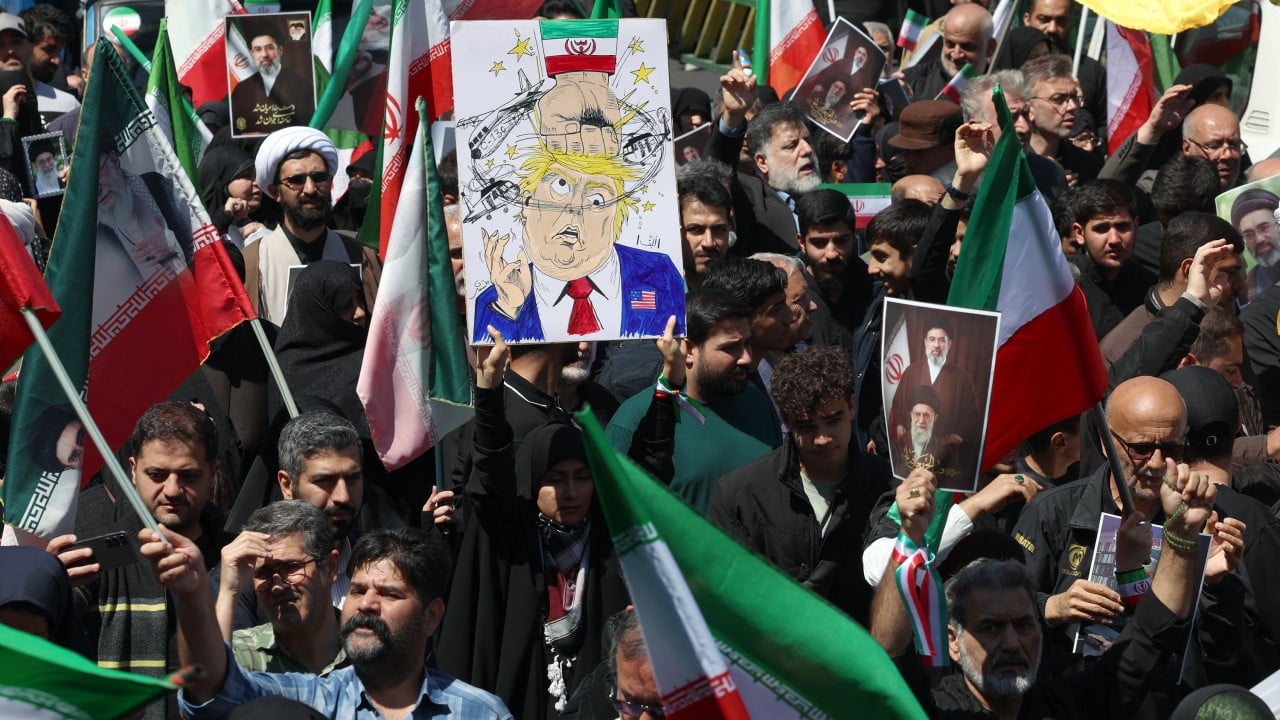
The shadow of conflict is not a metaphor in Tehran; it is a weight. As talk of renewed negotiations with Washington filters through state-run media and encrypted Telegram channels, the atmosphere in the Iranian capital has shifted from weary resignation to a palpable, sharp-edged anxiety. This isn't just about the abstract fear of falling bombs. It is the practical, daily terror of a currency in freefall, a middle class being erased by sanctions, and the haunting memory of the "war of the cities" during the 1980s. While diplomats in expensive suits argue over centrifuge counts and enrichment percentages in European hotels, the eighty-five million people caught in the middle are bracing for a collapse they feel is already underway.
The disconnect between geopolitical strategy and the kitchen table is total. For the average Iranian, a "successful" round of talks often yields nothing but a temporary pause in the downward spiral of the rial. Conversely, a breakdown in communication usually signals an immediate spike in the price of imported medicine and basic staples. People aren't just watching the news for political updates. They are watching for signs of whether they can afford to eat next month.
The Ghost of 1980 and the Modern Siege
War is a living memory in Iran. Unlike the American public, which views conflict through the sterilized lens of drone footage and overseas deployments, Iranians over the age of forty remember the sirens. They remember the blackouts. This historical trauma is the primary lens through which they view the current tension. When the United States increases its naval presence in the Persian Gulf or when domestic rhetoric hits a fever pitch, it triggers a collective PTSD that crosses generational lines.
This isn't an irrational panic. It is a calculated response to a decade of "maximum pressure" that has functioned as a siege in all but name. We often talk about sanctions as a surgical tool of statecraft. In reality, they are a blunt instrument that crushes the most vulnerable. The investigative reality on the ground shows a healthcare system struggling to source specialized cancer drugs and a manufacturing sector cannibalizing old machinery for parts. The "war" has been happening for years; it’s just been fought with ledgers and banking bans instead of ballistic missiles.
The Rial as a Barometer of National Mental Health
Economics in Iran is the ultimate psychological warfare. Every time a headline hints at a stalemate in Geneva or New York, the black-market rate for the US dollar jumps. Shopkeepers in the Grand Bazaar have become amateur currency traders, refreshing their phones every ten minutes to adjust prices.
Consider the ripple effect of a single failed meeting. A 5% drop in the rial doesn't just make iPhones more expensive. It means a construction worker’s monthly wage, which was already meager, now buys three fewer kilograms of meat. It means a student’s dream of studying abroad evaporates because their savings are now worth half what they were a year ago. This constant fluctuation creates a state of permanent hyper-vigilance. You cannot plan a wedding, start a business, or even commit to a long-term lease when the ground beneath your feet is made of shifting sand.
Beyond the Reformist and Hardliner Binary
Western analysis often falls into the trap of oversimplifying Iranian politics into a neat battle between "reformists" who want peace and "hardliners" who want confrontation. This is a fairy tale. The reality is a complex web of entrenched interests, where even those who favor engagement are often hamstrung by a deep-seated distrust of Western guarantees. After the 2018 withdrawal from the nuclear deal, the argument that "the West cannot be trusted" moved from the fringes of radicalism to the center of the Iranian political mainstream.
Even the most pro-Western Iranians will tell you they feel betrayed. They did what was asked of them in 2015. They celebrated in the streets when the JCPOA was signed, believing the era of isolation was over. When that deal was unilaterally dismantled, it didn't just hurt the government; it humiliated the people who had bet their futures on it. Now, the fear of war is coupled with a profound cynicism. Why sacrifice for a deal that might be scrapped by the next administration in Washington? This creates a deadlock where the Iranian leadership feels it must project maximum strength to avoid looking weak, while the population prays that the posturing doesn't accidentally ignite a fire no one can put out.
The Regional Chessboard and Local Casualties
Tehran does not exist in a vacuum. The proxy battles in Yemen, Syria, and Lebanon are often viewed by the Iranian leadership as "forward defense"—keeping the fight away from Iranian borders. However, for the Iranian public, these regional entanglements are increasingly viewed as a drain on resources that should be spent at home.
There is a growing resentment toward the billions spent on regional influence while domestic infrastructure crumbles. This resentment is a volatility factor that both the Iranian government and foreign intelligence agencies are tracking closely. A spark—a fuel price hike, a water shortage, or a perceived military provocation—could easily transform the general anxiety into a domestic uprising. The government knows this. Their response is often to tighten the domestic security apparatus, which only adds another layer of fear to the lives of ordinary citizens. They are trapped between the threat of foreign intervention and the reality of domestic repression.
The Architecture of Miscalculation
The greatest danger right now isn't a planned invasion. It is a mistake. In a climate where both sides are operating at the highest level of alert, a misinterpreted radar signal or a naval skirmish in the Strait of Hormuz could escalate before the diplomats even get to their phones.
The "red lines" are invisible and constantly moving. Iran’s enrichment levels are at an all-time high, and the US has made it clear that a nuclear-armed Iran is a non-starter. This is the classic "Thucydides Trap" played out in the 21st century. The Iranian side believes that only by showing a credible threat can they force the US back to the table. The US believes that only by maintaining crushing pressure can they force Iran to concede. It is a feedback loop where every action intended to deter the opponent actually provokes them.
The Myth of the Surgical Strike
One perspective that is often overlooked in Washington policy circles is the logistical and human impossibility of a "limited" strike on Iran. Iranian military doctrine is built on asymmetric retaliation. If a strike occurs, it won't stay confined to a nuclear facility in Natanz. It will spread to every corner of the Middle East.
For the person living in a high-rise in North Tehran, this is the nightmare scenario. They know that "surgical" is a term used by people who don't have to live with the collateral damage. They know that if the power grid goes down, the hospitals stop working. If the refineries are hit, the food distribution network collapses. The fear isn't just about dying in an explosion; it's about the total disintegration of the civil society they have worked so hard to maintain despite the sanctions.
The Survivalist Economy
In response to this permanent state of crisis, Iranians have developed a sophisticated "resistance economy" that exists entirely off the books.
- Barter systems: Professional services are increasingly traded for goods.
- Cryptocurrency: Bitcoin and Tether have become lifelines for businesses trying to bypass the SWIFT ban.
- Asset flight: Anyone with the means is moving their wealth into real estate in Turkey, Dubai, or the West, further hollowing out the domestic economy.
This isn't a sign of resilience to be celebrated. It is a sign of a society in survival mode. When a population stops investing in its own country and starts looking for the exit, the long-term damage is often more permanent than the destruction caused by a missile.
The Psychological Toll of the "Waiting Game"
Living in a state of "almost war" for years on end does something to a national psyche. It creates a culture of short-termism. You don't start a five-year business plan if you think the country might be under bombardment in six months. You don't have children if you aren't sure you can buy diapers next week.
This psychological exhaustion is perhaps the most significant "overlooked factor" in the current crisis. The Iranian people are tired. They are tired of being the bargaining chip in a game they didn't choose to play. They are tired of being told that "victory" is just around the corner while their standard of living retreats to levels not seen since the 1970s.
The international community treats the Iranian nuclear file as a technical problem to be solved with spreadsheets and inspectors. It is, in fact, a human rights crisis. Every delay in the diplomatic process is measured in lost lives—not from bombs, but from the slow, grinding erosion of a civilization.
The Inevitable Collision
The current path is unsustainable. Either a diplomatic breakthrough occurs that provides real, tangible relief to the Iranian people, or the pressure will find a vent. That vent could be a regional war, or it could be a domestic implosion.
The Western world tends to view the "Iran problem" as something that can be managed indefinitely. This is a dangerous delusion. The "fear and anxiety" described by those on the ground is not just a sentiment; it is a warning. When a society reaches its breaking point, the resulting chaos is rarely "surgical" or "contained." It spills over borders, disrupts global markets, and creates decades of blowback.
The time for incrementalism has passed. If the goal is truly to avoid a catastrophic conflict, the approach must move beyond the narrow confines of enrichment percentages and address the fundamental reality that eighty-five million people cannot be held in a state of permanent economic and psychological siege without something breaking.
The rial hit another record low today. In the markets of Tehran, the price of bread rose again. The sirens haven't started yet, but for many, the war has already begun.