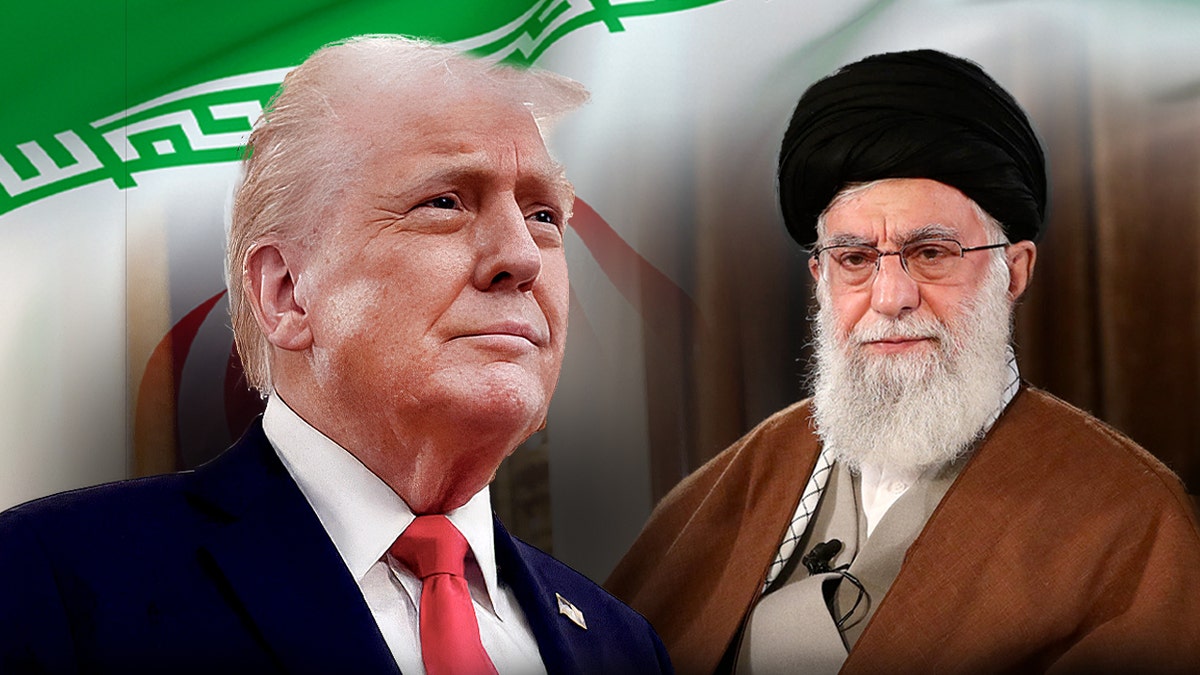
The Iranian government has dismissed Donald Trump’s assertions of a looming "grand bargain" as little more than political theater. This rejection is encapsulated in the Persian proverb, "The camel dreams of cottonseed," a sharp jab suggesting the former president is hallucinating a reality that does not exist. Tehran is not merely being difficult. The Iranian leadership is signaling that the era of "maximum pressure" met with "maximum patience" has transitioned into a period of strategic defiance where economic survival is no longer tied exclusively to Western approval.
Foreign Ministry officials in Tehran are currently operating on the assumption that American rhetoric regarding a quick deal is designed for a domestic audience rather than a serious diplomatic channel. While Trump has frequently claimed that Iran is "dying" to make a deal and that one could be struck within a week of his inauguration, the reality on the ground in the Middle East suggests a much wider chasm. The Iranian economy, though battered by years of sanctions, has developed a calloused resilience. It has found new, albeit less efficient, arteries for its oil and a growing reliance on Eastern powers that makes the prospect of a hurried, one-sided agreement with Washington look less like a necessity and more like a trap.
The Architecture of Persian Defiance
To understand why Iran is comfortable mocking American claims of a quick fix, one must look at the structural shifts in their trade. They have moved past the initial shock of the 2018 withdrawal from the Joint Comprehensive Plan of Action (JCPOA). Instead of waiting for a return to the negotiating table, Tehran has spent the last several years deepening its integration into the Shanghai Cooperation Organisation (SCO) and the BRICS+ framework. These are not just diplomatic clubs. They represent a concerted effort to build a "sanctions-proof" financial architecture that operates outside the reach of the U.S. Treasury.
The mockery coming from the Iranian Foreign Ministry isn't just about pride. It is a calculated assessment of leverage. By labeling Trump’s claims as "building castles in the sand," Tehran is telling its own people and its regional allies that it does not fear a return to the 2017-2020 era of isolation. They believe they have already survived the worst the American financial system can throw at them.
Shadow Fleets and Gray Markets
Iran’s ability to export oil despite heavy sanctions is the primary reason they feel they can laugh off Trump's claims. The "shadow fleet"—a vast, murky network of aging tankers with obscured ownership—continues to move Iranian crude to refineries in Asia. While this oil is sold at a steep discount, the sheer volume provides enough hard currency to keep the Iranian state functioning.
- Discounted Crude: Iran offers significant price drops to incentivize buyers to risk secondary sanctions.
- Transshipment Hubs: Oil is often transferred from ship to ship in international waters to hide its origin.
- Barter Systems: Increasingly, Tehran is trading energy directly for manufactured goods and infrastructure projects, bypassing the SWIFT banking system entirely.
This economic reality means that the "cottonseed" the camel dreams of—a total surrender of Iran’s nuclear and regional ambitions in exchange for relief—is not a trade the current leadership is desperate to make. They have found a way to breathe underwater, and while the air is thin, it is enough to keep them from drowning.
The Nuclear Clock and the Negotiating Table
The fundamental problem with any claim of a "quick deal" is the technical advancement of the Iranian nuclear program. Since the collapse of the previous agreement, Tehran has moved significantly closer to the threshold of a nuclear weapon. They have installed advanced centrifuges and increased their stockpiles of highly enriched uranium. This is not a clock that can be wound back with a simple handshake or a "tough guy" tweet.
Any serious analyst knows that the technical knowledge gained by Iranian scientists cannot be unlearned. A new deal would require a level of monitoring and transparency that the Iranian hardliners are currently unwilling to grant. They view inspections as a form of espionage. Therefore, when Trump suggests a deal is imminent, he ignores the massive bureaucratic and ideological barriers that have been erected over the last decade.
The Regional Proxy Variable
A deal with Iran is never just about nuclear physics. It is about the map of the Middle East. Iran’s influence through the "Axis of Resistance"—spanning from Yemen to Lebanon—is a non-negotiable pillar of their national security strategy. Washington wants Iran to stop funding these groups. Tehran views these groups as their only defense against superior conventional air power from their neighbors and the West.
The disconnect is total. Washington wants a deal that changes Iranian behavior. Iran wants a deal that only changes American behavior. This is why the Iranian leadership views any talk of a "week-long" negotiation as a fantasy. You cannot solve forty years of ideological warfare in a five-day summit.
Why the Market is Watching the Rhetoric
Global oil markets are sensitive to these exchanges because even the appearance of a potential thaw can send prices downward. However, savvy traders are beginning to discount the rhetoric on both sides. They see the "camel and cottonseed" comment for what it is: a warning that the price of Iranian compliance has gone up, not down.
If a new administration attempts to tighten the screws even further, the risk of a kinetic conflict in the Strait of Hormuz increases. Iran has shown it is willing to harass shipping and disrupt the global energy flow when it feels cornered. This "scorched earth" capability is their ultimate insurance policy. They are telling the world that if they cannot sell their oil, no one in the region will be able to export theirs easily either.
The Miscalculation of Maximum Pressure
The "Maximum Pressure" campaign of the first Trump term did succeed in shrinking the Iranian economy, but it failed in its primary objective: changing the regime’s behavior or forcing it back to the table on American terms. In fact, it had the opposite effect. It marginalized the moderates within the Iranian government who had staked their careers on the JCPOA and empowered the hardliners who always argued that the United States could not be trusted.
These hardliners are the ones now mocking the idea of a new deal. They have used the last few years to purge the government of anyone who might be open to a Western-leaning compromise. The people Trump would be negotiating with this time around are far more skeptical and far more ideologically rigid than those he faced or ignored in 2018.
The China Factor
The most significant change since 2016 is the overt role of Beijing. China is no longer a silent partner in the Middle East. By brokering the rapprochement between Iran and Saudi Arabia, China demonstrated that it is willing to provide Iran with a diplomatic alternative to Western-led peace processes.
China’s appetite for Iranian oil provides a floor for Tehran’s economy. As long as Beijing is willing to ignore or bypass U.S. sanctions, Iran has a lifeline. This geopolitical shift makes the Iranian leadership feel that they are in a position of strength, or at least a position of stability. They are not the desperate, isolated nation the "grand bargain" narrative suggests.
The Role of Domestic Iranian Politics
Inside Iran, the government is facing internal pressure, but it is not the kind of pressure that leads to a pro-Western pivot. The leadership uses the "external enemy" narrative to justify internal crackdowns. A deal with the U.S. is often viewed by the ruling elite as a greater threat to their survival than the sanctions themselves. They fear "Westoxification"—the cultural and political influence that would follow a reopening of the country.
When they mock Trump’s claims, they are also speaking to their domestic base. They are projecting an image of the "invincible republic" that stands tall against "the Great Satan." This rhetoric is essential for maintaining the morale of the security forces and the religious establishment that forms the backbone of the state.
The Reality of the Deadlock
We are currently witnessing a high-stakes game of chicken where both drivers believe the other will swerve first. Trump believes his reputation as a dealmaker and the threat of crushing economic force will bring Tehran to its knees. Tehran believes that the U.S. is a declining power, distracted by domestic division and the war in Ukraine, and lacks the stomach for another long-term conflict in the Middle East.
The "camel dreams of cottonseed" proverb is more than a witty retort. It is a declaration of a stalemate. It suggests that the American strategy is based on a fundamental misunderstanding of Iranian resolve and their new strategic depth in the East.
The Cost of a False Narrative
If the U.S. enters a new diplomatic phase under the impression that Iran is ready to fold, it will likely lead to a dangerous miscalculation. The Iranian leadership has signaled they will only talk if there is a fundamental shift in the American approach—starting with a return to the original terms of the nuclear deal and compensation for economic losses. Since that is politically impossible for any U.S. president, the status quo of shadow wars and sanctions-evasion is the most likely future.
The talk of "grand bargains" and "quick deals" is a distraction from the much harder work of managing a permanent adversary that has learned how to thrive in the dark. The marketplace of ideas is currently flooded with simplified versions of this conflict, but the truth is found in the stubborn refusal of the Iranian state to play the role of the victim. They are not waiting for a savior or a dealmaker. They have built a fortress out of their isolation.
Any policy built on the hope of a sudden Iranian collapse or a sudden Iranian surrender is a policy built on a dream. Tehran is wide awake, and they are not looking for a way out—they are looking for a way through. The next few years will not be defined by a historic handshake on a lawn, but by the slow, grinding reality of a regional power that has decided it can afford to say no. The cottonseed is out of reach, and the camel has stopped looking for it. Instead, the camel has learned to find water in a landscape the West thought was a desert.