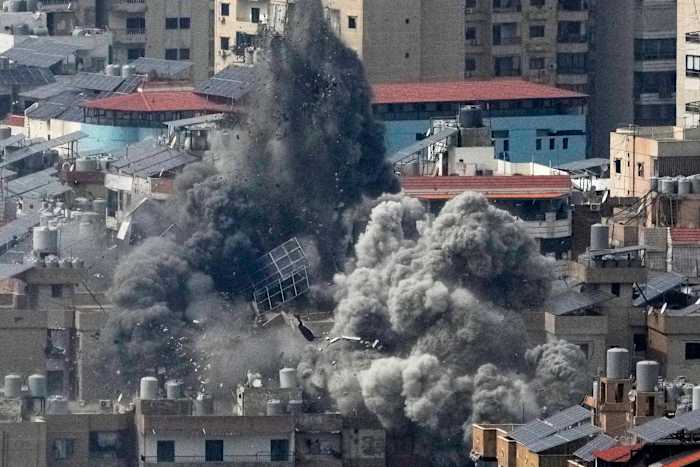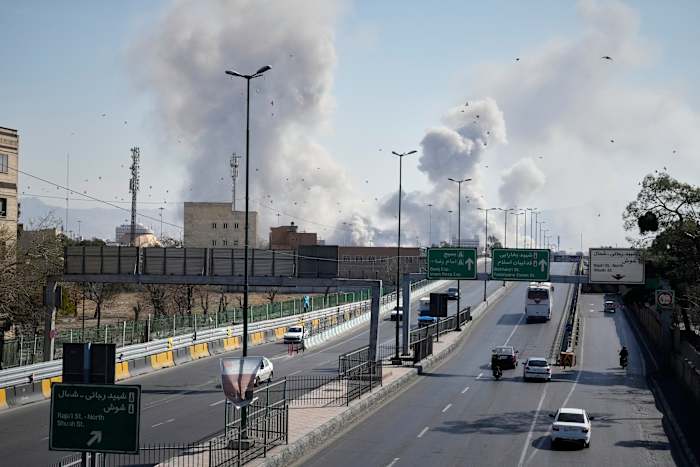
The security of the Taiwan Strait is no longer a localized concern defined by cross-strait military parity; it is an output of a global resource allocation equation. When systemic shocks occur in the Middle East, the resulting friction does not merely impact energy prices—it actively degrades the "Integrated Deterrence" framework established by the United States and its Indo-Pacific allies. The vulnerability of Taiwan in the face of prolonged West Asian instability is rooted in three critical bottlenecks: the finite nature of precision-guided munitions (PGMs), the bandwidth of executive decision-making during polycrises, and the fragility of maritime energy transit points.
The Logic of Material Attrition
Modern warfare is a contest of industrial capacity rather than just standing inventories. The conflict in the Middle East acts as a kinetic drain on the very stockpiles essential for a high-intensity Taiwan Strait contingency.
The PGM Scarcity Constraint
Strategic defense of Taiwan relies heavily on a "porcupine" strategy, necessitating vast quantities of Harpoon anti-ship missiles, Patriot PAC-3 interceptors, and HIMARS munitions. US defense industrial base (DIB) production lines for these systems are currently inelastic. When interceptors are deployed to counter Houthi drones in the Red Sea or to bolster Mediterranean defenses, the "available to promise" (ATP) inventory for the Pacific shrinks. This is not a theoretical loss; it is a measurable delay in the Foreign Military Sales (FMS) backlog already hovering near $20 billion for Taipei.
The Multi-Theater Logistics Burden
Projecting power simultaneously across the US Central Command (CENTCOM) and Indo-Pacific Command (INDOPACOM) areas of responsibility creates a "tanker gap." Aerial refueling assets and heavy-lift sea transport are finite. If a carrier strike group is tethered to the Gulf of Aden to ensure the flow of global trade, it cannot perform the freedom of navigation operations (FONOPs) or joint exercises required to signal presence in the South China Sea. The displacement of a single asset represents a calculated risk that adversaries in the Pacific are positioned to exploit.
The Cognitive Bandwidth Bottleneck
Strategic deterrence functions on the perception of a credible, focused will. When the US National Security Council (NSC) is forced into a reactive cycle regarding Middle Eastern escalations, the "deterrence by signaling" directed at Beijing loses its sharpest edge.
- Prioritization Inertia: Bureaucratic systems under stress revert to immediate crisis management. Long-term strategic competition with China requires sustained policy focus. Every hour spent on de-escalation in the Levant is an hour stolen from the implementation of the Pacific Deterrence Initiative.
- Political Capital Depletion: Sustaining domestic support for foreign engagement is a zero-sum game. If the American electorate perceives an "endless" commitment to Middle Eastern stability, the appetite for the potentially higher costs of defending Taiwan diminishes. This perceived domestic fatigue is factored into the risk calculus of the People’s Liberation Army (PLA).
The Energy-Semiconductor Feedback Loop
Taiwan’s existential vulnerability is its 97% dependence on imported energy. While the Middle East is often viewed through the lens of crude oil, for Taiwan, the variable that matters is Liquefied Natural Gas (LNG).
The Strait of Hormuz Vulnerability
Roughly 35% of Taiwan’s LNG imports pass through the Strait of Hormuz. A regional conflagration that closes or restricts this chokepoint triggers an immediate energy security crisis in Taipei. Unlike oil, which can be stockpiled in strategic reserves for months, LNG storage capacity in Taiwan is notoriously thin—often estimated at less than two weeks during peak summer demand.
The Silicon Shield Paradox
A power grid failure in Taiwan caused by energy shortages would immediately halt the fabrication of advanced logic chips. Because Taiwan produces over 90% of the world's most advanced semiconductors, an energy shock in the Middle East translates directly into a global technology supply chain collapse. This creates a perverse incentive: an adversary could use a proxy conflict in the Middle East to soften Taiwan’s domestic resilience and global economic leverage without firing a single shot in the Pacific.
The Shift Toward "Dual-Role" Weaponry
The technological overlap between the Middle Eastern and Pacific theaters is increasing. The proliferation of low-cost, long-range loitering munitions (one-way attack drones) by non-state actors in the Middle East provides a live-fire laboratory for the PLA.
The defense of Taiwan now requires mastering "asymmetric counter-asymmetry." If US and Taiwanese forces cannot solve the cost-exchange ratio problem—using a $2 million interceptor to down a $20,000 drone—they will be economically defeated before the first major naval engagement. The Middle East conflict is accelerating this learning curve for all parties involved, but it is also depleting the very interceptors Taiwan needs to survive a "saturation attack" from the mainland.
Structural Realignment of Taiwanese Defense
To mitigate the implications of Middle Eastern volatility, Taiwan's strategic posture must transition from a reliance on external intervention to a state of "total resilience." This requires a shift in three operational pillars:
- Decentralized Power Production: Shifting from large, vulnerable LNG terminals to a distributed grid that can sustain critical military and fabrication infrastructure during a naval blockade.
- Domestic Munition Production: Establishing licensed production lines for key PGM components on Taiwanese soil to bypass the US FMS delivery bottleneck.
- Cyber-Kinetic Integration: Recognizing that the first phase of any conflict will be an attempt to isolate Taiwan’s information environment, mirroring the "gray zone" tactics seen in recent regional conflicts.
The fundamental risk is not that the US will "choose" the Middle East over Taiwan. The risk is that the physical and political cost of maintaining stability in the former will leave the US with a degraded toolkit for the latter. In the current global security environment, a fire in the Middle East is not just a distraction; it is a structural weakening of the Pacific’s firewalls.
The strategic imperative for Taipei is to accelerate its indigenous defense programs and energy diversification with the assumption that US "surge" capacity is permanently compromised by global instability. The window for this transition is narrowing as the frequency of global shocks increases.
The primary objective now is the hardening of civilian infrastructure and the radical expansion of domestic PGM stockpiles. Without these two elements, the "Silicon Shield" becomes a "Silicon Target," vulnerable to any disruption in the global energy or security architecture.