The Taliban is not just governing Afghanistan through a series of restrictive decrees. It is conducting a deliberate, multi-phased dismantling of the female identity. Recent warnings from United Nations experts highlight a humanitarian disaster, but the reality on the ground is more clinical and more permanent than a simple "risk" to safety. By banning women from parks, gyms, and higher education, and now targeting their presence in the few remaining workspaces allowed to them, the de facto authorities are effectively deleting half the population from the public record.
This is a crisis of structural erasure. The economic and social cost of sidelining women has already crippled the Afghan GDP, yet the leadership in Kabul remains unmoved by financial logic. For the Taliban, the ideological purity of their vision outweighs the survival of the state. This isn't a policy failure. It is a policy success.
The Architecture of Isolation
The current environment in Kabul and the provinces is defined by a suffocating absence. When you walk through the markets of Mazar-i-Sharif or the streets of Herat, the silence of the female voice is heavy. The UN’s special rapporteur on the situation of human rights in Afghanistan, Richard Bennett, has characterized this as "gender persecution," and for good reason. The restrictions are not isolated incidents of overzealous policing; they are the gears of a machine designed to return the country to a pre-modern social hierarchy.
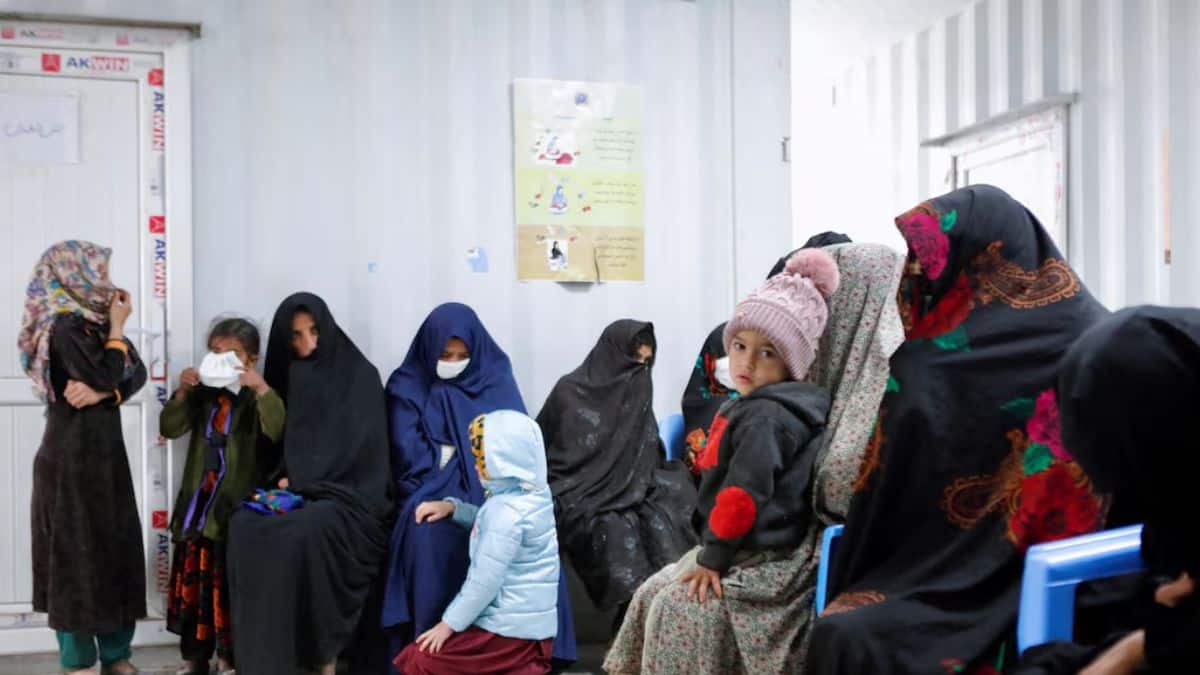
Education remains the primary battlefield. By closing secondary schools and then universities to women, the Taliban has cut the cord of Afghan development. We are witnessing the creation of a lost generation. In twenty years, there will be no female doctors to treat female patients—a grim irony given the Taliban’s own strict rules on gender segregation in healthcare. If a woman cannot be seen by a man, and women are forbidden from becoming doctors, the result is a slow-motion mass casualty event.
The Economic Suicide of a Nation
Afghanistan is currently one of the poorest nations on earth, surviving largely on dwindling international aid. Barring women from the workforce is an act of economic self-harm that few nations could survive, let alone one already on the brink of famine. Estimates suggest that the restrictions on women’s employment have cost the Afghan economy up to $1 billion, or roughly 5% of its total economic output.
- Agricultural Collapse: Women traditionally made up a significant portion of the rural workforce. Their forced removal from collective labor has disrupted harvest cycles.
- Small Business Death: Thousands of female-led enterprises, from tailoring shops to micro-lending circles, have been shuttered by decree.
- Aid Delivery Obstacles: International NGOs find it nearly impossible to distribute food and medicine to women in need when their female staff are barred from the field.
The international community often talks about "leverage" when dealing with the Taliban. The hard truth is that the traditional levers of diplomacy—sanctions, frozen assets, and diplomatic isolation—have failed to change the trajectory of the leadership's social policy. The hardliners within the movement view international pressure as a badge of honor, a sign that they are successfully resisting Western influence.
The Mental Health Pandemic
Beyond the visible poverty and the empty classrooms lies a psychological catastrophe. Afghan psychologists, many of whom are now practicing in secret or via encrypted messaging apps from abroad, report an unprecedented spike in female suicide and severe depression. When a person’s entire future is retracted overnight, the resulting despair is not something that can be fixed with a grain shipment.
The "Mahram" requirement—the rule that a woman must be accompanied by a male relative for any significant travel—has turned homes into prisons. For women who do not have a living male relative due to decades of war, this is a literal death sentence for their independence. They cannot shop for food, they cannot visit a clinic, and they cannot seek help from the authorities because the authorities are the ones enforcing the cage.
The Myth of Provincial Variation
There is a common misconception among some observers that the Taliban is a monolithic entity with internal "moderates" fighting for a more relaxed approach. While there are certainly disagreements between the Kandahar-based leadership and the more pragmatic administrators in Kabul, the outcome for women remains identical. The "moderates" are not fighting for women’s rights; they are fighting for international recognition and the release of frozen funds. Their willingness to trade women's freedoms for political legitimacy is not moderation—it is a different form of calculation.
We see this play out in the sporadic "opening" of schools in certain northern provinces, only for them to be shuttered again days later when the central command reinforces its stance. These are not signs of progress. They are the flickers of a dying flame.
The International Community's Fatal Distraction
The global focus has shifted. Ukraine, Gaza, and internal domestic tensions in the West have pushed Afghanistan to the periphery of the foreign policy agenda. This is exactly what the Taliban leadership was banking on. They understand that the world has a short attention span and a low appetite for long-term intervention.
By maintaining a "low-intensity" crisis—keeping the country just above the level of total starvation while slowly tightening the noose on civil liberties—the Taliban has successfully managed to avoid the kind of concentrated global backlash that might actually threaten their grip on power. The UN's warnings, while factually accurate and morally necessary, often land in a vacuum of inaction.
The mechanism of control is total. It starts with the hijab, moves to the classroom, occupies the workplace, and ends in the home. There is no middle ground being sought by the de facto government. They are not looking for a "modern" interpretation of their ideology; they are implementing a definitive social order that requires the total submission of the female population.
If the current trend continues, the concept of the "Afghan woman" as a public entity will cease to exist. What remains will be a population of shadows, hidden behind walls and veils, performing the essential but unrecognized labor required to keep a broken society from total collapse. The world must decide if it is willing to watch a country intentionally regress into a medieval state, or if the "never again" rhetoric of human rights actually applies to the women of Kabul.
Stop looking at this as a series of human rights violations. Start looking at it as the successful execution of a state-sponsored disappearance.
Find a way to support the underground schools and the digital networks that still link Afghan women to the outside world, because the formal channels are being systematically destroyed.