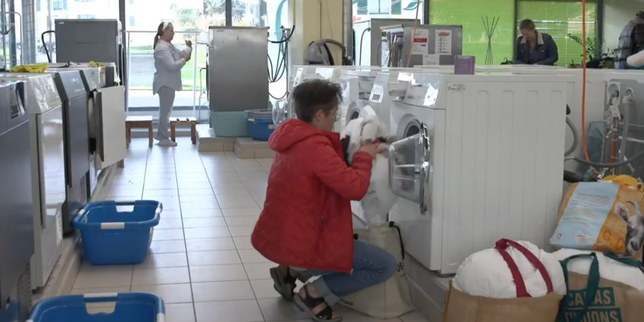
If you want to see the real Switzerland, don't look at the postcards of the Matterhorn. Go to the basement of a typical apartment building in Zurich, Geneva, or Lausanne. This is where the national myth of perfect harmony meets the cold, hard reality of the buanderie collective. In a country known for precision and neutrality, the shared laundry room is a high-stakes arena of social tension, unwritten rules, and the occasional passive-aggressive Post-it note that could rival a diplomatic incident.
Most expats arrive thinking the "laundry schedule" is a helpful suggestion. It isn't. It's a legal contract. In many Swiss buildings, you're assigned a specific day—sometimes once every two weeks—where you own the machines from 7:00 AM to 10:00 PM. If you miss your window because you had a life or a job or a crisis, you don't just "pop a load in" the next morning. You wait. You pray for a neighbor’s cancellation. Or you face the wrath of the building’s self-appointed laundry warden.
The myth of the seamless shared space
The Swiss system of collective laundry was designed for efficiency and resource management. Why should every 40-square-meter studio have its own washing machine when a high-performance industrial beast in the basement can do the job better? It's environmentally friendly. It's cost-effective for landlords. It's supposed to be a triumph of communal living.
But communal living requires a level of civisme—the Swiss concept of civic duty—that's increasingly under pressure. When the buanderie works, it's a Swiss watch of productivity. When it doesn't, it’s a battlefield. You'll find notes taped to the dryer. Someone didn't clean the lint trap. Someone else used the wrong detergent and left a layer of slime. A third person started their wash ten minutes before their slot ended, leaving the next tenant staring at a locked machine while the clock ticks.
In a country where being five minutes late to a dinner party is a social crime, being five minutes late to empty your washing machine is an act of war. You're not just taking up a machine. You're stealing someone else’s precious, allocated time.
Why the unwritten rules are the ones that matter
The written rules are simple enough. Don't wash after 10:00 PM because the noise travels through the pipes and people are trying to sleep. Clean the machines. Sweep the floor. Use the drying room (the séchoir) correctly.
The unwritten rules are where the real complexity lies. There's an unspoken hierarchy in many buildings. The tenant who’s lived there for thirty years often feels they have a moral right to dictate how the basement is managed. They know exactly how much lint constitutes a "dirty" trap. They know if you’ve been hanging your bedsheets in a way that blocks the airflow of the Secomat—that uniquely Swiss wall-mounted dehumidifier that blows cold air over your clothes.
If you violate these norms, you won't get a friendly knock on the door. You'll get a letter from the Régie (the property management company). Or worse, a handwritten note on the machine, written in capital letters with multiple exclamation marks, detailing your failures in three different national languages.
This isn't just about laundry. It's about the Swiss obsession with order. In a society that values quiet, cleanliness, and predictability, the buanderie is one of the few places where your mess literally becomes someone else’s problem. It’s the ultimate test of whether you’re a "good neighbor" or a disruptive force in the community.
The rise of the individual machine and the death of the basement social
In the last decade, there’s been a massive shift in Swiss urban living. Newer apartments almost always come with their own washing machine and dryer, often tucked away in a cupboard or a bathroom. For many, this is the ultimate luxury. It means no more schedules. No more lugging heavy baskets of wet clothes down three flights of stairs. No more negotiating with the neighbor who always "forgets" it’s Wednesday.
But something is being lost. The collective laundry room, for all its frustrations, was one of the few places in a Swiss apartment block where neighbors actually interacted. It was the village square of the concrete jungle. You’d meet the guy from the fourth floor. You’d find out who just had a baby. You’d realize that the "grumpy" woman on the ground floor actually has a great sense of humor once you help her with a heavy load of towels.
When you move to private machines, that social friction disappears. But so does the social cohesion. You're no longer part of a system; you're an island. The civisme that sustained the shared laundry room for generations is being replaced by the convenience of the individual.
Yet, for hundreds of thousands of people in cities like Geneva and Zurich, the basement remains a reality. And it’s getting more complicated. As the population becomes more international, the cultural clash over "correct" laundry behavior intensifies. What a newcomer sees as a minor oversight, a traditional Swiss tenant sees as a fundamental breakdown of social order.
How to survive the Swiss laundry room without losing your mind
If you’re currently navigating the world of the buanderie collective, you need a strategy. Don't just wing it.
Own the schedule. As soon as you move in, photograph the laundry list. Mark it in your digital calendar with alerts. Treat your laundry day like a board meeting. If there’s no list and it’s a "first-come, first-served" situation, pay attention to the rhythms of the building. Saturday morning is usually a bloodbath. Tuesday at 2:00 PM is often a ghost town.
Over-clean everything. Don't just wipe the seal of the machine. Clean the detergent drawer. Sweep the floor around the machine. Leave the room in better condition than you found it. This builds social capital. When you eventually make a mistake—and you will—your neighbors are more likely to forgive the person who leaves the place spotless.
Be the person who talks. If you see a neighbor in the basement, say hello. Acknowledge them. It’s much harder for someone to write an angry note to "the person I had a nice chat with about the weather" than it is to "the anonymous tenant in 3B."
Invest in a quality laundry basket. It sounds stupid until you’re trying to navigate a narrow staircase with 10kg of damp jeans. Get something ergonomic and sturdy.
Know when to escalate. If someone is consistently stealing your slot or leaving the room a disaster, don't write a note. That just fuels the fire. Talk to them directly and calmly. If that fails, contact the concierge or the Régie. Keep a log of the incidents. In the Swiss system, documentation is your only real weapon.
The buanderie isn't going anywhere. It’s a core part of the Swiss rental market, rooted in a specific vision of how a society should function. It’s frustrating, it’s outdated, and it’s occasionally absurd. But it’s also a reminder that living in a community requires more than just paying rent. It requires a shared commitment to a set of rules that keep the machines running and the neighbors from losing their cool.
Next time you head down to the basement, take a deep breath. Check the lint trap. Smile at whoever is coming in as you’re going out. It’s just laundry, but in Switzerland, it’s also the very fabric of civilization.
Check your lease agreement today for the specific "Hausordnung" (house rules) regarding the laundry room. Most disputes are settled by what’s written in black and white in that document. If you’re looking to buy a machine for your own unit, verify with your landlord first—many older buildings aren't wired or piped for individual machines in the apartments, and installing one without permission can lead to a fast eviction notice.