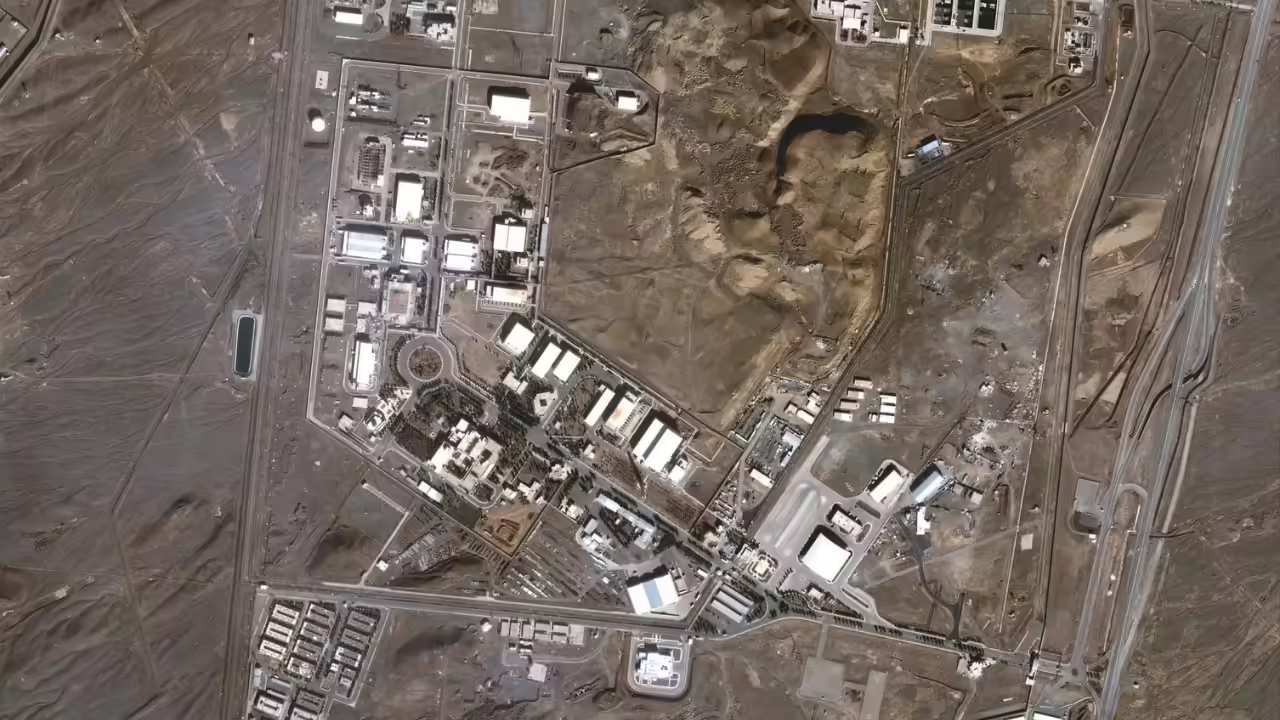
The kinetic or cyber-electronic compromise of a hardened nuclear enrichment facility is not merely a tactical setback; it is a disruption of the state’s chronological path to a breakout capacity. When the Natanz Fuel Enrichment Plant (FEP) experiences a catastrophic power failure or explosion affecting its centrifuge cascades, the impact must be measured through three specific analytical lenses: technical degradation of the separation work units (SWU), the logistical bottleneck of specialty material procurement, and the strategic shift toward deep-fortification redundancy.
The reported incident at Natanz, involving a failure in the internal power distribution network, targeted the most sensitive component of the nuclear fuel cycle: the rotating assembly of the centrifuge. To understand the severity, one must analyze the mechanical constraints of isotopic separation. Centrifuges, particularly the IR-1 and more advanced IR-2m or IR-6 models, operate at extreme rotational frequencies, often exceeding 1,000 hertz. A sudden loss of power or a forced oscillation in the frequency drive does not merely stop the machine; it creates a "crash" where the rotor assembly contacts the casing, resulting in the total physical destruction of the unit.
The Mechanics of Cascade Failure
The vulnerability of Natanz is rooted in its architectural reliance on serialized cascades. In a nuclear enrichment context, a cascade is a series of centrifuges arranged to progressively increase the concentration of Uranium-235. This arrangement creates a single point of failure within the power-frequency chain.
- Frequency Inverter Manipulation: The most likely vector for such a disruption is the manipulation of the frequency inverters that control the motor speeds. If the software controlling these inverters is compromised, it can command the motors to accelerate beyond the material’s tensile strength or decelerate so rapidly that the internal harmonics shatter the carbon-fiber or high-strength aluminum rotors.
- The Kinetic-Electrical Feedback Loop: When a single centrifuge in a cascade fails catastrophically, it can release debris or cause pressure surges in the UF6 (uranium hexafluoride) gas lines. This creates a "domino effect" where the physical vibration or the pressure spike triggers a sequence of failures across hundreds of connected units.
- The Recovery Lead Time: Replacing a destroyed cascade is not a simple assembly task. Each rotor must be balanced to sub-milligram precision. The bottleneck is the availability of high-strength maraging steel or specific carbon fiber flow-forming machines, both of which are under strict international export controls (multilateral regimes like the Nuclear Suppliers Group).
Quantifying the Enrichment Deficit
The primary objective of interdicting Natanz is the reduction of the total SWU capacity. Separation Work Units (SWU) are the standard measure of the effort required to undergo enrichment. By destroying the advanced IR-2m and IR-6 cascades, an adversary effectively resets the "breakout clock"—the time required to produce enough Highly Enriched Uranium (HEU) for a single nuclear device.
The math of the breakout clock is non-linear. While the IR-1 centrifuges are the workhorses of the Iranian program, they are inefficient. The IR-6 can enrich uranium up to ten times faster than the IR-1. Therefore, the destruction of 1,000 IR-6 machines is strategically equivalent to the destruction of 10,000 IR-1 machines. The strategic intent behind the Natanz strike was likely the elimination of these high-efficiency units, forcing the program back onto a slower, more detectable trajectory using legacy technology.
Structural Hardening and the Fordow Pivot
Tehran’s vow to rebuild and "upgrade" the facility is a predictable response to structural vulnerability. However, the physical geography of Natanz presents a ceiling on its defensibility. The FEP is a buried facility, but its depth—roughly 8 to 15 meters of cover—is insufficient against modern earth-penetrating munitions or sophisticated internal sabotage.
This creates a mandatory pivot toward the Fordow Fuel Enrichment Plant. Fordow is buried deep within a mountain, providing a level of "passive defense" that Natanz lacks. We can categorize the Iranian response strategy into three phases:
- Vertical Dispersion: Moving high-value enrichment activities deeper underground, specifically to Fordow or new tunnels being excavated near the Natanz site, to negate the effectiveness of conventional airstrikes.
- Technological Leapfrogging: Replacing destroyed IR-1 cascades with IR-6 units. While this increases the risk of future sabotage due to the complexity of the electronics required, it maximizes the output of the remaining footprint.
- The IAEA Verification Friction: Utilizing the damage as a justification to restrict International Atomic Energy Agency (IAEA) access. By claiming "security concerns" or "ongoing repairs," the state creates a "black box" where the actual number of functioning centrifuges and the current stockpile of enriched material become speculative rather than verified data.
The Radiation Risk and Environmental Constraints
The IAEA’s flagging of "radiation risk" serves as a diplomatic lever rather than a description of a localized Chernobyl-style event. Uranium hexafluoride is chemically toxic and mildly radioactive, but the primary danger in a centrifuge hall collapse is the chemical release of hydrofluoric acid when UF6 reacts with moisture in the air.
The environmental risk is a secondary effect used to underscore the "recklessness" of the attack in international forums. For the analyst, the real risk is the contamination of the cleanroom environments required for centrifuge assembly. If the facility is contaminated with particulate matter or chemical residues, the precision required for high-speed rotation becomes impossible to achieve, effectively mothballing the hall even if the structural damage is repaired.
The Cost Function of Sabotage
The cycle of destruction and reconstruction at Natanz illustrates a high-stakes cost function for both the perpetrator and the defender.
For the attacker, the cost is the depletion of "zero-day" cyber exploits or the exposure of high-level human intelligence (HUMINT) assets within the Iranian electrical or security infrastructure. These assets are finite and, once used, are burned.
For the defender, the cost is the diversion of "hard currency" and engineering talent away from other military or economic sectors to rebuild a facility that remains fundamentally vulnerable. The "rebuild" is not a one-time cost but a recurring tax on the nuclear program's efficiency.
The strategic play is now centered on the "Cold Start" capability. Iran must prove it can manufacture centrifuges faster than they can be destroyed, while the intervening parties must prove they can penetrate any level of hardening—whether physical or digital.
The next logical escalation is the transition from targeting the enrichment machines to targeting the personnel—the "human capital" of the program—or the secondary supply chains that provide the raw materials for carbon fiber and specialized bellows. The resilience of the Natanz site is no longer a matter of concrete thickness; it is a matter of the state’s ability to maintain a clandestine procurement network that operates faster than the attrition rate imposed by external kinetic or digital interdiction.
The primary strategic move for the Iranian program is the immediate acceleration of the "underground workshop" initiative, moving the manufacturing of centrifuge components into the same deep-buried environments as the enrichment cascades themselves, thereby shortening the logistics chain and reducing the surface-level signature of the enrichment cycle.