The surge in 401(k) hardship withdrawals is not a statistical anomaly but a lagging indicator of systemic financial friction. While superficial reports point to "inflation" or "cost of living" as the primary drivers, a rigorous analysis reveals a more complex intersection of wage-growth stagnation, the disappearance of liquid emergency reserves, and the psychological "liquidity trap" of tax-advantaged accounts. This trend represents a fundamental shift in how the American middle class manages short-term volatility at the expense of long-term solvency.
The mechanism of a hardship withdrawal—distinct from a standard loan—creates a permanent loss of compounding power. Unlike a 401(k) loan, which is repaid to the account holder with interest, a hardship withdrawal is an irreversible extraction of capital. This extraction triggers an immediate tax liability and, depending on age, a 10% early withdrawal penalty. When an individual executes this move, they are effectively paying a 30-40% premium to access their own capital, representing the highest-cost form of financing available in the modern market.
The Hierarchical Framework of Financial Desperation
To understand why participants are choosing this high-cost liquidity, we must categorize the triggers into a hierarchical framework. These are not random choices; they are the result of a specific failure in the individual's "Buffer Stack"—the sequence of assets one liquidates during a crisis.
- The Primary Buffer (Liquid Cash): Checking and savings accounts.
- The Secondary Buffer (Lines of Credit): Credit cards, HELOCs, personal loans.
- The Tertiary Buffer (Non-Tax Advantaged Assets): Brokerage accounts.
- The Final Buffer (Retirement Equity): 401(k) hardship withdrawals and IRAs.
When hardship withdrawals spike, it indicates a total exhaustion of the first three layers. The reliance on 401(k) assets signals that the participant has reached a "zero-liquidity state" where the immediate penalty of the IRS is outweighed by the immediate threat of eviction, foreclosure, or medical insolvency.
The Cost Function of Premature Liquidation
The true impact of a hardship withdrawal is rarely understood by the participant at the moment of execution. The "Cost Function" consists of three distinct variables:
- The Instant Friction (Tax/Penalty): $T + P$, where $T$ is the marginal tax rate and $P$ is the 10% penalty.
- The Opportunity Cost of Compounding: The projected value of the withdrawn amount over the remaining years until retirement.
- The Re-entry Barrier: IRS regulations often suspend the participant’s ability to contribute to the plan for a six-month period following a withdrawal, resulting in a loss of employer matching funds.
Consider a 35-year-old withdrawing $10,000 to cover a medical emergency. Assuming a 22% tax bracket and a 10% penalty, the participant receives only $6,800. If that $10,000 had remained in the market at a 7% average annual return, it would have grown to roughly $76,000 by age 65. The "true cost" of that $6,800 injection is therefore $76,000 in future purchasing power, plus the lost employer match during the contribution suspension period. This is an exchange of future stability for current survival at a ratio exceeding 11:1.
Structural Drivers of the Withdrawal Surge
The current increase in withdrawal volume is fueled by a convergence of three structural shifts in the American economy that traditional commentary often overlooks.
The Housing-Wealth Divergence
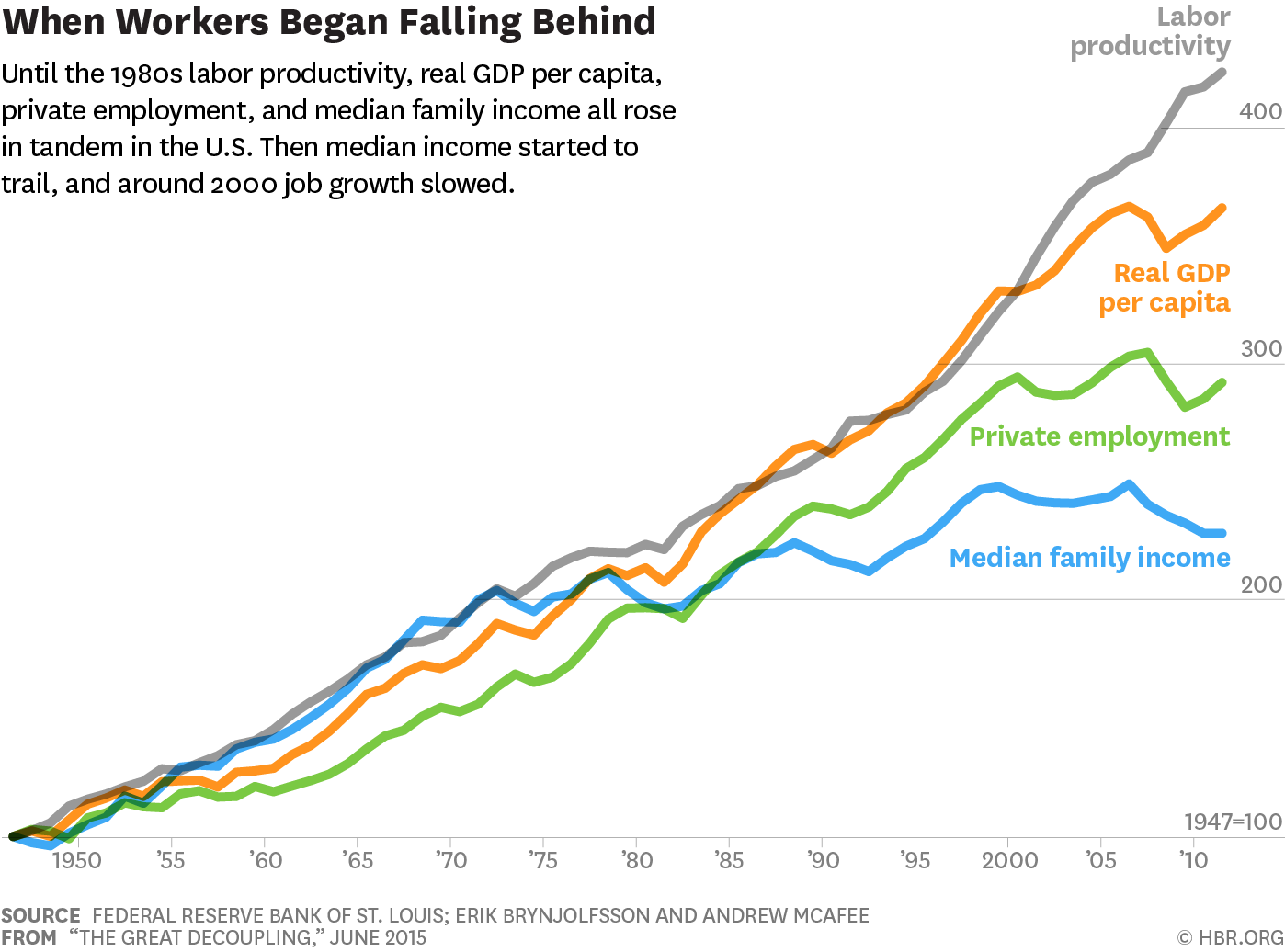
The cost of shelter has decoupled from median wage growth. For many, the 401(k) is the only asset growing faster than inflation. When rent or mortgage payments exceed 30-40% of gross income, the 401(k) stops being a retirement vehicle and starts being viewed as a "synthetic savings account." The IRS allows hardship withdrawals specifically for "costs related to the purchase of a principal residence" or "to prevent eviction from or foreclosure on a principal residence." As housing costs rise, the 401(k) becomes the de facto insurer of last resort for the housing market.
The Health Care Gap
Despite high employment rates, the quality of health insurance (specifically high-deductible plans) has shifted the first $3,000 to $7,000 of medical risk onto the employee. Without a fully funded Health Savings Account (HSA), a single major medical event forces a liquidation event. The 401(k) is often the only pool of capital large enough to satisfy a hospital’s demand for payment.
The SECURE Act 2.0 Paradox
Legislative changes intended to make retirement accounts more "flexible" have inadvertently lowered the psychological barrier to withdrawals. By expanding the definitions of what constitutes a "hardship" and simplifying the self-certification process, the government has increased the velocity of capital flowing out of these systems. While this provides a short-term safety net, it erodes the "lock-box" perception that historically protected retirement assets from impulsive or desperate liquidation.
Quantifying the Systematic Risk to Plan Sponsors
For corporations, a rise in hardship withdrawals is a red flag for workforce stability. High withdrawal rates correlate with increased financial stress, which manifests as lower productivity and higher turnover. Plan sponsors must view these withdrawals as a failure of their financial wellness architecture.
The risk to the employer is two-fold:
- Fiduciary Friction: Increased administrative burden and potential for audit if self-certification processes are not rigorously managed.
- Retirement Readiness Gap: If a significant portion of the workforce liquidates their 401(k)s in their 30s and 40s, they will be unable to retire at 65. This creates "labor stagnation," where older, higher-paid employees remain in the workforce because they cannot afford to leave, blocking the upward mobility of younger talent and increasing the company's long-term healthcare and salary costs.
The Failure of the "Emergency Savings" Narrative
Financial advisors often preach the "three-to-six months of expenses" rule, but this advice ignores the mathematical reality for the bottom 60% of earners. When real wages are eaten by the inflation of core commodities (food, energy, rent), the surplus required to build a cash buffer disappears.
In this environment, the 401(k) match offered by employers becomes the only source of "found money." Participants contribute to the 401(k) not because they are planning for 2050, but because the 50% or 100% employer match is the only way they can achieve a positive return on their limited income. They treat the 401(k) as a high-yield savings account with a massive exit fee, betting that they won't need the money before retirement. When they lose that bet, the "hardship" is simply the market correcting their over-leveraged position.
Strategic Response for Individuals and Policy Makers
To mitigate the damage of this trend, the focus must shift from "encouraging savings" to "structuring liquidity."
Sidecar Accounts as a Buffer
The most effective structural solution is the implementation of "sidecar" emergency savings accounts linked to the 401(k) payroll deduction. These accounts allow employees to contribute to a post-tax liquid fund simultaneously with their retirement fund. By automating the build-up of the "Primary Buffer," the 401(k) remains untouched.
Automated Loan-to-Hardship Conversions
Plan sponsors should implement friction-heavy workflows that require employees to exhaust loan options before attempting a hardship withdrawal. This forces the participant into a "repayment" mindset rather than a "liquidation" mindset.
The Hardship Tax Credit Hypothesis
A potential policy evolution would be the introduction of a "Hardship Recovery Tax Credit." If a participant replaces the withdrawn funds within a three-year window, the 10% penalty could be refunded as a tax credit. This would incentivize the "re-filling" of the retirement bucket once the immediate crisis has passed, though it currently lacks legislative backing.
The Inevitability of Capital Leakage
Despite these interventions, capital leakage from retirement accounts will likely accelerate. We are moving toward an era where the 401(k) is no longer a "retirement" account in the traditional sense, but a multi-purpose life-cycle fund. The data suggests that for the modern worker, the risk of a mid-career financial catastrophe is perceived as higher and more immediate than the risk of outliving one’s money in old age.
This shift in risk perception necessitates a complete redesign of the employer-sponsored benefit model. If the 401(k) is the only place where Americans have wealth, they will find a way to spend it, regardless of the penalties. The strategy for the next decade must involve creating secondary liquidity vehicles that prevent the retirement account from becoming the only ATM available during a crisis. Failing to do so will result in a generation that reached the finish line only to find they spent their winnings twenty years before the race ended.
The immediate tactical play for plan administrators is to integrate "Emergency Savings Accounts" (ESAs) as a mandatory feature of the benefits package. This is no longer a "nice-to-have" perk; it is a defensive necessity to preserve the integrity of the core retirement plan. Organizations that do not provide a path for liquid savings will continue to see their retirement participation rates high, but their actual "retirement readiness" scores plummet as capital leaks out through the hardship hatch.