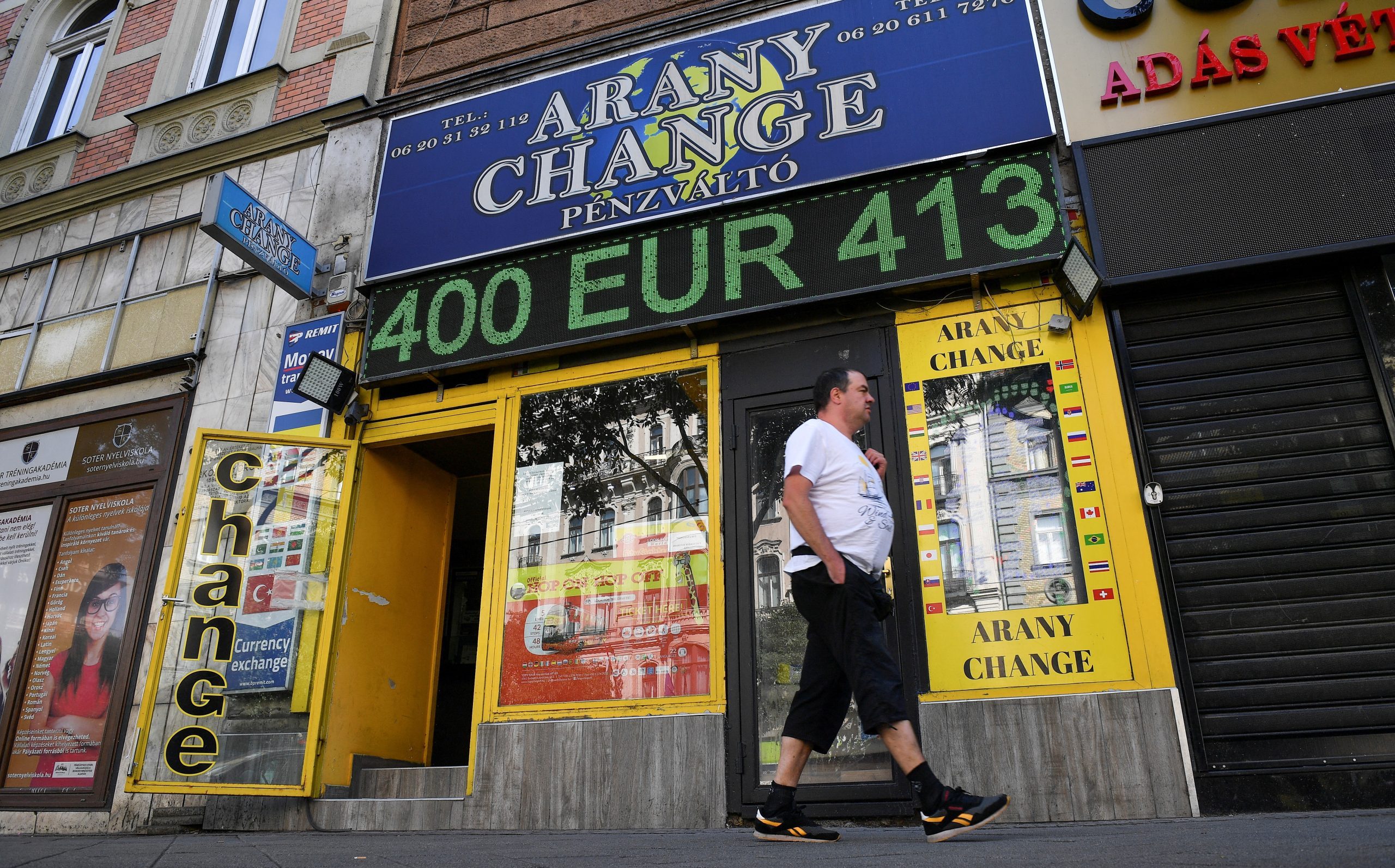
The strategic utility of Viktor Orbán to the American "America First" movement has reached a point of diminishing returns, transitioning from an ideological blueprint to a geopolitical liability. While the Hungarian model was long marketed as a successful laboratory for illiberal democracy, recent domestic economic contractions and diplomatic friction within the European Union have compromised its exportability. The assumption that the Hungarian state apparatus could serve as a friction-less gateway for American influence in Europe ignores the fundamental structural constraints of Hungary’s size, its dependency on EU transfers, and its increasingly divergent interests regarding China and Russia.
The Three Pillars of Illiberal Fragility
The perceived strength of the Orbán administration rests on three pillars: constitutional capture, centralized media dominance, and a reliance on Foreign Direct Investment (FDI) from non-Western actors. However, these pillars are currently undergoing a period of structural stress that limits their utility as a model for larger Western economies.
- Constitutional Capture and Institutional Exhaustion: The Hungarian Fidesz party utilized a two-thirds majority to rewrite the constitution, but this mechanism requires a level of legislative monolithism that is mathematically improbable in the polarized, multi-cameral system of the United States. The model fails to account for the "check-and-balance" inertia inherent in larger federalist systems.
- The Subsidy-Sovereignty Paradox: Hungary’s "sovereignty" is paradoxically funded by the European Union. When the EU froze billions in Cohesion Funds and Recovery and Resilience Facility (RRF) payments due to rule-of-law concerns, the domestic economic engine stalled. This reveals a critical flaw: the illiberal model, as practiced in Budapest, lacks a self-sustaining fiscal base.
- The Eastern Opening (Keleti Nyitás) Friction: Orbán’s strategy of acting as a bridge for Chinese EV manufacturers (like BYD) and Russian energy creates a direct conflict of interest with a "MAGA" foreign policy centered on decoupling from China. You cannot be the "jewel" of an American nationalist movement while simultaneously serving as the primary entry point for Chinese industrial expansion in the Schengen Area.
The Cost Function of Diplomatic Isolation
In strategic terms, Hungary has moved from being a "disruptor" within the EU to being a "bottleneck." This isolation carries a quantifiable cost that degrades Orbán’s value to American partners.
The Visegrád Four (V4) Dissolution
Historically, Hungary led a bloc including Poland, the Czech Republic, and Slovakia. This provided a force multiplier for Orbán’s influence. The divergence over the Russo-Ukrainian War—specifically Poland’s pivot toward aggressive defense spending and Atlanticism—has left Hungary without its regional shield. A leader without a bloc is a leader with a single vote in the European Council, a vote that is increasingly neutralized by the "Article 7" threat and the "Qualified Majority Voting" (QMV) mechanisms being explored by Brussels.
The Defense Procurement Gap
While Hungary has attempted to modernize its military with German Leopard 2 tanks and Swedish Gripen jets, its refusal to align with NATO’s broader strategic posture regarding Ukraine has created a trust deficit. For a potential Trump administration, Hungary represents a partner that agrees with the rhetoric of "sovereignty" but disagrees on the core tactical objective of containing Eurasian rivals.
The Mechanism of Economic Contraction
The Hungarian economic model is currently facing a "double-bind" of high inflation and stagnant growth. In 2023, Hungary experienced one of the highest inflation rates in the EU, peaking above 25%. This was not merely an external shock but a result of price caps and market interventions that distorted the supply chain.
- Price Cap Distortion: Government-mandated ceilings on fuel and basic foodstuffs led to supply shortages and forced retailers to hike prices on non-regulated goods to maintain margins. This "repressive" economic management is the antithesis of the deregulation-focused agenda typical of American conservative economics.
- The Debt-Service Constraint: As interest rates rose to combat inflation, the cost of servicing Hungary’s debt increased significantly. Without the influx of EU funds, the state is forced to rely on more expensive bilateral loans, often from China, which further complicates its standing within the NATO security architecture.
The Misalignment of the "Cultural Export"
The primary export of the Hungarian government to the American right has been "Cultural Conservatism as Policy." This includes the 2011 Fundamental Law and subsequent family-support tax credits. While these policies are rhetorically popular in US conservative circles, the demographic results remain inconclusive. Hungary’s birth rate, while seeing a marginal "Orbán bump," remains well below replacement level, and the cost per additional birth is extraordinarily high in terms of GDP percentage.
The failure to achieve demographic replacement through these subsidies suggests that the "Hungarian Model" is an expensive social engineering project rather than a scalable economic policy. For an American audience concerned with fiscal responsibility, the ROI on these programs is negative.
The Geopolitical Bottleneck: China and Russia
The most significant divergence between the Orbán administration and the American "America First" movement is the "Eastern Opening."
- Paks II and Energy Dependency: The expansion of the Paks nuclear power plant, funded by Russia’s Rosatom, ties Hungarian energy security to Moscow for the next half-century.
- Huawei and 5G Infrastructure: While the US pressured allies to strip Huawei from their 5G networks, Hungary welcomed the firm, establishing the largest Huawei supply center outside of China.
- The Belt and Road Initiative (BRI): Hungary remains the most enthusiastic European participant in the BRI, specifically the Budapest-Belgrade railway project.
This "Multi-Vector" foreign policy is designed to maximize Hungarian leverage by playing East against West. However, from a Washington-centric view, this makes Hungary an unreliable proxy. If the goal of a future US administration is to consolidate a Western front against Chinese industrial dominance, Orbán’s Hungary is a hole in the net, not a knot in the rope.
The Strategic Forecast
The utility of Hungary as a lighthouse for American policy is fading because the model is not transferable and the costs of the partnership are rising. The "European Dream" of a coordinated illiberal bloc led by Budapest has failed to materialize because of national interests: the Polish right wants to stop Russia; the Italian right (Meloni) wants to remain relevant in EU fiscal discussions; and the French right (Le Pen) is focused on domestic secularism.
Orbán is increasingly a "party of one." For strategic planners, the move is to de-emphasize the "Budapest Model" in favor of more decentralized, domestic-focused strategies. The Hungarian state is a specific, idiosyncratic creation of a post-communist transition and EU subsidy dependency; it is not a universal template for 21st-century governance.
The strategic play is to treat Hungary as a tactical outlier rather than a foundational ally. Future engagements should be transactional, focused on specific NATO requirements, while abandoning the expectation that Hungary can serve as a catalyst for a broader European transformation. The "Jewel" has lost its luster because it was never a diamond; it was a highly polished piece of glass, reflecting the light of whoever was willing to pay for the electricity.
-02.png?format=1500w)