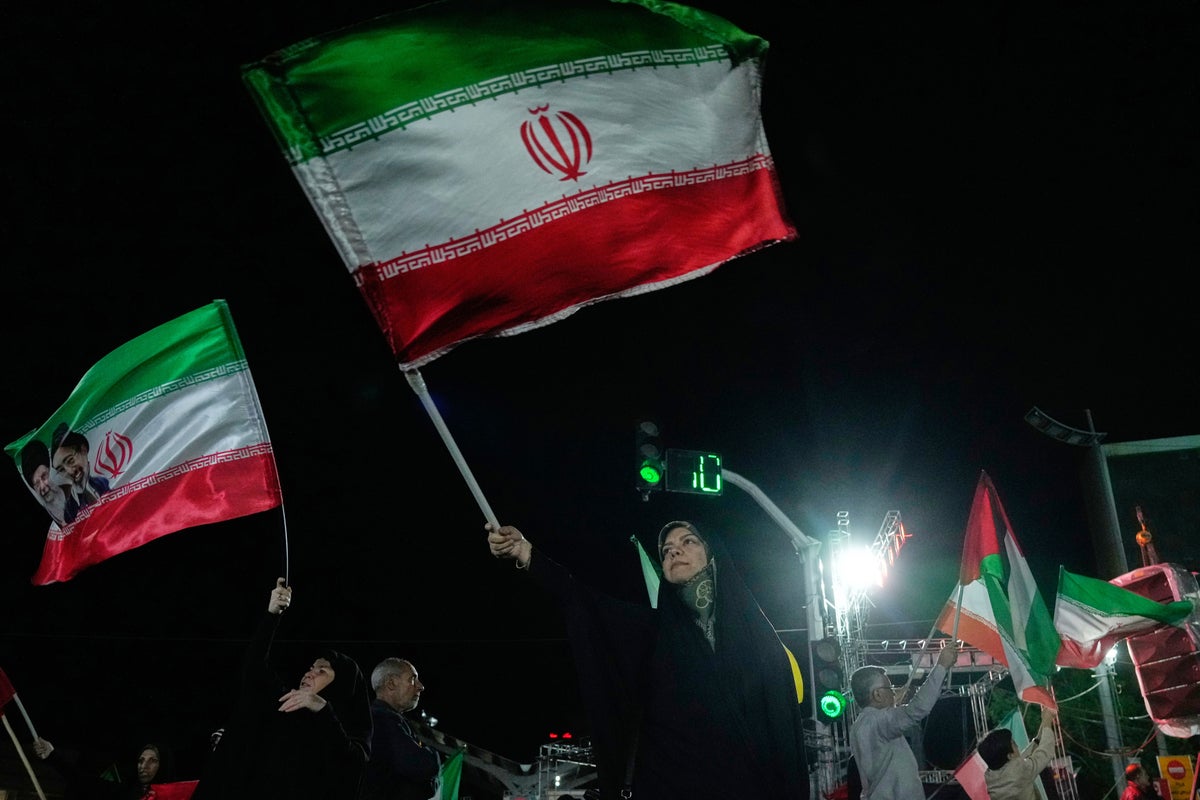
The current impasse between Washington and Tehran over the Strait of Hormuz is not a diplomatic misunderstanding; it is a structural collision between two incompatible geopolitical risk models. Iran’s proposal to decouple maritime commerce from its nuclear development program is an attempt to exchange a localized tactical bottleneck—the chokepoint of the Strait—for relief from an existential economic blockade. Washington’s cold reception to this offer confirms a strategy prioritized on neutralizing long-term proliferation risks over short-term energy market volatility.
The Operational Logic of the Iranian Proposal
Iran’s current negotiating posture relies on the assumption that energy security serves as the primary pressure point for the United States. By threatening the stability of 20% of global oil and liquefied natural gas (LNG) transit, Tehran seeks to transform the Strait of Hormuz from an international maritime corridor into a variable in a domestic U.S. economic equation.
The mechanics of this proposal are binary:
- The Concession: A cessation of maritime interference in the Strait, lowering the global oil risk premium.
- The Counterweight: An immediate termination of the U.S. naval blockade, granting the Iranian regime access to its primary source of hard currency through oil exports.
By deliberately omitting the nuclear issue, Iran is signaling a desire to revert to a pre-nuclear-breakout status quo. This is an effort to move the conflict from a "total war" footing back to a "sanctions-and-containment" framework where the regime maintains both internal revenue stability and its nuclear infrastructure.
The American Risk Function
The United States, conversely, operates under a doctrine where the nuclear program represents an irreversible strategic threat. For Washington, the cost function of this crisis includes:
- The Proliferation Multiplier: A nuclear-capable Iran alters the regional security architecture, mandating an indefinite, high-cost U.S. military presence in the Middle East.
- The Credibility Trap: Accepting a deal that ignores the nuclear program undermines the administration's stated red lines, potentially inviting further tactical escalations from adversaries who perceive a lower threshold for American military response.
The administration’s refusal to separate the Strait’s reopening from the nuclear dossier indicates a decision to absorb the short-term political cost of elevated fuel prices—a domestic vulnerability—to avoid the long-term strategic catastrophe of a nuclear-armed state.
Tactical Asymmetry and the Information Gap
The current conflict is defined by an extreme information asymmetry. Washington possesses superior kinetic capabilities, including the ability to strike infrastructure and enforce a naval blockade. Tehran, however, maintains an asymmetrical advantage in its ability to inflict "noise" on the global economy through localized, low-cost maritime disruption.
Recent developments highlight why the negotiation is stalled:
- Proxy and Infrastructure Dependencies: Iran’s refusal to address missile programs and regional proxy activity signals that they consider these tools essential for their deterrence strategy.
- The "Zero Enrichment" Demand: The U.S. insistence on near-zero enrichment creates a zero-sum outcome. Unlike trade negotiations where incremental adjustments (e.g., tariff reductions) are possible, nuclear status is a binary condition. There is no middle ground between "potential nuclear capability" and "non-proliferation."
- Intermediary Failure: The pivot between Omani, Pakistani, and Qatari mediation channels highlights the lack of a trusted bridge. When parties cannot communicate directly, or when the channels are used for public signaling rather than private concession-making, the probability of a miscalculation increases.
The Economic Pressure Feedback Loop
Iran’s domestic economy is currently undergoing a structural contraction. The combination of U.S.-led naval blockades, the destruction of petrochemical production facilities, and the cessation of shipping has forced the regime into a corner where internal social stability is increasingly precarious.
However, the U.S. also faces a tightening constraint. While Washington possesses the military power to sustain the blockade, the secondary effects—inflation, supply chain disruption in agriculture (fertilizer availability), and the political risk inherent in midterm election cycles—provide Tehran with a slim hope that the American political will will degrade before the Iranian economy suffers an irreparable breakdown.
Strategic Forecast
The conflict will likely persist in a state of "managed instability" until one of two conditions is met:
- The Internal Threshold: The Iranian regime experiences a domestic failure of control exceeding the thresholds of its security apparatus, rendering the nuclear program a secondary priority relative to state survival.
- The Escalation Dominance Shift: Washington identifies a specific, high-value asset—such as the complete disabling of remaining refining capabilities or energy infrastructure—that forces a total capitulation without the need for a formal agreement.
The most probable path forward is a continuation of the current blockade, characterized by localized kinetic incidents and intensified economic pressure. Diplomatic overtures will continue to be used as tools for domestic political theater rather than genuine bargaining. For stakeholders, the rational strategic play is to hedge against a protracted period of volatility in energy and shipping markets, as the fundamental incentives for both parties currently favor continued brinkmanship over a negotiated settlement.


