The declaration that Iranian trade through the Strait of Hormuz has reached a point of total cessation is not merely a diplomatic milestone; it is the culmination of a multi-vectored economic and kinetic containment strategy. The Strait of Hormuz functions as the world's most sensitive energy transit artery, facilitating the passage of approximately 21 million barrels of oil per day, or roughly 20% of global petroleum consumption. When the United States signals a "full halt" of Iranian trade through this corridor, it is describing the successful imposition of a high-friction environment where the cost of illicit transit exceeds the risk tolerance of the global shipping and insurance industries.
The Mechanics of Maritime Containment
The cessation of trade is achieved through the integration of three distinct operational layers: financial exclusion, physical surveillance, and legal liability.
1. Financial Exclusion and P&I Club Pressure
Maritime trade relies on Protection and Indemnity (P&I) insurance. Approximately 90% of the world's ocean-going tonnage is insured by the International Group of P&I Clubs, which are subject to Western regulatory jurisdictions. By designating Iranian vessels and their cargo as sanctioned entities, the U.S. creates a "non-insurable" status. Without P&I coverage, a vessel is prohibited from entering major international ports, effectively tethering the Iranian fleet to a limited network of "ghost" ports.
2. The AIS "Dark" Fleet Limitation
Iran utilizes Automatic Identification System (AIS) manipulation—switching off transponders or "spoofing" coordinates—to obscure vessel movements. However, the efficacy of this tactic has decayed due to the advancement of Synthetic Aperture Radar (SAR) and radio frequency (RF) signal geolocating. While a ship can turn off its transponder, it cannot hide its physical wake or its thermal signature from satellite constellations. The "full halt" implies that the detection-to-interdiction cycle has reached a threshold where the probability of detection is near 1.0.
3. Secondary Sanctions as a Market Barrier
The primary deterrent is not the seizure of Iranian oil, but the threat of excluding third-party buyers from the U.S. dollar clearing system. For a refinery in East Asia or the Mediterranean, the marginal profit from discounted Iranian crude is mathematically negated by the risk of losing access to the $25 trillion U.S. economy. This creates a "Buyer’s Choke Point," where the physical flow of oil stops because the financial return path is severed.
The Three Pillars of Iranian Counter-Strategy
To understand why the U.S. claims a "full halt," one must analyze the failure of Iran’s traditional bypass mechanisms. These mechanisms are historically categorized into three pillars:
- Pillar I: Domestic Diversification. Attempting to process crude into refined products (petrochemicals) that are harder to track than raw oil.
- Pillar II: Land-Based Transshipment. Utilizing pipelines to bypass the Strait of Hormuz, such as the Goreh-Jask pipeline.
- Pillar III: Asymmetric Harassment. Using the threat of mine-laying or Fast Inshore Attack Craft (FIAC) to raise the insurance premiums for all regional trade, thereby leveraging global economic pain to force a relaxation of sanctions.
The current "halt" indicates that Pillar I is hindered by a lack of specialized technology (catalysts and high-pressure reactors) due to import bans, and Pillar II lacks the necessary pumping station capacity to move significant volumes. Pillar III remains the only active variable, yet its deployment risks a direct kinetic escalation that the Iranian leadership currently deems a terminal threat to the regime.
The Cost Function of Sanction Enforcement
Enforcing a total trade halt is not a static achievement but a continuous expenditure of geopolitical capital. The cost function of this containment is defined by:
$$C_{total} = C_{surveillance} + C_{diplomatic} + C_{market_premium}$$
The Surveillance Cost involves the deployment of the 5th Fleet and the International Maritime Security Construct (IMSC). The Diplomatic Cost involves the pressure exerted on allies to forego cheaper energy. The Market Premium is the "fear tax" added to every barrel of Brent crude produced in the Gulf.
When the U.S. announces a total halt, it signals that the $C_{total}$ is being successfully managed. However, the fragility of this system lies in the "Shuttle Tanker" loophole. Smaller vessels often transfer oil to larger tankers in international waters—a process known as Ship-to-Ship (STS) transfer. A "full halt" suggests that the U.S. has successfully pressured port states (such as those in the UAE or Malaysia) to deny anchorage to vessels involved in these transfers, closing the final gap in the containment circuit.
Strategic Vulnerabilities in the Current Model
The assertion of a 100% stoppage ignores the "Small-Scale Leakage" inherent in grey-market economies. While large-scale commercial trade is halted, small-scale smuggling via dhows and unflagged coastal vessels continues. This volume is statistically insignificant to global oil markets but provides the Iranian internal economy with critical liquidity.
The second limitation is the "Sovereign Immunity" problem. If a major power—specifically China—decides to use its own state-owned tankers and its own domestic insurance vehicles to transport Iranian oil, the U.S. faces a binary choice: seize the vessel and risk a direct confrontation with a nuclear-armed peer, or allow the trade to continue, thereby invalidating the "full halt" claim. The current success of the halt suggests that China is prioritizing its broader trade relationship with the West over the marginal gains of Iranian crude, but this is a temporary alignment of interests, not a permanent structural change.
The Friction of Asymmetric Warfare
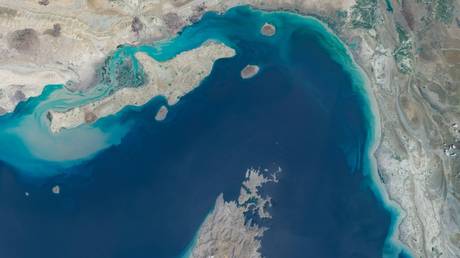
The Strait of Hormuz is only 21 miles wide at its narrowest point, with shipping lanes just two miles wide in each direction. This geography grants Iran a permanent "home field advantage" for asymmetric disruption.
- Sea Mines: The deployment of bottom-dwelling or moored mines is a low-cost, high-impact strategy. Clearing a minefield requires specialized vessels that move slowly, making them vulnerable targets.
- Drone Swarms: The use of low-cost Unmanned Aerial Vehicles (UAVs) to target the bridge or engine room of tankers creates a disproportionate repair cost compared to the cost of the weapon.
- Electronic Warfare (EW): GPS jamming in the Strait can force tankers to rely on manual navigation, significantly increasing the risk of collisions in the narrow lanes.
The "full halt" of trade does not mean a "full halt" of risk. In fact, as trade through the Strait becomes zero for Iran, their incentive to keep the Strait open for others decreases. The U.S. strategy must now shift from containment (preventing trade) to protection (preventing retaliation).
Quantitative Realities of the Oil Market
If Iranian exports were to return to the market tomorrow, the sudden influx of 2 to 2.5 million barrels per day would likely trigger a $10 to $15 per barrel drop in global prices. The "full halt" serves as a price floor for the global energy market. This creates a complex incentive structure where other OPEC+ producers benefit from Iranian exclusion. The maintenance of the halt is therefore supported by a silent consensus among competing oil exporters who gain market share and higher margins at Iran's expense.
The Geopolitical Endgame
The strategic objective of the trade halt is to induce "Maximum Pressure," forcing a renegotiation of regional security frameworks. However, the data suggests that while the trade halt has crippled the Iranian Rial and spiked inflation, it has not yet achieved the secondary objective of fundamental behavior modification. This creates a "stagnation trap" where the U.S. must maintain an expensive military and diplomatic posture indefinitely to prevent the system from reverting to its previous state.
The next phase of this conflict will move away from the physical interception of ships and toward the "Digital Blockade." This involves the targeting of the centralized servers that manage the "shadow" financial ledgers used by Iranian front companies. The struggle for the Strait of Hormuz is no longer just about who controls the water; it is about who controls the data that proves what is on the water.
The most effective strategic move for regional stakeholders is the accelerated development of the "East-West" corridors that bypass the Persian Gulf entirely. Investment should shift from maritime security to trans-continental pipeline infrastructure and rail links through Saudi Arabia and Oman. Reducing the "Choke Point Dependency" of the global economy is the only permanent solution to the volatility of the Hormuz corridor. Until the world’s energy reliance on this 21-mile wide strip of water is reduced, any "full halt" remains a high-maintenance, temporary achievement subject to the sudden shock of kinetic disruption.