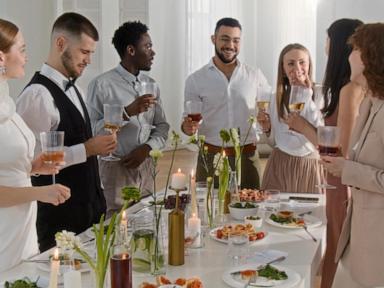
The seating chart for a modern wedding is an exercise in diplomatic warfare. You spend months agonizing over where to place divorced parents, balancing the volatile chemistry of college friends, and ensuring the quiet cousins aren't swallowed by the noise of the DJ. Every seat is budgeted. Every plate costs a small fortune.
Then, you invite a complete stranger.
It sounds like the setup for a romantic comedy or a catastrophic social experiment. For decades, the wedding crasher was a mythical creature of chaos—an uninvited ghost who drank your open-bar bourbon, danced with your aunt, and vanished into the night before the cake was cut. Couples spent thousands on security and venue coordinators specifically to keep these intruders out.
But a quiet, fascinating shift is happening at the altar. Instead of locking the doors, some couples are throwing them wide open. They are intentionally inviting people they have never met to the most intimate day of their lives.
To understand why, you have to look past the superficial glamour of the white dress and the champagne toasts. You have to look at the creeping isolation of the modern world.
Consider a hypothetical couple, Sarah and Marcus. They spent three years planning a seventy-person celebration in a rented barn. Six weeks before the big day, the cancellations started rolling in. An uncle suffered a medical emergency. A group of close friends realized flights were too expensive. Two bridesmaids had scheduling conflicts they couldn't resolve. Suddenly, the seventy-person room felt hollow. The empty chairs weren't just logistical annoyances; they were physical manifestations of a fractured, post-pandemic social network.
The silence of an empty wedding guest list is deafening. It carries a heavy, unspoken emotional weight. It whispers to the couple that perhaps their community isn't as robust as they believed.
That is when Sarah noticed a trend bubbling up on social media platforms like TikTok and Reddit. Brides were posting open invitations to local community groups. “We have ten open seats and a paid-for buffet. Who wants to come celebrate love with us?”
At first, the idea feels entirely transactional. You have leftover food; someone else wants a free meal. But talk to the couples who have actually done this, and a entirely different reality emerges.
The human brain is wired for ritual. For thousands of years, weddings were not exclusive, high-security galas behind velvet ropes. They were communal village events. If you lived in the town, you drank the wine and danced the jig. The entire community bore witness to the vow, binding the new couple not just to each other, but to the collective social fabric.
Somewhere along the line, we commercialized that ritual into oblivion. We turned the village celebration into a hyper-curated performance. By reintroducing the stranger, couples are subconsciously trying to claw their way back to that ancient, collective joy.
When a stranger walks into a wedding, they carry zero emotional baggage. They don't know that the groom's father hasn't spoken to the bride's mother in ten years. They don't care that the maid of honor blew the budget on the bachelorette party. They arrive with a singular, beautiful objective: to celebrate.
Think about the sheer vulnerability required to show up at a country club or a banquet hall where you know absolutely no one, dressed in your Sunday best, carrying a card for two people whose last names you can barely pronounce. The strangers who accept these invitations aren't grifters looking for a free shrimp cocktail. They are often lonely people looking for connection, recent transplants to a new city trying to find a community, or older folks who simply miss the intoxicating energy of a dance floor filled with hope.
The magic happens around hour three of the reception.
The strangers sit at Table Nine. Initially, the conversation is polite, stiff, and slightly awkward. The cousins ask how they know the groom. The strangers tell the truth. “We don’t. We saw an online post.”
There is a brief, collective gasp. Then, the ice breaks.
Suddenly, Table Nine becomes the most vibrant spot in the room. The strangers are asking questions without judgment. They are pulling shy teenagers onto the dance floor. Because they have no history with anyone in the room, they are free to be the purest, most enthusiastic versions of themselves. They are the ultimate hype men.
Statistics from the wedding industry show that the average cost of a wedding has skyrocketed, while average guest attendance has fluctuated wildly. Couples are paying more per head than ever before. Leaving a seat empty feels like throwing cash into a fire. Filling that seat with a stranger transforms a financial loss into an unpredictable human adventure.
Of course, this isn't a fairy tale without risk. The anxiety of inviting the unknown into a high-stakes environment is real. What if they drink too much? What if they make an inappropriate speech? What if they ruin the photos?
Those fears are valid, but they miss a fundamental truth about human nature. When you treat people like honored guests, they almost always rise to the occasion. Trust breeds decency. By offering a seat at the table to someone who didn't earn it through blood or history, the couple performs an act of radical hospitality. The stranger responds with radical gratitude.
Look closely at the wedding photos of these experimental celebrations. You will see the bride laughing hysterically with a woman she met three hours ago. You will see the groom slinging an arm around a guy who lives three blocks away but was a total ghost until that afternoon.
We spend so much of our lives building walls, filtering our circles, and curating our interactions to avoid the slight discomfort of the unfamiliar. We swipe past faces, walk with headphones firmly in our ears, and view the outsider with a baseline of suspicion.
But on a warm Saturday night in a room filled with string lights and the scent of eucalyptus, those walls crumble. The music swells. The bass thumps through the floorboards. The crowd parts, and there, right in the center of the chaos, is a person who woke up that morning with nowhere to go and no one to talk to. Now, they are holding a sparkler, cheering at the top of their lungs as two people they just met step into the rest of their lives.