The Strait of Hormuz is the world’s most important oil artery. If it clogs, the global economy catches a fever. Right now, the data coming out of the region isn't just concerning—it’s startling. In a recent 24-hour window, only seven vessels made the transit. To put that in perspective, we’re used to seeing double or triple that number on a slow day. The "chokehold" people keep whispering about isn't a theory anymore. It’s visible on the radar.
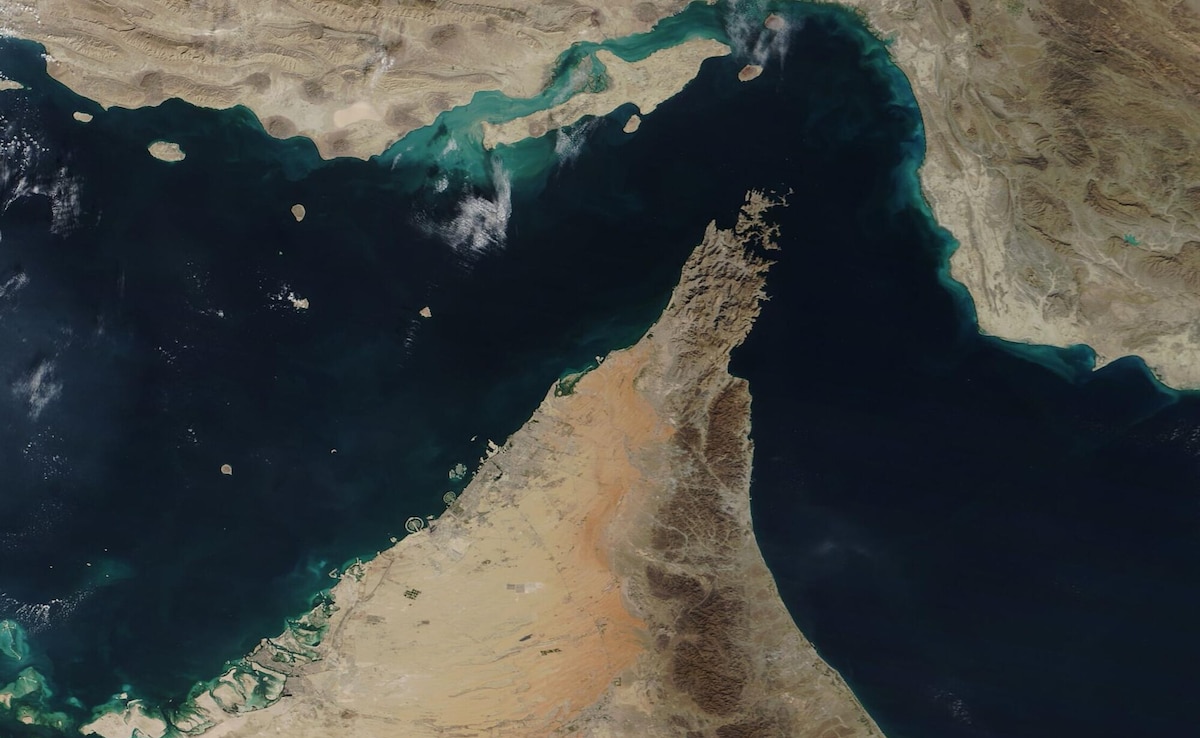
When you look at a map, the Strait of Hormuz is a tiny sliver of water between Oman and Iran. It’s only about 21 miles wide at its narrowest point. But through that gap flows roughly 20% of the world’s total consumption of liquid petroleum. When traffic dries up to a trickle of seven ships, you don't just worry about shipping delays. You start looking at your gas station prices and the stability of global energy markets.
The current situation feels different from previous years. Usually, there's a lot of posturing and saber-rattling, but the tankers keep moving because everyone needs the money. This time, the silence on the water is louder than the rhetoric.
Why Seven Ships Is a Massive Warning Sign
Seven ships. That’s it. In a 24-hour cycle, that's barely a heartbeat for a waterway that fuels entire continents. Normally, you’d see a constant parade of Ultra Large Crude Carriers (ULCCs) and liquefied natural gas (LNG) tankers. Instead, the AIS (Automatic Identification System) tracking data shows a vast, empty blue space where there should be a traffic jam.
What's actually happening on the ground? Ship owners are terrified. It isn't just about the physical risk of a seizure or a strike anymore. It's about the insurance. Marine insurance premiums for the Persian Gulf have skyrocketed. If you’re a fleet manager, you have to ask yourself if the margin on a load of crude is worth a 500% jump in war risk premiums. For many, the answer is a hard "no." They’re parking ships in safer waters or taking the long way around, though "the long way" from the Gulf is a logistical nightmare.
The ripple effect is immediate. When ships don't move, crude stays in the tanks. Refineries in Asia, particularly in China, India, and Japan, start eyeing their strategic reserves. These countries aren't just casual observers. They are the primary customers for the oil passing through Hormuz. If the "dry" spell continues, the supply chain doesn't just bend. It snaps.
The Geopolitical Pressure Cooker Behind the Numbers
You can’t talk about Hormuz without talking about Iran. They control the northern coast of the strait. For decades, Tehran has used the threat of closing the strait as its ultimate bargaining chip. It’s the "nuclear option" of conventional maritime trade.
Right now, the tension is thick enough to cut with a knife. We're seeing a mix of heightened military presence from Western coalitions and aggressive patrolling from the Iranian Revolutionary Guard Corps (IRGC). This isn't a secret. It’s a standoff in plain sight. When a tanker enters the strait, it’s often flanked by shadows—smaller, faster vessels that make the crew feel like they’re in a crosshair.
I’ve talked to maritime security experts who say the "psychological closure" of the strait is almost as effective as a physical blockade. You don't need to sink a ship to stop trade. You just need to make the risk so high that no one wants to be the one who gets hit. That’s where we are. The strait is technically open, but for most of the world's commercial fleet, it might as well be walled off with concrete.
Market Reality vs Political Rhetoric
Politicians love to say that energy independence protects us from these shocks. Honestly, that’s a half-truth at best. Even if a country produces its own oil, the price of that oil is set on a global market. When 20 million barrels a day are threatened by a regional "chokehold," the price of a barrel in Texas or the North Sea goes up anyway. It’s a connected web.
Here is the data that should keep you up:
- Over 80% of the crude oil that passes through the strait goes to Asian markets.
- The strait is the only sea passage from the Persian Gulf to the open ocean.
- There are very few pipelines that can bypass this route, and those that exist don't have the capacity to handle the volume.
The East-West Pipeline in Saudi Arabia and the Abu Dhabi Crude Oil Pipeline are the two main "escape valves." But combined, they can only move a fraction of what the tankers carry. If Hormuz stays dry, these pipelines become the most valuable real estate on earth overnight. But they can’t save the market from a sustained shutdown.
The Human Element on the Water
Think about the crews. Imagine being a mariner on a vessel carrying two million barrels of highly flammable cargo through a zone where ships are being harassed. It’s a high-stakes game of chicken. Reports from the few ships that did cross in the last 24 hours mention constant radio "challenges" and unidentified drones overhead.
The psychological toll on these sailors is immense. Many shipping companies are now offering "danger pay," but even that has its limits. We’re seeing more "dark" transits—ships turning off their AIS transponders to avoid being tracked. This makes the strait even more dangerous. If you can’t see the ship half a mile away because they’ve gone dark to avoid a missile, you’re looking at a recipe for a catastrophic collision.
Strategic Moves for the Coming Weeks
If you’re tracking this for business or just trying to understand your own cost of living, stop watching the news cycles and start watching the tanker tracking maps. The "seven ships" figure is a snapshot, but if that number doesn't climb back toward 20 or 30 soon, we're entering a period of extreme volatility.
Don't wait for the official "blockade" announcement. It probably won't come. Instead, look for:
- Redirected Cargo: Watch for tankers loitering near Fujairah or outside the Gulf of Oman.
- Insurance Updates: When Lloyd's of London or other major insurers update their "Listed Areas," it tells you more about the real risk than any government press release.
- Freight Rates: Check the VLCC (Very Large Crude Carrier) spot rates. If they spike, it means the few captains willing to make the run are charging a premium for their lives.
The Strait of Hormuz is the world's most precarious bottleneck. Right now, it's tightening. The fact that only seven ships dared the crossing in a day tells us that the fear is currently winning. If the flow doesn't resume, the global economy is going to feel the squeeze in ways that go far beyond the pump.
Keep your eye on the "dark" fleet too. Often, ships that aren't reporting via AIS are still moving oil, usually to bypass sanctions. If the official traffic is low but the "dark" traffic stays steady, the geopolitics get even messier. You need to stay informed on the actual vessel counts because the discrepancy between what's reported and what's actually floating is where the real story lives.
Move your focus to the regional storage hubs. Places like Fujairah are the barometers for this crisis. If their stocks start depleting because no new ships are arriving to refill them, the clock starts ticking for the global supply chain. This isn't just a "news" event; it's a structural shift in how energy moves in 2026.