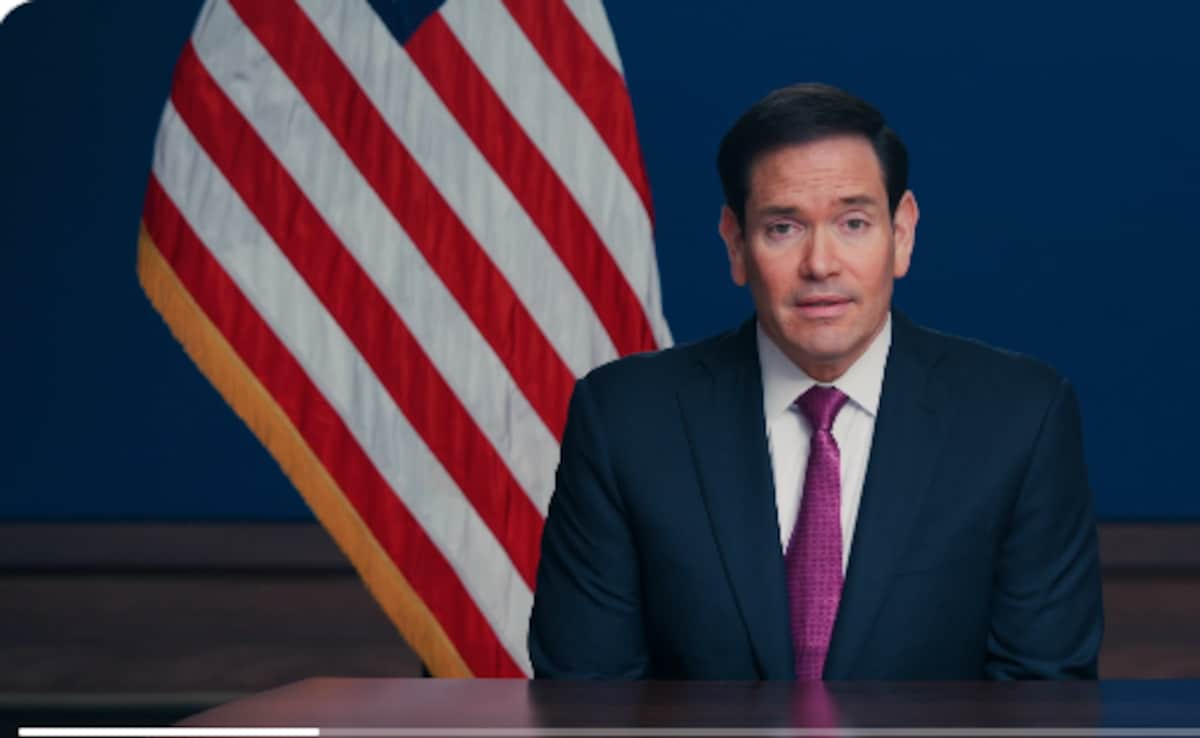
The global economy is currently staring down the barrel of a 21-mile-wide shotgun. When U.S. Secretary of State Marco Rubio recently labeled Iran’s stranglehold on the Strait of Hormuz an "economic nuclear weapon," he wasn't just reaching for a headline-grabbing metaphor. He was describing a structural vulnerability that the West has ignored for forty years.
Since March 4, 2026, the world has learned exactly what happens when that weapon is detonated. With the Strait effectively closed following the outbreak of hostilities between the U.S.-Israel coalition and Tehran, the "just-in-time" global supply chain has suffered a cardiac arrest. Brent Crude didn't just tick upward; it surged past $120 per barrel, forcing entities like QatarEnergy to declare force majeure on all exports.
This isn't just about the price at the pump in Ohio or Lyon. It is about a total systemic failure.
The Geography of Extortion
To understand why Rubio’s "nuclear" comparison is technically accurate, you have to look at the math of the waterway. Roughly 20% of the world’s petroleum and 25% of all seaborne liquefied natural gas (LNG) must pass through this single chokepoint. There is no viable bypass. While pipelines exist across Saudi Arabia and the UAE, they lack the capacity to handle even half of the volume currently stranded in the Persian Gulf.
Iran’s strategy has evolved from simple naval harassment to a sophisticated "tolling and vetting" regime. By claiming the right to regulate shipping as a "security measure," Tehran is attempting to transform an international waterway into a private driveway. Rubio’s rejection of Iran’s recent "offer" to reopen the straits—contingent on ships paying a toll and seeking explicit Iranian permission—underlines the stakes. Accepting those terms would be a de facto surrender of the freedom of navigation that has underpinned global trade since 1945.
The Caloric Crisis
While the West focuses on oil prices, a much more immediate and visceral crisis is unfolding in the Gulf Cooperation Council (GCC) states. These nations rely on the Strait for over 80% of their caloric intake.
- Food Security: By mid-March, 70% of the region’s food imports were disrupted.
- Inflation: Retailers have been forced to airlift staples, leading to price spikes of 40% to 120% on basic goods.
- Energy Poverty: Even in energy-rich nations, the inability to export means the inability to fund the desalination plants that provide their drinking water.
This is the "how" of the economic nuclear weapon. It doesn't just kill growth; it threatens the fundamental biological survival of an entire region to exert pressure on the global North.
Why Military Might Hasn't Cleared the Path
There is a persistent myth that the U.S. Navy can simply "open" the Strait through sheer firepower. The reality on the water is far more chaotic. Despite the heavy damage inflicted on Iran’s conventional navy during the February strikes, the threat environment has shifted to low-cost, high-impact asymmetric warfare.
A billion-dollar destroyer is a formidable asset, but it struggles against a swarm of 50 explosive-laden suicide drones or "smart" mines that are indistinguishable from debris. Insurance companies, the ultimate arbiters of global trade, refuse to cover hulls entering the Gulf. Even if the U.S. declares the water "safe," the merchant marine will not sail until the risk of a total loss is mitigated.
Currently, shipping volume in the Strait stands at roughly 5% of its pre-conflict levels. The few ships moving through are mostly Chinese-flagged vessels that have secured private "non-hostile" guarantees from Tehran—a move that effectively gives China a strategic veto over who gets to participate in the global economy.
The Russian Pivot
One of the most overlooked factors in this crisis is the opportunistic role of Moscow. As the Strait remained blocked, the U.S. was forced into a humiliating tactical retreat: temporarily lifting sanctions on Russian oil to prevent a total global collapse.
This has created a bizarre geopolitical feedback loop. To fight a war intended to curb Iranian influence and prevent nuclear proliferation, the West is inadvertently funding the Russian war machine. It is a zero-sum game where every move to stabilize the energy market strengthens a different adversary.
The Nuclear Shield Fallacy
Rubio’s core argument is that Iran is using the Strait as a "conventional shield" to hide its nuclear ambitions. The logic is simple: if Tehran can crash the global economy with a few mines and drones today, they will be "untouchable" once they possess a functional warhead.
However, the counter-argument is equally grim. Some analysts suggest that the current blockade is exactly what happens when a regime feels it has nothing left to lose. If the objective of the U.S.-led strikes was to "induce regime change," the Iranian leadership has responded by holding the world’s gas tank over a lighter.
The "economic nuclear weapon" is already in use. The question is no longer how to prevent its deployment, but how to survive the fallout.
The Price of Decades of Apathy
For thirty years, energy analysts warned that depending on a 33-kilometer-wide gap in the rocks was a recipe for disaster. Those warnings were buried under the convenience of cheap energy and the belief that global interdependence would prevent such a fracture.
We are now seeing the bill for that apathy. The European Central Bank has already slashed GDP growth projections, and the risk of a "technical recession" in energy-intensive economies like Germany is no longer a forecast—it is a present reality.
The U.S. counter-blockade, launched on April 13 to target ships reaching Iranian ports, is an attempt to even the scales. But a "double blockade" doesn't help the consumer in Seoul or the factory worker in Milan. It only ensures that the pain is distributed more evenly.
The Pakistan-mediated talks offer a slim hope of a "new arrangement" for maritime traffic, but the gap between the two sides remains a chasm. Washington demands "zero enrichment" and an open Strait; Tehran demands an end to the "economic war" and a permanent tolling system.
The Strait of Hormuz is no longer just a waterway. It is the primary theater of a conflict that has moved past the battlefield and into every grocery store, gas station, and boardroom on the planet.