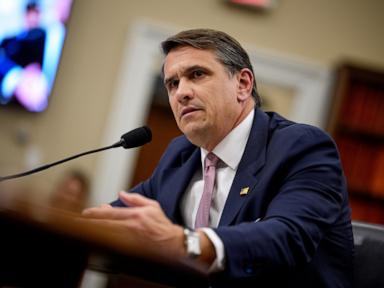
The corporate media is running its favorite playbook again. Donald Trump formally nominates his former criminal defense attorney, Todd Blanche, to serve as the permanent U.S. Attorney General, and the immediate consensus is a mix of panic and predictable outrage. The mainstream narrative is simple, uniform, and entirely wrong: they claim this is the final collapse of Department of Justice independence, a dangerous shift toward a "personal law firm" for the White House, and a historic aberration.
It is a lazy analysis that ignores how executive power actually functions.
I have spent years watching the intersection of federal law, corporate governance, and political power. If you believe the Department of Justice has historically operated as an untouchable, pristine island of neutrality, you are falling for a myth. The outrage machine is hyper-focusing on Blanche’s resume as Trump's personal lawyer while missing the actual, structural disruption happening right in front of them. The nomination of Todd Blanche isn't a subversion of the system; it is the logical, transparent conclusion of how the modern executive branch operates.
The Myth of the Neutral Justice Department
Let's dismantle the foundational premise of the freak-out. The political class loves to invoke the post-Watergate norm of a strictly independent DOJ. They talk about it like it is a fundamental pillar of the Constitution. It isn't. The Attorney General is, and always has been, a political appointee serving at the pleasure of the President.
The idea that a President choosing a fierce loyalist or a close personal confidant is a modern violation of norms is historically illiterate.
- John F. Kennedy appointed his own brother, Robert F. Kennedy, as Attorney General.
- Richard Nixon installed John Mitchell, his former law partner and presidential campaign manager.
- Barack Obama famously described his Attorney General, Eric Holder, as his "wingman."
When Eric Holder declared himself the president's wingman, the establishment did not declare an existential crisis for Western democracy. They accepted it as the cost of doing business in Washington. Trump nominating Blanche is merely stripping away the polite, institutional veneer that his predecessors used to mask the exact same dynamics.
Blanche is a former federal prosecutor from the Southern District of New York who later climbed the ranks of white-shoe defense firms like WilmerHale. He knows the machinery of the law inside and out. The difference between Blanche and previous nominees isn't competence or institutional knowledge; it’s that his loyalty to the executive was forged in a highly public courtroom rather than a private backroom.
The Real Capital Hill Friction Nobody is Talking About
The media wants you to believe the upcoming Senate confirmation battle is a grand moral struggle over the rule of law. It isn't. It is a cold, transactional calculation about leverage, and the real tension is coming from within the Republican party itself.
With a razor-thin majority, Republicans can only afford to lose three votes. Senators like Thom Tillis and John Cornyn have publicly signaled hesitation. But do not misread their skepticism as a sudden burst of constitutional purism. This is about institutional pushback against a nominee who has shown a willingness to bypass traditional legislative gatekeepers.
Consider the recent fallout over the proposed $1.8 billion "anti-weaponization" fund. The fund, designed to compensate political allies who faced legal scrutiny under the previous administration, was abruptly killed after a federal judge blocked it and Senate Republicans revolted. Senator Ted Cruz called the internal backlash a "full-on revolt."
The corporate press labeled the fund a corrupt "slush fund." That is a superficial take. In reality, the fund was an aggressive, unconventional attempt to use civil litigation settlements to reshape administrative policy. The real reason Senate Republicans spiked it wasn't moral outrage; it was an institutional turf war. Congress jealously guards its power of the purse. Blanche tried to execute a massive financial maneuver through a DOJ settlement without groveling to Capitol Hill appropriators. That was his real sin. The retreat on the fund shows that the system’s structural checks and balances are working exactly as designed, driven by institutional self-interest rather than moral grandstanding.
The Operational Reality of the Blanche Era
If you want to understand how the Justice Department will actually change under a confirmed Attorney General Blanche, you have to look past the high-profile indictments of political adversaries like James Comey. Those headlines are political theater for the base. The real shift is operational and bureaucratic.
For decades, the DOJ has operated under a model where career civil servants and permanent bureaucrats dictate the enforcement priorities of the federal government. This has led to an incredibly risk-averse, slow-moving institution that often protects its own longevity above all else.
Imagine a corporate scenario where a newly appointed CEO takes over a bloated, stagnant tech giant. The legacy middle management insists that things must be done the way they have always been done, protecting their own departments. A smart CEO doesn't hire an industry insider who is going to play nice with the existing vice presidents; they bring in a turnaround specialist whose sole allegiance is to the mandate of the board.
Blanche is that turnaround specialist. His tenure as acting attorney general has already shown a ruthless willingness to clear out institutional deadwood. He has aggressively removed prosecutors tied to politically sensitive legacy investigations and refocused the department on explicit executive priorities: immigration enforcement, violent crime, and dismantling administrative overreach.
The downside to this approach is obvious, and it is a risk that corporate leaders face every day during a hostile takeover. When you alienate your legacy workforce, you risk structural brain drain. Institutional knowledge walks out the door. Leaks become rampant. The department's internal mechanics can grind to a halt if the rank-and-file decide to engage in quiet quitting or active bureaucratic resistance. Blanche's biggest challenge won't be surviving the Senate; it will be managing the internal sabotage from a career workforce that views him as an existential threat to their permanent autonomy.
Why the Critics Are Asking the Wrong Question
The public debate is stuck asking: "Is Todd Blanche too close to the President to be impartial?"
That is entirely the wrong question. The real question we should be asking is: "Should the Department of Justice be an unaccountable fourth branch of government, or should it be directly subservient to the elected executive?"
If you believe the executive branch should be held accountable by the electorate, then the head of the Justice Department must be aligned with the president's agenda. The alternative is a permanent, unelected legal bureaucracy that sets its own priorities, decides who to investigate based on its own internal culture, and operates without any real democratic mandate.
Blanche’s nomination brings this tension out of the shadows. He has explicitly stated that the president has a right and a duty to set law enforcement priorities. To the establishment, that sounds like authoritarianism. To anyone who understands the structural reality of constitutional law, it is a statement of the obvious. The unitary executive theory dictates that the president is ultimately responsible for the execution of federal law.
By nominating his direct defense counsel, Trump is forcing a brutally honest confrontation with the nature of federal power. The era of pretending the DOJ is a neutral, apolitical referee is over. Todd Blanche is the explicit recognition that federal law enforcement is, at its core, an exercise of executive will. Stop waiting for the system to break; the system is just shedding its skin.