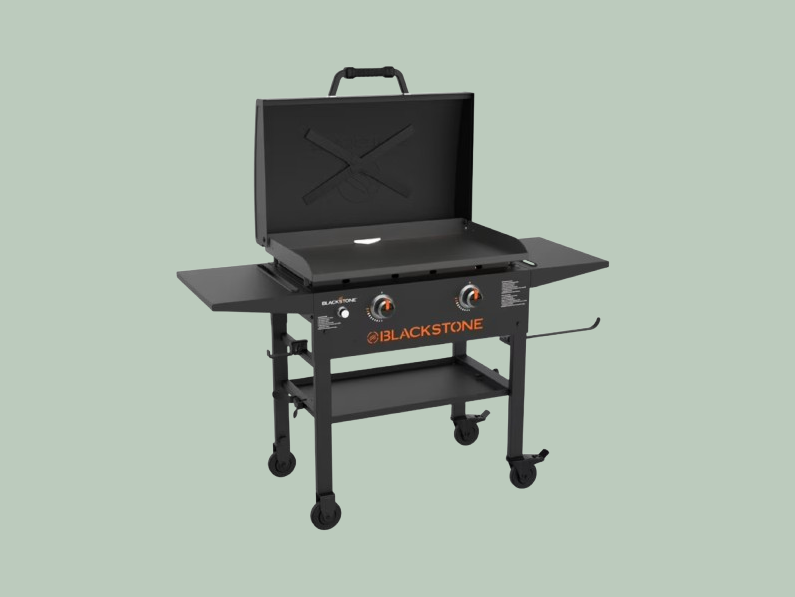
Every spring, the exact same buying guides roll off the digital assembly line. They use identical, tired templates to rank the "best BBQs of 2026." They look at shiny spec sheets. They drool over smart meat probes that sync to your phone via Bluetooth. They breathlessly tell you to drop $1,500 on a mirror-polished, six-burner stainless steel monster that looks like a commercial kitchen but cooks like a hair dryer.
It is a scam.
The backyard cooking industry is built on a fundamental lie: that size, BTU output, and digital gimmicks correlate to better food.
They do not.
I have spent fifteen years tearing down consumer appliances, consulting for manufacturing brands, and burning through thousands of dollars of premium charcoal, wood, and gas. I have watched patio owners blow thousands on outdoor kitchens, only to watch them produce grey, steamed burgers and dry chicken breasts.
The mainstream guides optimize for showroom appeal. They want you to buy a status symbol. Let us dismantle the lazy consensus of the 2026 grilling market and look at the thermodynamics of what actually happens under the hood.
The BTU Myth: Why High Output is Failing You
Walk into any big-box retailer or read any standard review site, and you will see British Thermal Units (BTUs) touted as the ultimate metric of power. "Boasting 60,000 BTUs across five burners!" the copy screams.
This is a terrible metric for judging a grill.
A BTU is simply a measure of heat output—specifically, the amount of energy needed to raise the temperature of one pound of water by one degree Fahrenheit. In grilling, high BTUs without thermal mass mean absolutely nothing.
Here is what the industry does not tell you: cheap, thin-walled gas grills require massive BTU numbers just to keep the temperature up because they leak heat like a sieve. They use thin-gauge stamped steel or flimsy aluminum. The moment you lift the lid, all that energy escapes into the atmosphere. When you close it, the burners have to work overtime to recover.
Thermal Mass Trumps Raw Power
Instead of looking at the BTU rating on the box, look at the weight of the machine.
An efficient grill relies on heat retention, not continuous fuel consumption. Heavy cast-aluminum fireboxes or thick-gauge ceramic walls hold energy. They radiate that heat back into the food evenly, creating a consistent convective environment.
When you put a cold, two-inch thick ribeye onto a cheap 60,000 BTU gas grill with thin grates, the metal immediately cools down. The burner beneath it tries to compensate, creating intense, localized hot spots while the rest of the cooking surface drops in temperature. You end up with a steak that is charred in two spots and grey everywhere else.
If you want a real sear, you need thermal density. A heavy cast-iron or thick stainless steel grate on a grill with proper insulation will deliver a superior crust at half the BTU output because the energy is stored in the metal, waiting to transfer directly to the meat via conduction.
Smart Grills are Built to Fail
The biggest trend of 2026 is the "smart" grill. Manufacturers are slapping Wi-Fi antennas, LCD touchscreens, and automated pellet feed systems onto everything they can find. They promise that you can control your brisket from the golf course.
They are selling you a ticking time bomb.
Let us look at the environment of an outdoor cooker. It is a violent mix of extreme heat, corrosive grease, ambient humidity, and airborne ash. Silicon chips and digital displays do not belong in environments that regularly fluctuate between freezing winters and 700-degree cooking sessions.
The Lifecycle Problem
- Mechanical life: A well-made ceramic kamado or heavy-duty kettle will easily last 20 to 30 years if you replace the grates every decade.
- Digital life: The companion app for your smart grill will likely lose software support from the manufacturer within five to seven years. The LCD screen will cloud over or crack after a few seasons of UV exposure. The internal Wi-Fi module will fail after its first humid August.
When the motherboard in your $2,000 smart pellet grill short-circuits, you do not have a grill anymore. You have a very heavy, very expensive metal box taking up space on your deck.
If you cannot resist the pull of data, buy a completely analog, indestructible grill. Then, spend $100 on a high-end, third-party digital thermometer probe that sits on your side table and can be thrown in a drawer when you are done. When the tech breaks—and it will—you replace a cheap probe, not your entire cooking platform.
Gas is for Convenience, Charcoal is for Cooking
The standard consumer guide spends 70% of its real estate on gas grills because they are easy to sell. "Just turn a knob and you are cooking in ten minutes!"
That convenience comes at a massive cost to flavor, and it is rooted in basic chemistry.
LPG (liquid propane gas) and natural gas are hydrocarbons. When they burn, they undergo a chemical reaction that produces carbon dioxide and water vapor.
$$\text{C}_3\text{H}_8 + 5\text{O}_2 \rightarrow 3\text{CO}_2 + 4\text{H}_2\text{O}$$
That water vapor is the enemy of a crisp crust. It creates a humid environment inside the cookbox, which actively thwarts the Maillard reaction—the chemical process that occurs between amino acids and reducing sugars to give browned food its distinctive, savory flavor. To get a perfect crust, the surface of the meat must dry out. Gas grills make this incredibly difficult because they are constantly pumping moisture into the cooking chamber.
Charcoal and real wood, on the other hand, burn incredibly dry. Lump charcoal is almost pure carbon. When it burns, it creates an intense, dry radiant heat that instantly flashes off surface moisture from your food, allowing the Maillard reaction to occur almost immediately. Furthermore, charcoal releases complex organic compounds like guaiacol and syringol, which give food that unmistakable, authentic smoky profile that no gas flavorizer bar can replicate.
If you must use gas for mid-week convenience, accept the compromise. Do not buy into the marketing that says a gas grill can do everything a wood fire can. It cannot.
Dismantling the "People Also Ask" Flawed Premises
If you search for advice on buying a grill, the internet serves up a list of consensus questions that steer buyers down the wrong path. Let us address them honestly.
Which grill brand holds its temperature best?
The internet will tell you to look at specific brands with patented burner designs. The honest answer is that no gas grill holds its temperature well compared to a ceramic kamado or a heavy, double-walled insulated smoker. If temperature stability is your primary metric, you should not be looking at traditional gas or open-kettle designs at all. You need mass. A ceramic pot weighing 200 pounds will hold 225 degrees Fahrenheit for 14 hours on a single basket of lump charcoal, completely unaffected by wind, rain, or snow.
How many burners do I need for a family of four?
The standard advice says you need at least three or four burners to create "zones." This is a fundamental misunderstanding of spatial cooking. You do not need five distinct burners to create two-zone cooking (direct heat for searing, indirect heat for baking). You can do this perfectly on a simple, round 22-inch charcoal kettle by banking the coals to one side. A massive footprint just means you are wasting money filling a giant chamber with gas that you are not using.
Is a pellet grill better than a smoker?
Pellet grills are convection ovens that use wood compressed into sawdust as a fuel source. They are incredibly convenient, but they provide a fraction of the smoke profile of a real offset smoker or a charcoal grill utilizing wood chunks. The combustion in a pellet grill is too efficient; it burns too clean, meaning you lose out on the deep, rich bark that defines real barbecue. If you want ease of use, buy a pellet grill. If you want actual barbecue, stop avoiding the learning curve of a real fire.
The Unconventional Blueprint: What You Should Actually Buy
If you want to stop wasting money on marketing gimmicks and start cooking exceptional food, ignore the top-ten lists. Here is the realistic, battle-tested approach to setting up an outdoor cooking space that actually works.
| Grill Type | The Real Benefit | The Trade-off | Who It Is Actually For |
|---|---|---|---|
| Heavy-Duty Ceramic Kamado | Incredible thermal efficiency. Can sear at 800°F or smoke at 225°F for 15 hours. | Heavy, difficult to move, takes 30 minutes to properly preheat the ceramic mass. | The purist who wants one cooker to last the rest of their biological life. |
| 22-Inch Heavy Gauge Kettle | Dirt cheap, indestructible, infinitely versatile for direct and indirect cooking. | Requires manual ash cleanup and charcoal management. | The budget-conscious cook who values flavor over automated convenience. |
| Commercial-Grade Flat Top Griddle | Massive surface area, perfect conduction, incredible crust formation for high-fat foods. | No smoke flavor whatsoever; essentially an outdoor cast-iron skillet. | The entertainer who cooks for crowds and prioritizes smash burgers, fajitas, and breakfast. |
Stop Upgrading the Grill; Upgrade the Accessories
If you have a standard, middle-of-the-road gas grill right now, do not throw it away for a 2026 model just because it has a sleeker hood design. The internal mechanics have not changed in thirty years.
Instead, modify the physics of your current machine. Drop a half-inch thick custom steel baking plate or a set of heavy interlocking hard-anodized aluminum grates directly onto your existing setup. This completely bypasses the thin, useless metal your grill came with, giving you the massive conductive heat transfer needed to mimic a high-end steakhouse.
Stop letting appliance manufacturers dictate your cooking ability based on the complexity of their control panels. Fire, metal, and air have governed barbecue since the dawn of human civilization. A microchip cannot rewrite the laws of thermodynamics. Find a thick piece of iron, learn how to manage a real flame, and leave the smart appliances in the showroom where they belong.