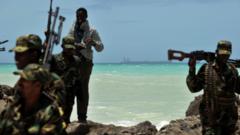
The Indian Ocean hasn't felt this dangerous in a decade. If you thought Somali piracy was a relic of the late 2000s, you're wrong. It's back. Recent boardings and successful hijackings off the Horn of Africa prove the "silent era" of maritime security is over. Ships are being seized, crews are being held for ransom, and the international shipping community is scrambling to figure out why the old playbook isn't working anymore.
The sudden spike in attacks isn't a coincidence. It's a calculated move by criminal networks taking advantage of a perfect storm. When global eyes shifted to the Red Sea to deal with Houthi drone strikes, the Somali pirates saw an opening. They took it. We're seeing a level of aggression that mirrors the peak of 2011, and the threat level has officially been dialed up.
Why Somali Piracy Is Surging Right Now
Most people think piracy just happens because of poverty. That's a lazy take. While economic desperation in Somalia is real, piracy is a sophisticated business. It requires investors, shore-based logistics, and a massive amount of intelligence. The current resurgence is driven by a security vacuum.
For years, the European Union’s Operation Atalanta and other international task forces kept a lid on the situation. But resources are stretched thin. With the Houthi rebels in Yemen attacking commercial shipping in the Bab el-Mandeb strait, many naval assets moved north. This left the vast expanse of the Indian Ocean under-patrolled. Pirates aren't stupid. They know when the police have left the neighborhood.
Local political instability in Somalia also plays a role. In regions like Puntland, the local government’s focus has shifted toward internal power struggles and elections. When the state stops looking at the coast, the "big men" of the piracy world start recruiting again. They’re using dhows—traditional fishing vessels—as mother ships to launch fast skiffs hundreds of miles away from the Somali coast.
The Tactics Are Evolving Faster Than the Defense
Back in the day, you could spot a pirate skiff from a mile away. Now, they're using hijacked fishing boats to blend in. This makes it almost impossible for merchant vessels to know they're under threat until the ladders are already on the hull.
I've seen the reports on the recent seizure of the MV Abdullah and similar vessels. The speed of these boardings is terrifying. In many cases, the pirates are armed with RPGs and AK-47s, overwhelmed the crew before a distress signal could even be fully processed by regional centers. They aren't just looking for cargo. They want the ship and the people. The ransom model is alive and well.
It’s not just about the ships either. The psychological toll on seafarers is massive. Imagine sailing through these waters knowing that the nearest destroyer is six hours away while a skiff is closing in at 30 knots. It's a nightmare scenario that’s becoming a daily reality for thousands of sailors.
The Link Between Illegal Fishing and Piracy
You can't talk about Somali piracy without mentioning the fish. This is the part most news outlets skip. For decades, foreign trawlers have been illegally vacuuming up the Somali coastline's resources. This destroyed the livelihoods of local fishermen.
What started as "coast guard" actions by local men to protect their waters quickly turned into a lucrative kidnapping industry. While that doesn't justify holding crews hostage, it explains the recruitment pool. As long as illegal, unreported, and unregulated (IUU) fishing continues, the pirates will always have a "moral" justification to sell to their villages.
The Global Economy Is Already Feeling the Bite
Shipping companies are in a tough spot. They have two choices. They can sail through the high-threat area and pray their armed guards are enough. Or, they can take the long way around the Cape of Good Hope.
Going around Africa adds about 10 to 14 days to a trip. It burns more fuel. It delays supply chains. It makes everything you buy more expensive. If piracy continues to escalate alongside the Red Sea crisis, we're looking at a permanent increase in global shipping costs.
Security companies are hiking their rates too. Private Maritime Security Companies (PMSCs) are in high demand again. Putting a three-man armed team on a ship can cost tens of thousands of dollars. Not every ship owner can afford that, which creates a tiered system of safety where the poorest crews are the most vulnerable.
The Role of International Navies
The Indian Navy has been surprisingly proactive lately. They’ve intercepted several hijacked vessels and rescued crews, showing a level of muscle that other nations seem hesitant to use. While the US and UK are focused on the Houthis, India is positioning itself as the primary security provider in the Indian Ocean.
But one or two countries can't police the entire ocean. The High Risk Area (HRA) was recently reduced in size because everyone thought the threat was gone. That was a premature move. Re-extending that zone is necessary, but it also means higher insurance premiums for every ship entering those coordinates.
How to Stay Safe in the New High Risk Zone
If you’re involved in maritime operations or responsible for vessel routing, you can't rely on 2022 data. The situation changed in the last six months. You need to be proactive.
First, stop treating the Best Management Practices (BMP5) as a suggestion. It’s a survival manual. Hardening your ship isn't just about razor wire. It’s about creating a "citadel"—a secure room where the crew can retreat and maintain control of the ship’s engines and communications even if pirates are on deck.
Second, don't skimp on intelligence. Use real-time tracking and subscribe to updates from the Maritime Security Centre – Horn of Africa (MSCHOA). Knowing where the latest "suspicious activity" was reported can save your ship.
Finally, recognize that the "Wait and See" approach is dead. If you see a dhow acting weird, assume the worst. Pirates are counting on your hesitation.
Get your security teams in place before you hit the 15-degree north latitude. Ensure your crew has run drills until they can reach the citadel in under two minutes. The threat level didn't just increase on paper—it increased on the water. Treat it that way. The Indian Ocean is no longer a safe transit corridor. It’s a combat zone again. Stay sharp or stay away.


