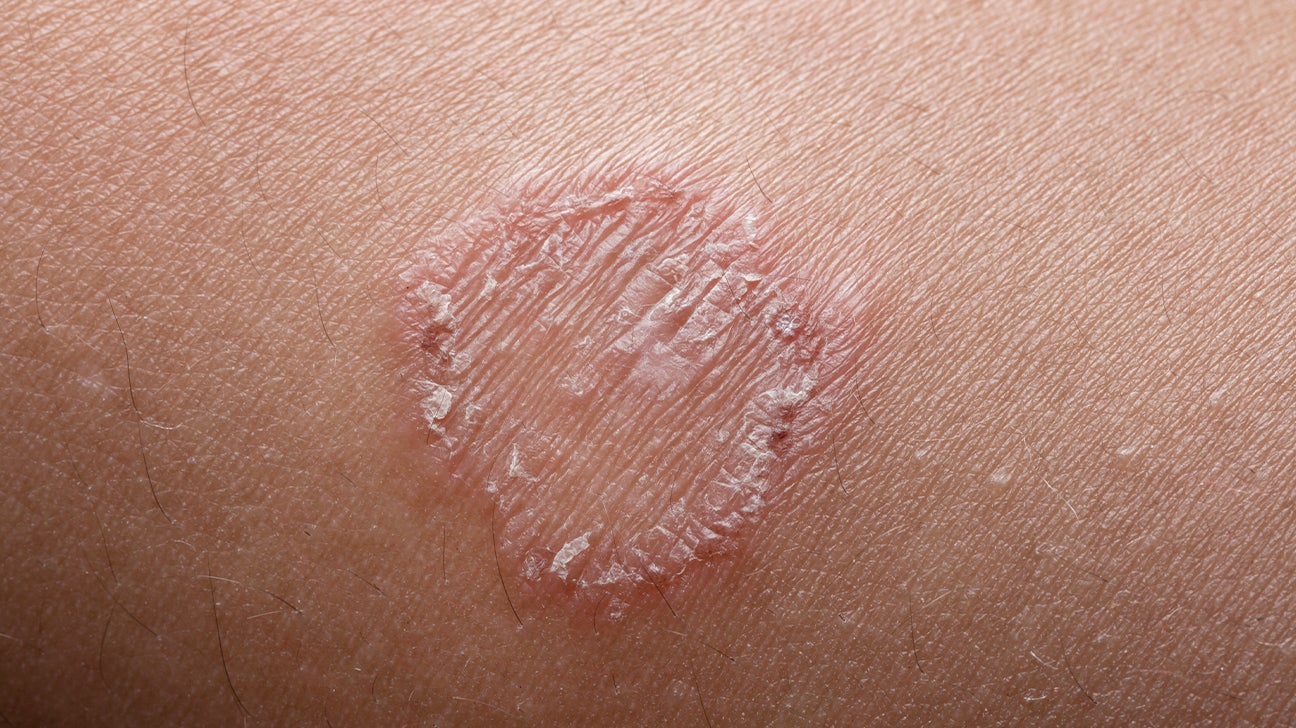
You’re out of the shower, reaching for the towel, and you see it. Just a tiny, circular patch of rough skin. It’s not necessarily itchy, and it’s definitely not a huge deal, but those small round dry spots on skin have a way of making you stare into the bathroom mirror for way too long. Is it just dry winter air? Or is your body trying to tell you something about your immune system?
Honestly, most of us just slap some heavy lotion on and hope for the best. Sometimes that works. But when it doesn't, you start wondering if it’s ringworm or maybe eczema.
The truth is that your skin is basically a giant map of your internal health and external environment. These little circles—often called "nummular" spots by dermatologists because they look like coins—can be caused by anything from a reaction to your new laundry detergent to a chronic condition like psoriasis. It’s rarely just one thing.
The Most Likely Suspects for Circular Dryness
If you go to a dermatologist like Dr. Shari Marchbein or someone at the Mayo Clinic, the first thing they’ll check is the texture. Is it scaly? Is there a "border"?
Nummular Eczema is a classic culprit. It doesn’t act like regular eczema. Instead of appearing in the folds of your elbows, it pops up as distinct, coin-shaped patches on your arms or legs. It’s notoriously stubborn. You might notice it flares up after a long, hot shower because hot water is actually a nightmare for your skin barrier. It strips away the natural oils, leaving these little "islands" of dehydration.
Then there’s Pityriasis Rosea. This one is weird. It often starts with one large "herald patch" and then dozens of smaller spots follow. Doctors aren't 100% sure what causes it, but it’s widely believed to be a viral trigger. It looks scary, but it’s usually harmless and goes away on its own, though it takes its sweet time—sometimes six to eight weeks.
We also have to talk about Tinea Corporis. That’s the medical name for ringworm. It’s not a worm. It’s a fungus. The giveaway here is usually a red, scaly ring with a clearer center. If your "dry spot" is expanding outward while the middle looks normal, you’re likely dealing with a fungal infection, not just dry skin.
Granuloma Annulare and Other Rarities
Sometimes it’s not eczema or fungus. Granuloma Annulare is a chronic skin condition that consists of raised, reddish or skin-colored bumps that form patterns—usually rings. It’s often mistaken for ringworm, but antifungal creams won't touch it. It’s an inflammatory response, and while it’s benign, it can be frustratingly persistent.
Psoriasis can also manifest in small, circular plaques. Usually, these are "guttate" psoriasis spots, which look like small drops. They are often triggered by a strep throat infection. It’s a wild connection, but your immune system gets confused after fighting the bacteria and starts attacking your skin cells instead.
Why Your Environment is Sabotaging Your Skin
Your skin barrier is a wall. When that wall has cracks, moisture escapes and irritants get in.
Think about your soap. If you’re using something with high pH or heavy fragrances, you’re basically micro-corroding your skin every day. Many people find that small round dry spots on skin appear exactly where their clothes rub the most or where they apply perfume.
The "Hard Water" Factor: If you live in an area with high mineral content in the water (calcium and magnesium), those minerals can settle on your skin. They react with soap to form a film—essentially "scum"—that clogs pores and irritates the surface. This leads to localized patches of dermatitis.
And let’s be real about stress. Cortisol is a disaster for your skin. When you're stressed, your skin’s ability to retain water drops. You might notice these spots appearing during a rough week at work or after a period of poor sleep. It’s not a coincidence.
How to Tell the Difference Without a Medical Degree
You shouldn't self-diagnose, but you can be smart about what you're seeing.
- The Itch Test: If it’s intensely itchy, it’s likely eczema or a fungal infection. If it doesn't itch at all, it might be Pityriasis Rosea or Granuloma Annulare.
- The Border Check: Look at the edge. Is it raised and redder than the center? That’s a classic fungal sign. Is it uniformly dry and flaky throughout? Probably eczema or simple xerosis (extreme dryness).
- The Response to Moisture: Apply a thick, fragrance-free ointment (like Aquaphor or Vaseline) for three days. If it disappears, it was just a localized dry patch. If it stays exactly the same, there’s an underlying inflammatory or fungal issue.
Addressing the "Winter Itch" and Chronic Dryness
When the humidity drops, your skin loses water to the air through a process called Transepidermal Water Loss (TEWL). This is when those small round dry spots on skin tend to proliferate.
You need to change how you bathe.
Seriously.
Short, lukewarm showers are the gold standard. When you get out, don't rub yourself dry. Pat the skin with a towel so it’s still slightly damp, then immediately apply a cream that contains ceramides. Ceramides are the "glue" that holds your skin cells together. Brands like CeraVe or La Roche-Posay are popular because they actually focus on this barrier repair rather than just smelling like flowers.
When to See a Professional
If the spots start to blister, ooze, or develop a yellow crust, you might have a secondary staph infection. This happens when you scratch a dry spot and bacteria get in. You’ll need a prescription antibiotic cream for that.
Also, if the spots are spreading rapidly across your torso, or if you feel feverish, go see a doctor. While most round spots are annoying but harmless, skin changes can occasionally signal internal issues like thyroid imbalances or, in rare cases, cutaneous lymphoma. It’s always better to have a dermatologist use a dermatoscope to be sure.
Actionable Steps for Clearer Skin
Stop using "beauty bars" or heavily scented body washes. Switch to a non-soap cleanser like Cetaphil or a moisturizing oil-based wash. This preserves the acid mantle of your skin.
Invest in a humidifier for your bedroom. If you're running the heater all night, you're sleeping in a dehydrator. Keeping the air at 40-50% humidity can stop new dry spots from forming overnight.
Check your laundry. Residual detergents in your clothes can cause "contact dermatitis" in circular patterns where the fabric presses against your limbs. Switch to a "free and clear" detergent and skip the dryer sheets, which are coated in chemicals designed to stick to fabric (and then your skin).
For existing spots, try the "Soak and Smear" technique. Soak the area in warm water for five minutes, pat dry, apply a thick layer of a petrolatum-based ointment, and cover it with a cotton bandage or clothing. Doing this for a few nights often resets the skin barrier more effectively than applying lotion twenty times a day.
If these steps don't show results within two weeks, schedule an appointment. A professional can provide a steroid cream for eczema or an antifungal for ringworm, which will clear the spots much faster than any over-the-counter hack.