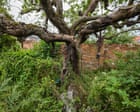
A cold rain falls on a small garden in Southwell, Nottinghamshire. It slicks the leaves of an ancient, gnarled apple tree. To the casual passerby, this tree looks like an old survivor of a forgotten orchard, its trunk twisted by time, leaning heavily toward the earth. But this is no ordinary fruit tree. This is the matriarch.
Every single Bramley apple on Earth—every crisp bite baked into a pie, every tart slice bubbling in a crumble across British Sunday roast tables—shares the exact genetic DNA of this single, dying organism.
Now, the cottage where she was planted as a mere pip over two centuries ago has been sold. The future of the world’s most famous apple tree is suddenly draped in a quiet, terrifying uncertainty.
The story of the Bramley apple is not a corporate tale of agricultural laboratories or patent lawyers. It is a story of a young girl, a greedy butcher, and a biological countdown that is ticking toward zero. When we lose the spaces where our history grew, we lose more than wood and soil. We lose the living threads that tie us to who we were.
The Child and the Pip
Mary Ann Brailsford was only a young girl in 1809 when she took a handful of pips from her mother’s kitchen and pushed them into the dirt of her cottage garden. She was not trying to change the culinary world. She was playing.
Imagine her small hands covered in Nottinghamshire mud, oblivious to the fact that she was performing a minor miracle. Apple trees do not grow "true to type" from seeds. If you plant a Granny Smith pip, you will not get a Granny Smith tree; you will get a genetic lottery ticket, usually resulting in a sour, inedible crabapple. The odds of a random seed producing a world-class fruit are millions to one.
But Mary Ann’s seed defied the mathematics of nature.
By the time a local butcher named Matthew Bramley bought the cottage decades later, the tree was bearing massive, heavy fruit. The skin was a brilliant green flushed with red. The flesh was sharply acidic, completely unsuited for eating raw, but magical when exposed to heat. Unlike other apples that turn into a watery mush when cooked, this apple melted into a light, fluffy, golden puree. It was the holy grail of baking.
When a local nurseryman named Henry Merryweather noticed the tree over the wall, he asked the butcher if he could take cuttings to graft and sell. Bramley agreed, on one arrogant condition: the apple must bear his name.
Mary Ann Brailsford, the girl who actually planted the future of British baking, died in poverty, her name largely forgotten by the millions who eat her legacy every day.
The Anatomy of a Clone
To understand why the sale of a small cottage in Nottinghamshire matters, you have to understand the fragile science of the orchard.
Every Bramley apple tree in existence today is a clone. They do not come from seeds; they come from scion wood—twigs cut from the mother tree and grafted onto the rootstocks of other trees. If you walk into a supermarket today and buy a Bramley, you are eating fruit from a branch that is genetically identical to the one Mary Ann tended in 1809.
This means the entire global infrastructure of the Bramley apple industry relies on a single genetic identity. It also means the original tree is irreplaceable.
But the mother tree is tired.
In the early 2000s, a devastating fungal infection known as honey fungus invaded the garden. It attacked her root system, rotting the very foundation that had kept her upright through two centuries of British winters. Scientists from Nottingham Trent University stepped in, using modern agricultural techniques to nurse her along, but you cannot cure a tree of old age. She is structurally compromised. She requires physical props to keep her heavy limbs from snapping under their own weight.
She is on life support. And now, the land beneath her has changed hands.
The Invisible Stakes of a Property Sale
The cottage at 75 Church Street has been a private residence for generations. For years, the previous owner cared for the tree, allowing academic experts and historians glimpses into the back garden to monitor her failing health. But houses are bought and sold. Legacies are reduced to real estate listings.
The property was put on the market, sparking immediate panic among conservationists and apple enthusiasts worldwide. What happens if the new owner wants to build an extension? What happens if they tire of the tourists peeking over the fence, or the scientists coming to check the soil chemistry? What if they simply do not care?
The law offers a shield, but it is a thin one. The tree is protected by a Tree Preservation Order (TPO), which makes it a criminal offense to cut it down or willfully damage it. But a TPO cannot force a homeowner to love a tree. It cannot compel someone to spend their weekends checking for fungal spores or adjusting the wooden crutches holding up a ancient bough. A TPO prevents deliberate slaughter, but it does not prevent neglect.
Consider what happens if the microscopic ecology of that garden changes. A rogue lawnmower nicking the bark, an improper application of weedkiller on a nearby flowerbed, or a simple lack of watering during a dry summer could finish what the honey fungus started.
The Myth of Perpetual Abundance
We live in an era of terrifying disconnection. We walk down supermarket aisles flanked by walls of perfect, uniform produce, insulated from the dirt and the precarity of how that food came to be. We assume that because the shelves are full today, they will be full tomorrow.
The Bramley apple is a staple of cultural identity. It is the smell of a grandmother’s kitchen on a rainy Tuesday. It is the comfort food of an entire nation. But its existence hangs by a thread far thinner than we care to admit.
If the mother tree dies, the world will not stop spinning. The millions of cloned Bramley trees currently growing in commercial orchards across Kent and Armagh will continue to bear fruit next season, and the season after that. The apple will not vanish overnight.
But biologically, the loss of the matriarch is a profound psychological blow. In the world of horticulture, the mother tree is the ultimate reference point. It is the genetic anchor. Over decades of cloning, genetic drift can occur; subtle mutations can add up, causing commercial varieties to slowly lose the traits that made them special in the first place. When you need to recalibrate, you look back to the source.
When the source is gone, we are just drifting.
The Rain on Church Street
The sale of the cottage has closed. The keys have changed hands. The new occupants are moving their furniture into a house that contains one of the most significant botanical treasures in human history.
One can only hope they understand the weight of the shadow that falls across their lawn. They have bought a house, but they have been appointed the guardians of a ghost.
Back in the garden, the rain continues to fall. The old tree sags against her wooden supports, her bark dark and wet, her deep roots locked in a slow-motion battle with the fungus in the soil. She has outlived empires, world wars, and the industrialization of the very food system she helped create.
Every spring, against all biological probability, her gnarled branches still push out delicate, pink-tinged white blossoms. It is an act of pure defiance. But defiance requires energy, and the mother tree is running out of time. We can only watch, and hope that those who now hold her future in their hands realize that some things are too valuable to ever truly be owned.